A joint delegation from world football governing body FIFA and the Confederation of African Football (CAF) is expected in Abuja as international football authorities begin a detailed assessment of the latest crisis within the Nigeria Football Federation (NFF).
The visit follows growing controversy over proposed reforms to Nigerian football administration and the ongoing NFF electoral process.
The development comes after FIFA told Nigerian football stakeholders that it had not reached any conclusion on the issues under review, contradicting earlier reports suggesting that FIFA and the National Sports Commission (NSC) had reached an understanding over the proposed reforms.
In an email dated September 7 and signed by FIFA Chief Member Associations Officer Elkhan Mammadov, FIFA said it and CAF were still examining the legal, governance, administrative and electoral implications arising from the situation within the NFF.
FIFA says no decision has been made
FIFA’s latest communication is significant because of reports that an agreement had already been reached between Nigerian authorities and the international football bodies over proposed changes to the administration of the country’s football federation.
FIFA, however, said that assessment was still ongoing.
The organisation said it was reviewing the facts surrounding the dispute, the applicable NFF regulations and the positions presented by the various stakeholders involved.
It also made clear that no determination had yet been made regarding possible next steps.
This means that the arrival of the FIFA and CAF delegation should not be interpreted as confirmation that a particular reform package has already been approved.
Instead, the mission is intended to allow the two football bodies to gather more information directly from the parties involved before deciding whether any recommendations or proposals should be made.
Why FIFA and CAF are coming to Nigeria
According to FIFA’s communication, the joint mission will meet representatives from several parts of the Nigerian football structure.
Those expected to engage with the delegation include the NFF administration, members of the federation, NFF electoral bodies and representatives of the Federal Government, including officials of the National Sports Commission.
The meetings are intended to help FIFA and CAF establish a clearer understanding of the circumstances surrounding the recent developments within the NFF.
The international bodies also want to hear directly from the different stakeholders about their positions and any issues that may require further examination under FIFA, CAF and NFF regulations.
The mission therefore goes beyond discussions with one individual or one section of Nigerian football administration.
It is designed as a broader fact-finding exercise involving the principal parties connected to the dispute.
NFF electoral process put on hold
One of the most important elements of FIFA’s communication is its request that the ongoing NFF electoral process be suspended.
FIFA said no further steps or decisions should be taken in connection with the process until further notice.
The organisation explained that the request was intended to preserve the status quo while FIFA and CAF completed their assessment and engaged with the relevant stakeholders.
However, FIFA stressed that the request should not be interpreted as a ruling on the validity of any of the positions, decisions or actions taken by the different parties.
This distinction is important.
Rather than declaring one side right or wrong, FIFA appears to be seeking to prevent further developments in the electoral process until it has completed its examination of the circumstances.
The suspension therefore creates room for the international football bodies to assess the situation before determining what happens next.
FIFA recognises Ikpeme as deputy general secretary
FIFA also clarified its position regarding Barrister Emmanuel Ikpeme.
In its communication, FIFA said it recognised Ikpeme as the Deputy General Secretary of the NFF, rather than as the federation’s acting General Secretary.
It further requested that Ikpeme serve as the primary point of contact between the NFF, FIFA and CAF until further notice.
This effectively establishes a direct communication channel between the international football authorities and the NFF while the assessment is underway.
The clarification is significant because questions surrounding the authority and status of officials have formed part of the wider dispute within Nigerian football administration.
By stating its position on Ikpeme’s status, FIFA has provided a clearer indication of who it expects to coordinate communication with the international bodies during the assessment period.
NSC role under scrutiny
The latest development also comes against the backdrop of increased involvement by the National Sports Commission in efforts to reform Nigerian football.
The NSC has been involved in discussions concerning changes to football administration, while its leadership has also engaged FIFA on the country’s football development and governance.
However, FIFA’s latest communication makes clear that the international body wants the NFF, rather than the NSC alone, to remain central to communication with FIFA and CAF during the current assessment.
FIFA specifically requested that Ikpeme serve as the primary contact rather than the NSC.
The distinction is particularly important because FIFA’s statutes traditionally place national football associations at the centre of the relationship between member associations and the world governing body.
The latest mission will nevertheless include meetings with the Federal Government and the NSC, meaning government officials will still have an opportunity to present their position.
Earlier Nigeria delegation visited FIFA headquarters
The Abuja mission follows a recent visit by a combined Nigerian delegation to FIFA headquarters in Zurich.
The delegation included representatives of the National Sports Commission and the Nigeria Football Federation.
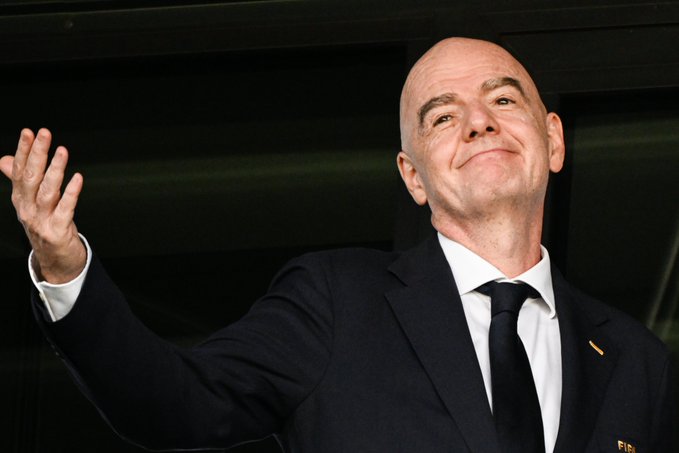
During that visit, FIFA President Gianni Infantino expressed the organisation’s willingness to collaborate with Nigeria on football development.
The latest development shows that discussions between Nigerian authorities and FIFA have now moved into a more detailed examination of the governance situation within the NFF.
While the Zurich discussions focused in part on cooperation and football development, the Abuja mission will specifically examine the circumstances surrounding the current NFF situation.
No predetermined outcome
FIFA has been careful to emphasise that the Abuja mission does not have a predetermined outcome.
After the assessment is completed, FIFA and CAF will decide whether recommendations or proposals should be submitted to their respective decision-making bodies.
The international bodies said the outcome remains open and warned stakeholders against assuming that they will take a particular action before the assessment has been completed.
That means several possibilities remain open.
The delegation could conclude that certain reforms are necessary, recommend changes to aspects of the electoral process or governance structure, or determine that additional information is needed before any action is taken.
Any eventual decision will depend on the findings of the assessment and the applicable statutes and regulations.
What the mission means for Nigerian football
The arrival of the delegation comes at an important moment for Nigerian football.
The NFF is responsible for administering football in the country and coordinating Nigeria’s national teams and competitions, while FIFA and CAF provide the international regulatory framework within which the federation operates.
Any prolonged dispute over the federation’s administration could therefore have implications beyond the individuals involved.
A stable football administration is important for organising domestic competitions, managing national teams, conducting elections and maintaining relationships with international football bodies.
For that reason, FIFA and CAF’s decision to conduct a joint assessment indicates that the international bodies consider the current circumstances serious enough to warrant direct engagement with the various stakeholders.
At the same time, FIFA’s statement shows that it does not want to prejudge the outcome.
Stakeholders to present their positions
During the Abuja mission, representatives of the NFF administration and its members are expected to have an opportunity to explain their positions.
The NFF electoral bodies are also expected to provide information about the electoral process and the circumstances that led to the current controversy.
Government representatives, including the NSC, will equally have an opportunity to explain the rationale behind proposed reforms and their position on the administration of Nigerian football.
The process could therefore provide FIFA and CAF with information from all sides rather than relying exclusively on reports or correspondence from individual stakeholders.
That is likely to be important in determining whether the proposed reforms comply with the rules governing national football associations.
FIFA and CAF hold the next move
For now, FIFA and CAF have effectively placed the NFF electoral process on hold while they investigate the situation.
The international bodies have not declared that the proposed reforms are valid or invalid, nor have they announced any final decision regarding the future structure of Nigerian football administration.
Instead, the immediate focus is on the assessment mission.
The delegation’s meetings in Abuja are expected to provide the international bodies with a clearer picture of the dispute, the competing positions of Nigerian football stakeholders and the legal and regulatory questions surrounding the NFF.
Only after that process will FIFA and CAF determine whether recommendations should be forwarded to their respective decision-making bodies.
For Nigerian football stakeholders, the message is therefore clear: the process is still open, and no final FIFA or CAF decision has been made.
The Abuja mission could become a crucial stage in determining how the current NFF governance dispute is resolved and whether the proposed reforms will eventually proceed.
Until the assessment is completed, however, FIFA has urged stakeholders not to assume what action it or CAF will ultimately take.