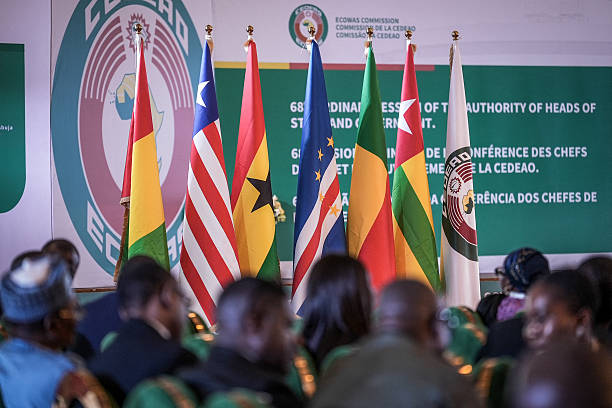
FREETOWN, SIERRA LEONE — The Economic Community of West African States (ECOWAS) has officially reaffirmed its firm commitment to launching its long-awaited single regional currency, the "ECO," in 2027. The announcement was delivered in the official final communiqué issued following the conclusion of the 69th Ordinary Session of the ECOWAS Authority of Heads of State and Government, held in Sierra Leone under the leadership of Sierra Leonean President Julius Maada Bio.
Regional heads of state underscored that the introduction of a unified monetary framework remains the cornerstone of West Africa’s long-term economic strategy. By replacing national fiat currencies with a single regional currency, ECOWAS aims to drastically lower transaction costs, eliminate foreign exchange volatility across member states, boost intra-regional trade, and accelerate sustainable economic growth across the 15-nation bloc.
The summit's final declaration comes at a pivotal moment as the sub-region navigates complex macroeconomic adjustments, regional security pressures, and shifting global trade dynamics. ECOWAS leaders emphasized that despite global headwinds, West Africa’s macroeconomic indicators demonstrate growing structural resilience, establishing a solid baseline for monetary unification.
The Convergence Criteria and Phased Implementation Strategy
Recognizing the varying economic capacities and fiscal structures across participating nations, the ECOWAS Authority confirmed a gradual, phased adoption framework for the ECO. Rather than requiring all member nations to transition simultaneously, the single currency will initially be adopted by member states that fully satisfy the primary macroeconomic convergence criteria established by the regional body.
To qualify for the first wave of adoption in 2027, participating countries must meet strict fiscal and monetary stability benchmarks:
-
Budget Deficit Ratio: A overall budget deficit (including grants) of no more than 3 percent of Gross Domestic Product (GDP).
-
Average Annual Inflation: Single-digit annual consumer price inflation, targeting a cap of below 5 percent.
-
Central Bank Financing: Direct central bank financing of national budget deficits restricted to no more than 10 percent of the previous year’s tax revenue.
-
Gross External Reserves: Maintenance of gross foreign reserves sufficient to cover at least three months of national import obligations.
[ ECOWAS Single Currency (ECO) Key Milestones & Criteria ]

• Target Launch Window: 2027 Calendar Year
• Initial Implementation: Phased adoption based on convergence compliance
• Primary Fiscal Target: Budget deficit ≤ 3% of GDP
• Primary Inflation Target: Single-digit annual inflation (< 5%)
• Reserve Requirement: Minimum 3 months import cover
• Intellectual Property Status: "ECO" name registered with OAPI
For member states that fall short of meeting these economic benchmarks by the 2027 deadline, ECOWAS plans to deploy technical assistance, structural adjustment support, and policy alignment frameworks to help them achieve compliance and join the currency union during subsequent integration phases.
Intellectual Property Rights and Brand Protection
A significant operational milestone highlighted in the summit communiqué was the formal legal protection secured for the new currency brand. The ECOWAS Authority welcomed the successful registration of the name "ECO" with the African Intellectual Property Organization (OAPI).
To prevent unauthorized corporate usage, counterfeit commercial branding, or legal ambiguity in foreign financial jurisdictions, the Authority directed the ECOWAS Commission to expedite supplemental trademark filings. The commission has been mandated to secure immediate trademark and intellectual property registrations with other regional and international intellectual property institutions, ensuring total sovereign control over the currency’s global identity before physical notes and digital settlement channels are deployed.
Macroeconomic Outlook and Fiscal Performance Trends
The commitment to the 2027 timeline is supported by a favorable macroeconomic projection for the sub-region. According to economic assessments presented during the summit, West African economies are tracking toward improved fiscal stability, supported by declining headline inflation rates, lower sovereign debt-to-GDP ratios, and a widening aggregate current account surplus.
However, regional leaders cautioned that national budget deficits remain a critical area of concern. High interest rates, global supply chain realignments, and sovereign debt servicing obligations continue to strain domestic budgets. The Authority urged finance ministers and central bank governors across member states to maintain strict fiscal discipline, optimize domestic revenue collection, and align monetary policies to ensure that macro-stability is preserved ahead of the 2027 monetary transition.
Addressing Sahel Insecurity and Regional Humanitarian Challenges
Beyond monetary integration, the 69th Ordinary Summit addressed critical security and humanitarian obstacles that threaten economic stability in West Africa. The Authority expressed deep concern over persistent security threats in the Sahel region and the Lake Chad Basin, unequivocally condemning ongoing attacks by non-state armed groups and insurgent networks.
To restore regional stability, ECOWAS leaders endorsed a revised operational roadmap for the full activation of the ECOWAS Counterterrorism Brigade. The specialized multi-national force is scheduled to achieve full operational capability by July 2027, aligning its deployment with broader regional security and economic stabilization plans.
Regarding domestic security challenges within Nigeria—the region's largest economy—the communiqué highlighted the escalating threat of rural banditry, armed abductions, and attacks targeting rural communities. The Authority commended Nigerian President Bola Ahmed Tinubu for swift administrative and military interventions deployed to combat insurgency, secure the release of abducted citizens, and restore stability across vulnerable northern corridors.
Finally, ECOWAS leaders directed the Commission to step up resource mobilization efforts to manage worsening humanitarian conditions caused by climate disasters, forced displacement, and regional food insecurity. The executive directive includes coordinating voluntary return and rehabilitation programs for West African migrants stranded in North Africa, ensuring that economic growth strategies are accompanied by comprehensive social protection frameworks.
Strategic Path Toward 2027 Financial Integration
The unanimous decision taken in Sierra Leone sets a clear administrative timeline for West Africa's financial future. By coupling strict macroeconomic convergence metrics with aggressive security coordination and sovereign brand protection, ECOWAS aims to build a stable monetary union.
As technical committees and regional central banks prepare the legal, digital, and physical infrastructure required for the ECO, the coming years will be vital. Successfully launching the single currency in 2027 stands to fundamentally reshape trade across West Africa, cementing the region's position as a unified, competitive market within the global economy.