WASHINGTON — In a detailed official briefing, the White House has announced that the United States has maintained fifteen consecutive months without releasing undocumented migrants into the interior of the country. According to a comprehensive fact sheet published by the administration, executive authorities have overseen the removal of more than three million foreign nationals since President Donald Trump returned to office. The landmark figures underline a total overhaul of federal immigration enforcement, executive border policy, public assistance oversight, and national citizenship standards. The announcement highlights a dramatic pivot toward strict border security, enhanced judicial scrutiny, and sweeping regulatory actions aimed at limiting legal loopholes, preserving public resources, and redefining eligibility for naturalization and birthright citizenship.
The Scope of Federal Enforcement: Key Metrics and Operational Milestones
The statistical briefing released by the White House outlines an unprecedented escalation in administrative and federal law enforcement activity across the nation. Beyond the headline metric of three million deportations, which federal officials report includes thousands of individuals convicted of violent criminal offenses, the administration detailed a systematic strategy to eliminate incentives for unauthorized entry. Central to this strategy was an executive order signed during the administration's first week in office, which declared a state of crisis along the United States southern border and immediately terminated long-standing detention-and-release policies.
Federal agencies have simultaneously shifted focus toward internal enforcement, structural regulatory audits, and naturalization reviews. The White House reported launching a dedicated denaturalization surge aimed at revoking citizenship from individuals who allegedly obtained status through fraudulent claims or material misrepresentation. Legal filings have already been submitted against eighty-eight individuals identified as ineligible under federal law. Additionally, administrative audits led to the termination of taxpayer-funded benefit distributions for over 1.4 million undocumented residents, alongside formal exclusions from more than a dozen federally subsidized healthcare programs. On the electoral front, federal task forces are collaborating with state officials to remove non-citizens from voter registries, while Department of State regulations have paused visa processing for seventy-five designated high-risk nations to curb visa overstays.
Starting From Border Emergency to Structural Overhaul
The current operational posture represents the culmination of a rapidly changing legal and policy landscape that began immediately following the Presidential inauguration. During the preceding presidential term, immigration policy became a central battleground, marked by record numbers of migrant encounters at the U.S. southern border, strained municipal budgets in major northern cities, and intense debate over administrative parole authority. Upon taking office, the current administration acted swiftly to rescind previous guidance that prioritized enforcement primarily against non-citizens deemed immediate security threats, replacing it with a comprehensive mandates regime prioritizing the removal of all unlawful residents.
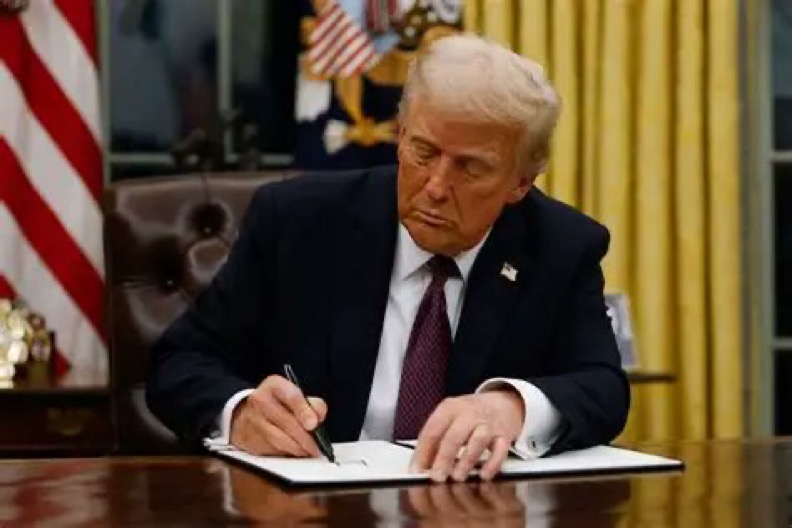
A major catalyst for the current legal landscape occurred on August 6, 2026, when the President signed two broad executive orders targeting birth tourism and reinterpreting long-standing legal interpretations of birthright citizenship. These executive measures followed a landmark Supreme Court decision in Trump v. Barbara, which clarified the constitutional framework regarding executive authority over citizenship qualifications and statutory birthright provisions. The administrative timeline also includes a structural overhaul of the official U.S. naturalization examination, which was updated to place greater emphasis on constitutional principles, American political history, and civic duties.
Navigating Complex Legal and Administrative Terms
Understanding the full scope of these immigration developments requires a clear breakdown of the specialized legal mechanisms employed by federal authorities. Among the most significant concepts cited in the White House report is denaturalization, a legal procedure through which the United States government revokes a naturalized person's citizenship. Unlike standard deportation proceedings, denaturalization typically requires the Department of Justice to establish in federal court that citizenship was acquired improperly, through willful misrepresentation, or by concealing disqualifying criminal backgrounds.
Another critical concept highlighted in the report involves the administrative pause on visa processing across seventy-five targeted nations. In international law and consular practice, visa suspension allows executive authorities to halt the issuance of immigrant and non-immigrant visas to citizens of specified countries while safety standards, background check databases, and bilateral information-sharing protocols are reassessed. Furthermore, the administration's recent focus on birth tourism targets commercial entities and foreign nationals who travel to the United States on temporary visitor visas specifically to give birth on domestic soil, thereby securing automatic citizenship for the child under traditional interpretations of the Fourteenth Amendment. The recent executive actions aim to dismantle these operations by instructing federal agencies to deny citizenship credentials to children born to non-resident foreign nationals without lawful permanent status.
Economic, Legal, and Political Implications
The economic and social ramifications of these enforcement measures are being felt across multiple sectors of the domestic and global economy. Proponents of the administration's policies contend that strict border controls protect national security, reduce municipal fiscal expenditures, and shield low-wage domestic workers from wage stagnation caused by an influx of undocumented labor. By cutting off access to federally funded healthcare programs and public benefits for non-citizens, supporters argue that government balance sheets will see significant relief, preserving limited public resources for native-born citizens and lawful permanent residents.
Conversely, economic analysts and industry leaders point out that aggressive deportation drives present immediate challenges for labor-intensive industries, including agriculture, construction, hospitality, and food processing. The removal of three million individuals over a fifteen-month period, combined with tightened visa restrictions, has contributed to labor shortages in several regional markets, putting upward pressure on wages and operational costs for businesses reliant on foreign-born labor. Furthermore, human rights organizations and legal advocacy groups have raised severe concerns regarding due process guarantees, potential family separations, and the humanitarian conditions facing individuals detained in high-throughput deportation facilities.
Repercussions Across the Western Hemisphere
The international impact of the United States' policy pivot extends far beyond domestic borders, creating complex diplomatic dynamics throughout Latin America, Asia, and Africa. Key migrant-origin countries, such as Mexico, Guatemala, Honduras, El Salvador, and Venezuela, are facing substantial socio-economic adjustments as deportation flights arrive at record rates. The sudden absorption of millions of returned citizens exerts strain on local housing markets, social services, and labor pools in Latin America, while simultaneously depressing the flow of international remittances—a crucial source of foreign income for many developing economies across the hemisphere.
Diplomatically, the policy has altered bilateral arrangements between Washington and regional capitals. Several Latin American governments have been pushed to enhance their own southern border controls, increase transit enforcement, and expand domestic asylum infrastructure to accommodate migrants intercepted before reaching the United States border. At the same time, the indefinite suspension of visa processing for seventy-five nations has drawn sharp criticism from international bodies and foreign governments, who argue that blanket freezes hinder educational exchange, international commerce, and bilateral diplomacy. As the U.S. government maintains its stringent posture, global institutions are closely monitoring how these policies re-shape migration corridors, international asylum law, and cross-border commerce over the coming years.