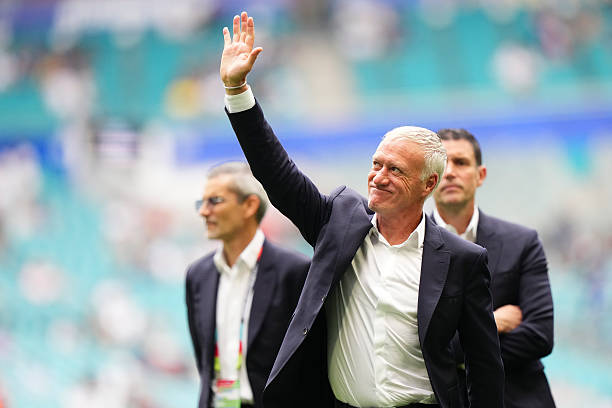
MIAMI, UNITED STATES — The historic 14-year tenure of Didier Deschamps as head coach of the French national football team concluded in an unprecedented, chaotic fashion at the Hard Rock Stadium. Following a stunning 6-4 defeat against England in the FIFA World Cup 2026 third-place play-off, Deschamps used his final post-match press conference to take full responsibility for a disastrous first-half performance that saw Les Bleus trail 4-0 at the interval.
The ten-goal fixture marked Deschamps’ 185th and final competitive match at the helm of the national team. While a spirited second-half fightback briefly threatened to pull off a historic tournament comeback, the systemic defensive failures in the opening 45 minutes proved too severe to overcome.
The defeat leaves France with a fourth-place finish in North America, a bitter sporting conclusion for a squad that entered the tournament with realistic ambitions of capturing a third global star.
Tactical Accountability: Addressing the First-Half Breakdown
Facing the international press for the final time as national coach, Deschamps was direct in his assessment of his team's defensive failures during the opening period. The French backline struggled significantly against a reshuffled English attack directed by Thomas Tuchel, conceding four goals before the referee blew for halftime.
In his post-match analysis, Deschamps openly stated that the team's early performance fell well below the required standards for elite international football:
"It is a defeat, but we were 4-0 down. We produced an unacceptable first half. There was a reaction after the break, with the things we know how to do well. We had two distinct chances to make the scoreline 4-4, but we pushed forward a little more. That offensive urgency is what we know how to do, but we didn't execute it early on. It is my fault because I must not have done what was needed in the first half."
[ Didier Deschamps: Final International Managerial Ledger ]
─────────────────────────────────────────────────────────────
Total Matches Managed                              185 Games
Total Competitive Victories                        120 Wins
Tenure Duration                                    14 Years (2012–2026)
Major Tournaments Won                              2018 World Cup,
                                                   2021 Nations League
─────────────────────────────────────────────────────────────
Deschamps noted that the second-half adjustments, which included four simultaneous substitutions during the interval, helped restore some competitive pride to the shirt.
The tactical shift allowed tournament Golden Boot leader Kylian Mbappé to score twice and assist substitute Bradley Barcola, bringing Les Bleus within a single goal at 5-4 deep into injury time. However, a late defensive gap during a counter-attack allowed Jude Bellingham to secure England's victory, leaving the French manager to reflect on a difficult defensive display.
Reviewing the North American Campaign: Ambition vs. Reality
The fourth-place finish brings an end to a demanding eight-week tournament campaign across North America. For a French squad packed with elite European talent, the failure to secure a spot in the final or capture the bronze medal represents a significant sporting disappointment.
Deschamps acknowledged that the team's critical tactical error occurred during their 2-0 semi-final loss against Spain, where the team's defensive structure was systematically broken down by the eventual finalists. Reflecting on the tournament's conclusion, the veteran manager noted:
"It would have been better to finish third. We came here with a lot of ambition and managed to do quite a few positive things across the group stages. However, we failed in our match against Spain, and they knew exactly how to perform against us. This is a group with immense footballing quality; there was more than enough talent to get results. Yet, on a human level, it was a beautiful adventure. Spending eight weeks together with this group was beautiful."
The successive defeats against Spain and England mark a rare period of consecutive tournament losses for a manager who built his reputation on defensive discipline and clinical tournament management. The programmatic style that guided France through multiple major finals was largely absent in Miami, replaced by an open, end-to-end match that exposed the physical fatigue of a long international season.
An Indelible Legacy: The French Football Federation's Tribute
Despite the difficult nature of his final match in the dugout, the French Football Federation (FFF) immediately released a comprehensive statement honoring Deschamps’ transformative impact on the national game. Over his 14 years in charge, Deschamps stabilized a national team previously disrupted by internal controversies, turning Les Bleus into one of the most consistent forces in modern football.
The official FFF valedictory statement highlighted the core principles that guided his long tenure:
"Didier Deschamps embodied high standards, rigour, a sense of the collective and love for the blue shirt. Under his leadership, for 14 years, the France team regained credibility, respect and affection while remaining at the highest level in the world. Few individuals will have given as much to the blue shirt as a player and then as coach. Thank you, Didier."
| Achievement Type | Tournament Edition | Role |
| FIFA World Cup Winner | France 1998 | Team Captain |
| UEFA European Champion | Belgium/Netherlands 2000 | Team Captain |
| FIFA World Cup Winner | Russia 2018 | Head Coach |
| UEFA Nations League Winner | Italy 2021 | Head Coach |
| FIFA World Cup Runner-Up | Qatar 2022 | Head Coach |
The federation’s statement noted that Deschamps has left an "indelible mark" on French sports culture, spanning a quarter-century of direct service as both an elite player and manager.
Historical Perspective: A Legend of the Modern Game
Deschamps leaves his post as one of the most decorated figures in the history of international football. As a tireless defensive midfielder, he captained France to their first World Cup title on home soil in 1998, followed by a European Championship victory two years later.
When he transitioned to the managerial role in 2012, replacing Laurent Blanc, he brought that same tactical discipline to the dugout. His crowning managerial achievement arrived at the 2018 World Cup in Russia, where he guided a young squad to a 4-2 victory over Croatia in the final.
That victory earned him a spot in an elite footballing group, making him one of only three men in history to win the World Cup as both a player and a coach—joining Brazil's Mário Zagallo and Germany's Franz Beckenbauer.
While his tactical approach occasionally drew criticism from pundits who favored a more expansive style of play, his ability to manage a star-studded squad and deliver consistent results in knockout football remains undisputed. Under his guidance, France reached the finals of Euro 2016, the 2018 World Cup, the 2021 Nations League, and the 2022 World Cup in Qatar.
As the French Football Federation begins its search for a successor to lead the team into the upcoming European championship qualifiers, they face the difficult task of replacing a manager whose standard of excellence defined an era.