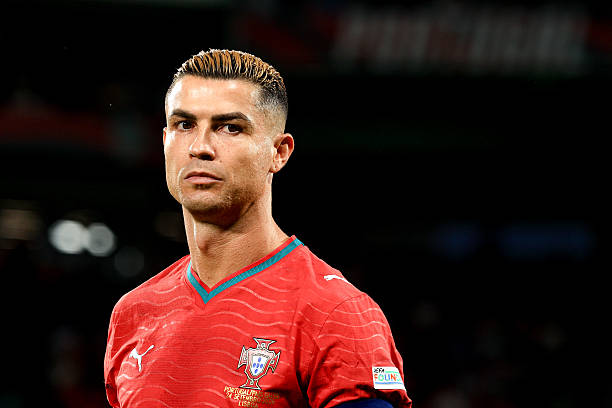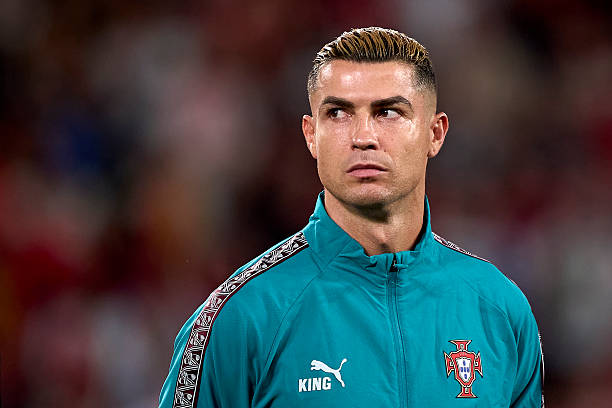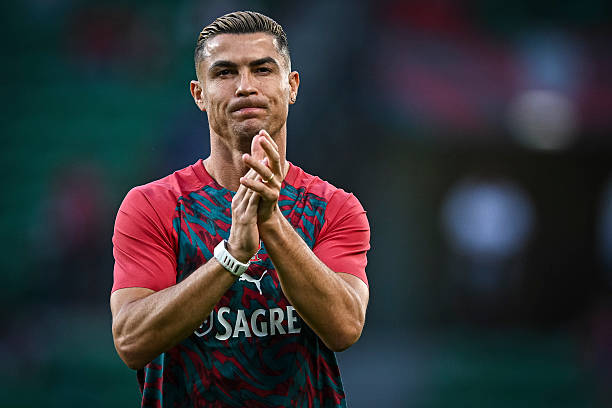
Cristiano Ronaldo submitted his full football résumé, together with a nearly 2,000-word statement, to the Portuguese Football Federation (FPF) as he sought leniency after walking out of Portugal’s national-team camp during a dispute with head coach Jorge Jesus.
According to Sky Sports, Ronaldo was asked to provide evidence of circumstances that could mitigate the disciplinary charge. His response included a detailed sporting CV documenting the major achievements of his 24-year career, while his lengthy personal statement explained why he left the squad and acknowledged that his decision should have consequences.
The unusual submission has now become one of the most talked-about details of the disciplinary case, particularly because Ronaldo had initially argued publicly that he should not receive special treatment.
The FPF ultimately imposed a 30-day suspension and a €255 fine. The £215 figure reported by Sky Sports and other British outlets is the approximate sterling equivalent of the €255 fine, rather than the amount originally denominated by the Portuguese federation.
Ronaldo put his career achievements before the disciplinary panel
The FPF disciplinary council specifically acknowledged Ronaldo's sporting achievements when considering mitigating circumstances.
According to the disciplinary ruling cited by Sky Sports, Ronaldo submitted his “sporting CV,” including the awards and honours he had received throughout his career. The CV reportedly appears on pages 126 to 128 of the disciplinary case file.
Among the achievements highlighted were:
• Five UEFA Champions League titles
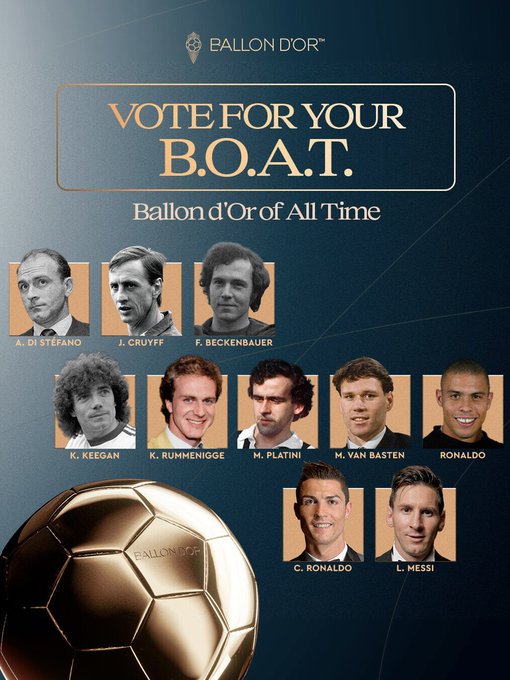
• Five Ballon d'Or awards
• Three Premier League titles
• Two La Liga titles
• Two Serie A titles
• UEFA Euro 2016
• FA Cup and Copa del Rey honours
• Major achievements with the Portugal national team
The disciplinary council also recognised Ronaldo's broader contribution to football and his status as one of Portugal's most prominent sporting figures. Portuguese newspaper Diário de Notícias reported that the council described his career as having exceptional national and international reach and noted his role in promoting Portuguese football around the world.
Ronaldo's CV was therefore not simply a list of trophies. It was submitted as evidence supporting the argument that his long service and contribution to football should be taken into account when determining the punishment.
The irony of Ronaldo asking for mitigation
There is an unusual twist to the case.
In his public statement, Ronaldo had initially said that he should be punished and suggested that his status as Portugal captain should actually make the situation more serious rather than less.
He wrote that he believed the consequences of his actions should be assessed by the Portuguese Football Federation and argued that rules should apply equally regardless of a player's reputation.
However, during the disciplinary proceedings, his legal representatives presented mitigating circumstances.
According to the disciplinary documents reported by Portuguese media, the defence cited three main factors: Ronaldo's clean disciplinary record during the current season and the previous three seasons, his significant services to football and recognition for sporting merit, and his contribution to establishing the facts of the case.
The council accepted the arguments relating to his football achievements and sporting contributions. It also took into account his admission of responsibility.
The result was a significant reduction in the potential punishment.
Ronaldo could have faced a much longer suspension
The original disciplinary framework was considerably harsher than the punishment Ronaldo eventually received.
The FPF rules provide for a suspension of between one and six months for abandoning the national team without justification, along with a fine. Diário de Notícias reported that the normal applicable range could have included a suspension of one to six months and a fine between €505 and €1,005.
After the accepted mitigating circumstances were applied, the applicable range was reduced to between eight and 45 days of suspension, with a fine ranging from €125 to €255.
Ronaldo ultimately received the maximum of that reduced range for the fine — €255 — but a 30-day suspension rather than the maximum possible 45 days.
The Guardian and Irish Times have reported that the punishment was reduced through successive mitigating considerations, including Ronaldo's record and contribution to football and his acceptance of responsibility.
The case began with Ronaldo's dispute with Jorge Jesus
The disciplinary case stems from an explosive episode during Portugal's September international camp.
Ronaldo was an unused substitute when Portugal defeated Norway 2-1 in Oslo on September 27.
According to Ronaldo's account, he had been told by Jesus that he could play approximately 30 minutes. He subsequently warmed up but was not introduced.
Ronaldo viewed that as a broken promise.
In his nearly 2,000-word statement, he described the situation as a breach of trust and explained that he subsequently met with Jesus and other officials in an attempt to resolve the disagreement.
Ronaldo claimed an eight-point understanding was reached concerning how the situation would be addressed publicly. He said Jesus had agreed to explain that Ronaldo had not demanded playing time, that the coach had proposed the original plan for his involvement, and that it had been a mistake to have him warm up without eventually bringing him onto the pitch.
Jesus has disputed Ronaldo's interpretation of their discussions.
The disagreement eventually escalated, and Ronaldo left Portugal's camp in Copenhagen on September 30, shortly before the team's Nations League fixture against Denmark.
He subsequently missed the match.
Ronaldo admitted that leaving was wrong
Despite his criticism of Jesus, Ronaldo did not attempt to completely absolve himself.
In his statement, he apologised to his teammates and the Portuguese public for leaving the camp.
He also apologised for failing to acknowledge the Portugal supporters following the victory over Norway.
Ronaldo argued that he felt remaining with the squad after what he described as a breakdown of trust would have been harmful to the group, but he acknowledged that leaving was ultimately his responsibility.
The FPF disciplinary council also considered his admission of the facts when determining the final punishment. The Associated Press reported that the federation said Ronaldo's formal statement amounted to a full admission of the facts underlying the charge and that his confession and clean disciplinary record helped reduce the punishment.
His status as captain also worked against him
While Ronaldo's achievements helped him during the disciplinary process, his position as Portugal captain created an additional responsibility.
The disciplinary council reportedly stressed that a captain has greater responsibilities because of his status as a role model within the team.
That meant Ronaldo's decision to leave the camp could not simply be treated as the actions of an ordinary squad member.
The council criticised his choice of timing and method, particularly because he publicly indicated that he would eventually reveal the reasons behind his departure.
Rather than quietly resolving the matter internally, his public comments generated further speculation surrounding the national team.
That distinction is important: Ronaldo's legendary status helped provide mitigating circumstances, but it did not erase the disciplinary responsibility attached to his actions.
The 30-day suspension will not cost him a Portugal match
Despite the headlines surrounding the punishment, Ronaldo is not expected to miss Portugal's next Nations League fixtures because the suspension began earlier.
The FPF's punishment took effect from October 1, according to the federation's decision as reported by Portuguese media. Nineteen days of the suspension had already been served because his provisional suspension counted toward the final punishment.
That means the 30-day punishment will expire before Portugal's next scheduled Nations League match against Denmark on November 14.
Ronaldo could therefore be available for selection if Jesus decides to call him up.
Sky Sports also reported that the suspension was understood to run from the date Ronaldo left the squad, meaning he would not miss a Portugal match as a direct consequence of the final disciplinary sanction.
Ronaldo's international future remains in Jesus' hands
The punishment has closed the disciplinary case, but it has not resolved the larger question of Ronaldo's future with Portugal.
Ronaldo is now 41 and remains Portugal's record men's international appearance-maker and goalscorer, with 234 caps and 146 goals.
In his statement, he made clear that he does not consider his international career finished.
He said that if he remains physically fit, continues playing for his club and serves whatever suspension is imposed, he will remain available to compete for Portugal.
However, selection is ultimately the decision of Jesus.
The coach previously indicated that the door remained open to Ronaldo, but the relationship between the two men has been placed under considerable public scrutiny following the dispute.
Portugal's federation president Pedro Proença has also expressed an interest in seeing the situation resolved and Ronaldo reintegrated into the national team.
Ronaldo's CV became part of the official case
The most striking aspect of the case is perhaps how Ronaldo's extraordinary career ended up being formally presented as part of a disciplinary argument.
Few footballers can point to five Ballon d'Or awards, five Champions League titles, domestic league championships in England, Spain and Italy, and a European Championship victory with their country.
But the disciplinary proceedings also demonstrate the limits of sporting status.
Ronaldo's achievements did not prevent the FPF from finding him guilty of a disciplinary offence. Instead, they were considered alongside his clean recent disciplinary record, admission of responsibility and other circumstances to determine an appropriate sanction.
The Portuguese federation effectively recognised two things at the same time: Ronaldo's contribution to Portuguese and international football is extraordinary, but his status does not place him above the rules governing the national team.
The final decision therefore represents a compromise between those competing considerations.
Ronaldo was punished for leaving the national-team camp, but the punishment was substantially below the maximum framework available under the regulations.
And while his CV may have seemed like an extraordinary document to place before a disciplinary panel, it had a specific purpose: demonstrating the sporting contribution and recognition that the regulations allow decision-makers to consider when assessing mitigation.
For Ronaldo, the next chapter will therefore be decided less by the disciplinary council and more by what happens between him and Jesus.
The suspension is almost over. The fine has been imposed. Ronaldo has apologised and says he remains available.
Whether Portugal's record goalscorer wears the captain's armband again will now depend on the relationship between the veteran forward, his coach and the national team.