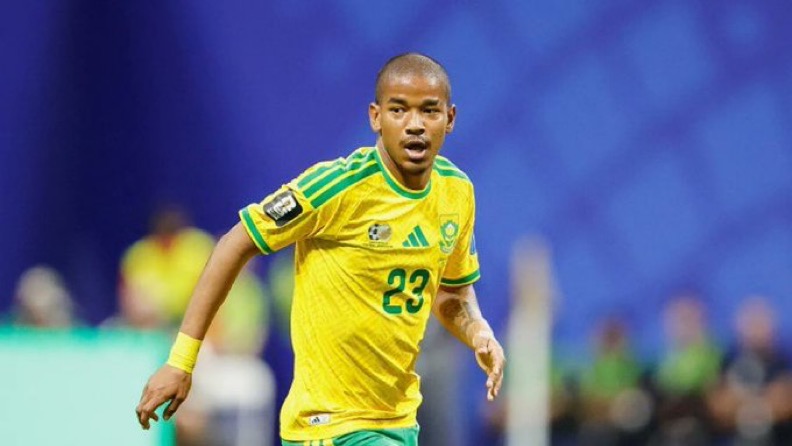
VANCOUVER, Canada — The promise of the 2026 FIFA World Cup for Colombia ended not with a whimper, but with a chilling, systemic breakdown of safety and security. In the days following their heart-wrenching penalty shootout defeat to Switzerland in the Round of 16 at BC Place, the national team’s journey has been eclipsed by the plight of midfielder Jáminton Campaz. The 26-year-old star, who stepped up to represent his nation on the world’s greatest stage, now finds himself in the crosshairs of violent, anonymous actors, forcing him into a state of self-imposed exile.
The fallout from the July 7 match a scoreless draw that culminated in a 4-3 penalty loss has transformed from mere sporting disappointment into a genuine human rights crisis. Campaz, who played 55 minutes of the match and successfully converted his attempt during the high-stakes shootout, has become the scapegoat for a nation’s collective heartbreak. Refusing to join his teammates on the return flight to Bogotá, Campaz has reportedly gone "off the grid," a move dictated by the gravity of the death threats flooding his social media channels and private communications.
The Specter of 1994: A Nation Confronts Its Darkest Hour
The panic surrounding Campaz is not unfounded; it is rooted in one of the most infamous episodes in the history of global sports. In 1994, Colombia defender Andrés Escobar was murdered in Medellín, gunned down in an act of retribution just days after scoring an own goal that knocked his country out of the World Cup in the United States.
For the modern Colombian generation, that tragedy remains a profound scar. When death threats began to surface against Campaz accusing him of squandering the match the collective consciousness of the footballing nation recoiled. The parallels to Escobar are being drawn not by the media, but by the players, families, and authorities who fear that the toxic intersection of fanaticism and violence has once again found a foothold in the game.
A Player’s Desperate Plea for Humanity
As the vitriol reached a fever pitch, Campaz took the brave, albeit isolating, step of addressing his tormentors publicly. In a statement posted to his Instagram account, his words served as a sober indictment of the hatred that has come to define his tournament experience.

"My Colombia, please let us never lose sight of respect," Campaz wrote. "We may hold different views or feel frustration and sadness, but no passion justifies hatred or living in fear."
His message was that of an athlete who understands the burden of the jersey but refuses to accept that his professional performance entitles others to threaten his life. Campaz recounted the lifelong dream he held to represent his nation, hearing the anthem play, and competing on the World Cup pitch. "I deeply regret not being able to bring you the joy we all hoped for," he continued, "but I want you to know that there was never a lack of dedication, commitment, or love for this jersey. I gave everything I had on the pitch, and I would do it a thousand times over for my country."
The Institutional Failure to Protect
The inability of Jáminton Campaz to safely return to his home country represents a profound failure of the sport's protective infrastructure. While the Colombia Football Federation (FCF) has issued a statement condemning the violence and requesting an investigation by the Attorney General’s office, critics argue that the institutional response remains reactive rather than preventive.
The Federation’s statement emphasized that "Football must be a space for unity, respect, and hope never a stage for hatred, intimidation, or violence." However, for Campaz, who remained in hiding as of the weekend, these words offer little immediate comfort. His decision to bypass the flight from Vancouver to Bogotá alongside stars like James Rodríguez and Juan Fernando Quintero suggests a profound lack of trust in the security provided to him. Whether he remains in Canada, has sought refuge in the United States, or has diverted to his club residence in Argentina, the fact remains that a national hero is currently unable to tread on his own soil.
The Anatomy of the Match: Facts Over Fanaticism
To understand the illogical nature of the rage directed at Campaz, one must examine the reality of the match. The Round of 16 encounter between Colombia and Switzerland was an intense, tactical battle of attrition. Colombia, managed by Néstor Lorenzo, pushed hard through 120 minutes of play. While Campaz had two shots and maintained a pass accuracy rate of 80% during his time on the pitch, he was one of many players tasked with breaking down a stubborn Swiss defense led by Granit Xhaka and Manuel Akanji.
In the shootout, Campaz was actually one of the successful converters. The pressure, however, eventually mounted on teammates Davinson Sánchez and Cucho Hernández, whose misses proved decisive. The reality that Campaz successfully fulfilled his duty under the most extreme pressure imaginable seems irrelevant to the anonymous voices calling for his blood. It highlights a dangerous psychological phenomenon in sports fandom: the inability to separate the complex reality of a team loss from the simplified, targeted hatred toward a single individual.
A Broader Crisis in Global Sports
The situation with Jáminton Campaz is part of a growing, alarming trend in global athletics: the normalization of online abuse. From European leagues to the World Cup, players are increasingly subjected to death threats, racial abuse, and harassment the moment their performance falls below a fan’s unrealistic expectation.
Social media platforms, often quick to claim they are "addressing" abuse, frequently fail to provide a barrier between the player and the threat until it is far too late. For Campaz, the threat is not "virtual"; it is existential. The digital age has brought the fan into the private life of the player, and for those who leverage that proximity to spread terror, there are currently few deterrents.
Moving Forward: Is Change Possible?
As the 2026 World Cup continues toward its conclusion, the case of Jáminton Campaz serves as a dark chapter that threatens to undermine the spirit of the tournament. The FIFA leadership, national associations, and local law enforcement must grapple with a difficult question: how do you protect a player when the very fans who celebrate them on Tuesday are the ones threatening them on Wednesday?
For now, the Colombian footballing community is left in a state of suspended animation. The joy of having reached the Round of 16 has been replaced by the shame of having to protect one of their own from their own compatriots. Campaz’s future in the national team remains uncertain—not because of his ability on the pitch, but because of the environment that now awaits him.
His teammates have largely remained silent, perhaps fearing that any statement could further inflame the situation or make them the next targets of the toxic fan base. It is a lonely existence for a 26-year-old athlete who, having achieved the pinnacle of his career, is now forced to delete his life to ensure his survival.
Until the Colombian authorities can demonstrate that they have the capability to identify and prosecute those issuing these threats, Jáminton Campaz will remain a symbol of the dangerous fragility of sports culture. He stands as a reminder that behind the jerseys, the national anthems, and the statistics, there are human beings—and that the game itself is not worth the life of a single one of them. The world watches, waiting to see if Colombia can provide the safety its son deserves, or if he will remain a tragic outlier in the history of a sport that promised joy but delivered only fear.
In an era of rampant online toxicity, what responsibility do you think national soccer federations should take in safeguarding their players' safety and privacy following high-profile defeats?
Share Your Thoughts In The Comment