MEXICO CITY — Colombia signaled their tournament intent with a dominant 3-1 victory over FIFA World Cup debutants Uzbekistan at the historic Estadio Azteca. In a performance that balanced technical finesse with the tactical maturity expected of a seasoned tournament side, the South American giants controlled large portions of the Group K opener. While the final scoreline favored Los Cafeteros, the match provided a compelling narrative of contrast: the composed, systematic approach of a team with knockout-stage ambitions versus the fearless, high-energy spirit of a debutant nation stepping onto the global stage for the very first time.
A Tactical Masterclass at the Estadio Azteca
The Estadio Azteca, a venue etched into the folklore of World Cup history, provided an intimidating backdrop for Uzbekistan’s inaugural match. From the opening whistle, Colombia established a high-pressing rhythm that forced the debutants to sit deep within their own half. Néstor Lorenzo’s side prioritized ball retention and vertical transitions, utilizing the width of the pitch to stretch the Uzbek defensive block. Despite enjoying the lion's share of possession, Colombia found it challenging to penetrate a disciplined backline that remained compact and communicative under the intense pressure.
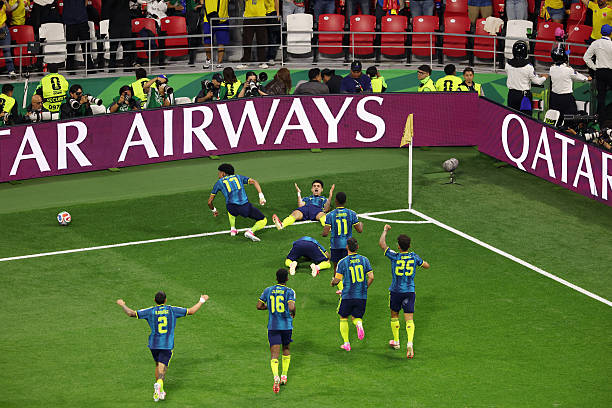
The breakthrough, when it arrived, was a testament to Colombia's superior technical execution. In the 40th minute, Jefferson Lerma—acting as the creative hub in the center of the park—spotted the intelligent run of Daniel Muñoz. Lerma delivered a pinpoint, lofted pass that bypassed the entire Uzbek defensive line, landing perfectly for Muñoz. Without a second of hesitation, Muñoz executed a composed, clinical one-touch volley that rippled the back of the net. The goal was a tactical validation for Lorenzo, who had spent the opening period encouraging his wing-backs to overload the wide areas.
The Historic Resurgence
Entering the second half, the atmosphere inside the stadium shifted. Uzbekistan, despite trailing, displayed a level of tactical evolution that caught Colombia off guard. Fabio Cannavaro’s side emerged from the dressing room with a renewed sense of purpose, abandoning their defensive shell to challenge the Colombian transition game. This newfound aggression bore fruit in the 60th minute, creating a moment that will be celebrated in Uzbek sporting history for generations.
The sequence began with a ferocious, long-range volley from Uzbek captain Eldor Shomurodov. Colombian goalkeeper Camilo Vargas, caught slightly out of position, could only parry the powerful effort into the heart of the six-yard box. Abbosbek Fayzullaev, exhibiting the instinct of a seasoned poacher, reacted faster than any defender to head the rebound home. The stadium erupted as the debutants leveled the score, marking the first-ever World Cup goal for the Central Asian nation. It was a tangible reward for their resilience, signaling that they were not merely here to make up the numbers, but to compete at the highest level of international football.
Colombia’s Clinical Final Third
Parity, however, proved short-lived. Colombia’s response to the equalizer was swift and ruthless—a hallmark of their elite status in the CONMEBOL region. Néstor Lorenzo’s side did not panic; instead, they intensified their vertical passing lanes. Just five minutes after conceding, a lightning-fast counter-attack sparked by the tireless Gustavo Puerta tore through the heart of the Uzbek midfield. Puerta found Luis Díaz in space, and the Liverpool winger displayed his world-class quality by side-stepping a recovering defender before burying a low, clinical strike into the bottom corner.
The goal sapped the energy from the Uzbek recovery effort, forcing them to push higher up the pitch in search of a second equalizer. This pursuit left them vulnerable to the counter-attack, a trap that Colombia sprung with precision in the final moments of stoppage time. Substitute Jaminton Campaz, introduced to add fresh legs, timed his run perfectly to meet a cross from Cucho Hernández. Campaz rose above his marker to power home a header, effectively putting the contest beyond reach and confirming a 3-1 victory for the South American side.
Group K Standings and the Road Ahead
This win places Néstor Lorenzo’s side in a commanding position in Group K. By securing three points in their opener, they immediately capitalized on the earlier 1-1 draw between Portugal and the Democratic Republic of the Congo, putting themselves at the top of the table. For a team with eyes on a deep run into the tournament, the result at the Azteca was exactly the confidence-booster required.
For Uzbekistan, the match was a complex mixture of disappointment and pride. While the loss hurts their immediate point tally, the performance showed a level of character that will serve them well in the remainder of the group stage. The test now becomes one of psychological recovery; they must prepare for a high-stakes fixture against Portugal in Houston on June 23, where they will look to harness the same attacking spirit they displayed in Mexico City. Colombia, meanwhile, can take a moment to savor a successful start before turning their focus toward their next objective: a pivotal encounter against the DR Congo in Guadalajara on June 28. If they continue to blend clinical finishing with tactical control, Colombia will undoubtedly remain a formidable hurdle for any opponent in this tournament.