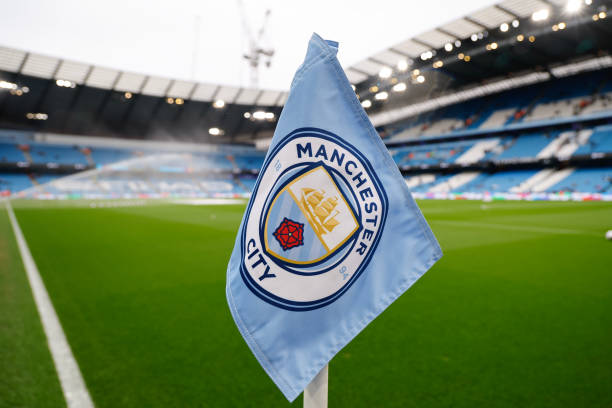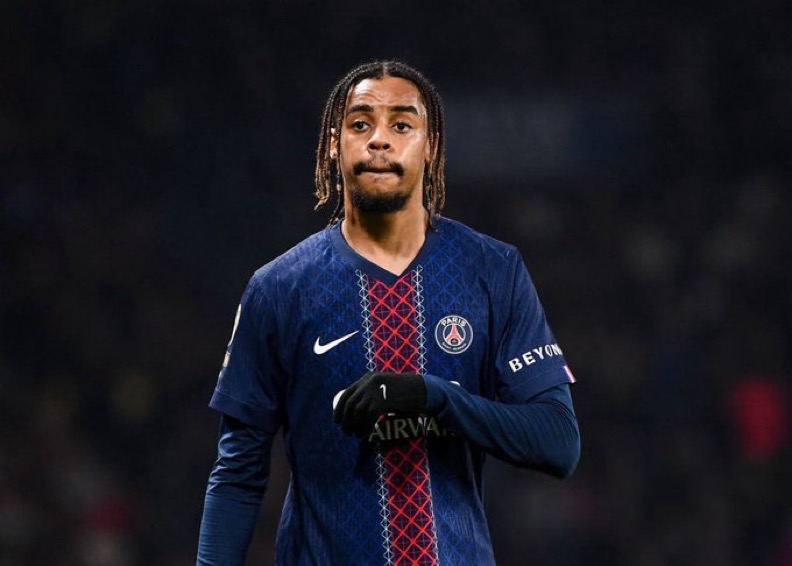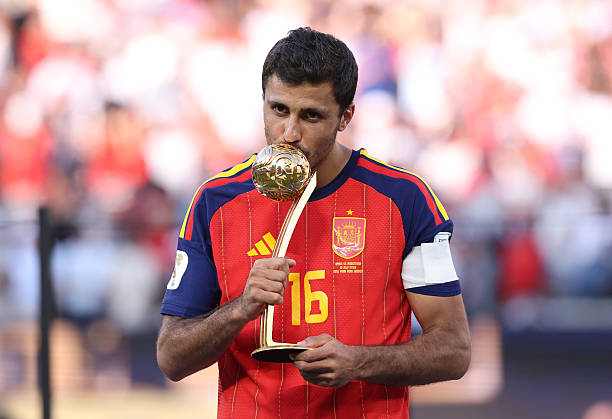
MANCHESTER — FC Barcelona has formally opened negotiations with Manchester City by submitting an initial transfer proposal of approximately €45 million plus performance add-ons for Ballon d'Or winner Rodri.
However, the opening opening gambit has been firmly rebuffed by the English powerhouse, who regard the valuation as nowhere near acceptable to initiate formal sales negotiations.
Manchester City executives maintain that no meaningful club-to-club talks are currently under way, maintaining that a serious bid reflecting the player's true market capital has yet to be presented.
City officials have communicated to their Catalan counterparts that a figure in the region of €80 million will be required to even consider sanctioning the departure of the 30-year-old Spain international.
Despite the wide financial chasm between the two continental heavyweights, the player has privately signaled a strong preference for a move to the Spotify Camp Nou, setting the stage for a dramatic transfer negotiation as the summer deadline approaches.
Tactical Alignment and Barcelona’s Rebuilding Ambitions
Barcelona’s pursuit of Rodri reflects a calculated strategic effort to reinforce their central midfield infrastructure following significant squad adjustments and injury setbacks.
The Catalan side view the 2024 Ballon d'Or recipient as the ultimate anchor for their possession-based tactical system.
The move holds immense personal appeal for the Spanish international, who is drawn to Barcelona's footballing identity and a dressing room environment that already features eight of his international teammates from Spain’s recent 2026 FIFA World Cup-winning squad.
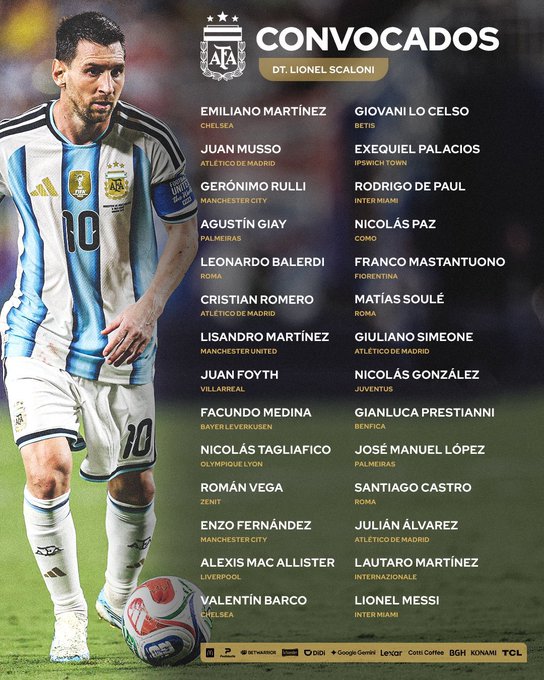
Rodri’s desire to return to his homeland follows outstanding international performances in North America, where he captured the Golden Ball award as the tournament's best player after guiding Spain to victory over Argentina in the final.
Barcelona’s urgency in securing an elite central midfielder has been further intensified by a major injury blow to Dutch star Frenkie de Jong, who suffered a torn medial collateral ligament in his right knee that will sideline him for the opening months of the 2026–27 campaign.
Having already made major investments this summer by signing wingers Anthony Gordon from Newcastle United and Karim Adeyemi from Borussia Dortmund, Barcelona is prioritizing the addition of an established defensive general to control match tempo and provide structural balance to a newly revamped attacking unit.
Manchester City’s Tactical Evolution Under Enzo Maresca
For Manchester City, the potential departure of Rodri coincides with a broader institutional transition following the departure of legendary manager Pep Guardiola after a trophy-laden decade in charge.
With incoming head coach Enzo Maresca assuming command, City is undergoing its most comprehensive structural overhaul in a generation.
The departures of long-serving stalwarts such as Bernardo Silva and John Stones have already signaled the end of an era, forcing the club to rebuild its core identity.
To future-proof their central midfield, City executed a massive £116 million acquisition of Elliot Anderson from Nottingham Forest, while actively pursuing 18-year-old Moroccan international prodigy Ayyoub Bouaddi from Lille.
From a roster management perspective, City administrators face a complex economic calculus regarding Rodri's long-term future.
With the midfielder’s contract expiring in 2027 and no indications of a willingness to extend his terms, City must balance the tactical value of retaining him for another season against the financial risk of seeing his asset value depreciate as he approaches the final year of his deal.
While keeping Rodri would provide vital stability as Maresca settles into the dugout, selling him for a high valuation would allow City to reinvest in younger, dynamic central midfielders better suited to the physical demands of a high-tempo pressing system.
Contractual Amortization, Medial Collateral Ligament Tears, and Market Valuations
Understanding the underlying mechanics of this European transfer saga requires examining the financial rules, medical considerations, and valuation models governing modern elite football.
Contractual amortization is the accounting method by which football clubs spread the acquisition cost of a player's transfer fee evenly across the duration of their multi-year contract.
When a club purchases a player for €80 million on a four-year contract, the annual accounting charge on the club's balance sheet is registered as €20 million per year.
For Barcelona, operating under strict La Liga financial fair play controls, balancing initial transfer fee outflows with long-term wage bill limits remains a critical administrative hurdle that dictates their initial, conservative €45 million opening bid.
A medial collateral ligament tear involves a structural sprain or rupture to the primary stabilizing ligament running along the inner side of the knee joint.
Unlike anterior cruciate ligament injuries, which often require extensive surgical reconstruction and up to a year of rehabilitation, medial collateral ligament injuries are frequently managed through targeted non-surgical physical therapy or targeted intervention, though recovery still requires several months of strict off-field conditioning.
Player market valuation models evaluate a athlete's financial transfer worth using a combination of age, remaining contract length, injury history, position, and international prestige.
While Rodri’s age of 30 and recent recovery from minor back surgery following the World Cup reduce his long-term resale potential, his status as a Ballon d'Or winner, World Cup Golden Ball recipient, and premier deep-lying playmaker justifies Manchester City's firm €80 million asking price in a market where elite central midfielders command historic transfer premiums.
Rodri’s Rise from Atletico Madrid to Global Supremacy
The journey of Rodri from a disciplined La Liga prospect to the undisputed benchmark for global defensive midfielders spans nearly a decade of domestic and international success.
-
July 2019: Manchester City trigger Rodri’s €70 million release clause to acquire him from Atletico Madrid, positioning him as the long-term successor to Fernandinho in Pep Guardiola's midfield system.
-
May 2023: Rodri scores the winning goal in the UEFA Champions League final against Inter Milan, securing a historic treble for Manchester City and cementing his status as the elite central midfielder in European football.
-
September 2024: Rodri suffers a serious anterior cruciate ligament injury early in the 2024–25 season, testing Manchester City's tactical depth and highlighting his indispensable role in their structural setup.
-
October 2024: Rodri is officially awarded the 2024 Ballon d'Or in Paris, becoming the first defensive midfielder in decades to claim football's highest individual honor.
-
July 2026: Rodri delivers a masterclass series of performances at the 2026 FIFA World Cup, winning the Golden Ball award while captaining Spain to victory over Argentina in the final.
-
August 2026: Barcelona submit an opening bid of €45 million plus add-ons, which Manchester City reject while holding firm to their €80 million evaluation.
Structural Balance in La Liga and the English Premier League
The ultimate resolution of the Rodri transfer negotiations carries profound implications for the competitive balance of both Spanish and English domestic football.
In La Liga, acquiring a world-class midfielder of Rodri's caliber would instantly elevate Barcelona's ability to challenge Real Madrid for domestic dominance and re-establish the club as a primary contender for the UEFA Champions League title.
Rodri’s elite ball retention, press resistance, and positional discipline would provide structural security for Barcelona’s younger talents, allowing their attacking players to operate with complete freedom knowing the central third of the pitch is anchored by a proven champion.
In the English Premier League, Rodri's departure from Manchester City would mark a definitive end to the tactical era that dominated English football for the better part of a decade.
For opposing title contenders, seeing City part ways with their primary midfield engine opens a rare window of vulnerability during a period of managerial transition.
However, if City successfully leverage the proceeds of an €80 million sale to assemble a younger, more physical midfield unit under Enzo Maresca, the short-term loss of an aging star could accelerate a successful generational transition that maintains City's long-term dominance at the summit of the game.
Career Longevity and European Transfer Market Dynamics
The ongoing transfer dispute between Barcelona and Manchester City highlights broader international trends regarding player career management, physical load sustainability, and the economic hierarchy of European football.
From a player longevity perspective, the transition from the intense, relentless physical demands of the English Premier League to the more tactical, control-oriented environment of Spanish La Liga represents an attractive pathway for elite players entering their thirties.
Following years of heavy match loads across domestic leagues, continental tournaments, and international competitions, moving to a league with lower physical transitions can significantly extend a top-tier player's competitive career at the highest level.
On the broader continental stage, the negotiations reflect the persistent rivalry between established Spanish institutions and the immense financial strength of top-flight English clubs.
While English teams command unprecedented television rights revenues that allow them to demand premium prices for their core stars, traditional European giants like Barcelona retain unmatched prestige and geographic appeal for Spanish and Latin American players.
As deadline day approaches, the outcome of this €80 million valuation battle will demonstrate whether Barcelona's institutional pull can overcome Manchester City's financial resolve, finalizing one of the most consequential transfers of the modern era