TORONTO — The 2026 FIFA World Cup opener at BMO Field in Toronto marked a seminal moment in Canadian soccer history. On June 12, 2026, Canada secured their first-ever point in the tournament’s history, battling to a hard-fought 1-1 draw against a disciplined Bosnia and Herzegovina side. In front of a passionate home crowd of over 43,000, the co-hosts demonstrated the tactical evolution of their squad under head coach Jesse Marsch, proving that they are a team capable of responding to adversity on the global stage.
Early Setback and Bosnian Discipline
The match began with high intensity as both sides looked to establish control in the opening minutes. While Canada initially dictated the tempo through fluid midfield transitions, Bosnia and Herzegovina relied on their defensive structure and clinical execution from set pieces. The visitors struck first in the 21st minute; a dangerous in-swinging corner kick from the right flank found Sead Kolašinac, whose headed flick-on created chaos inside the Canadian penalty area. Jovo Lukić was the quickest to react, nodding the ball home to give the Europeans an early 1-0 advantage.
The goal served as a shock to the system for the hosts, but Canada’s response was immediate and focused. For the remainder of the first half, the Canadians dominated possession, utilizing the width provided by Richie Laryea and Tajon Buchanan to stretch the Bosnian defense. Despite creating several high-quality scoring chances, Canada found itself frustrated by the resolute Bosnian goalkeeper, Nikola Vasilj, and a backline that defended with exceptional discipline. Heading into the halftime break, Canada held the statistical edge, but the scoreline remained in favor of the visitors.
The Second Half: Persistence and the Larin Factor
The second half mirrored the first, with Canada continuing to press forward in search of an equalizer. Coach Jesse Marsch’s tactical adjustments were clear: he demanded a higher defensive line and more aggressive movement in the final third. As the match approached the final 20 minutes, the energy in BMO Field reached a fever pitch, with every Canadian attack met by an overwhelming roar from the home supporters.
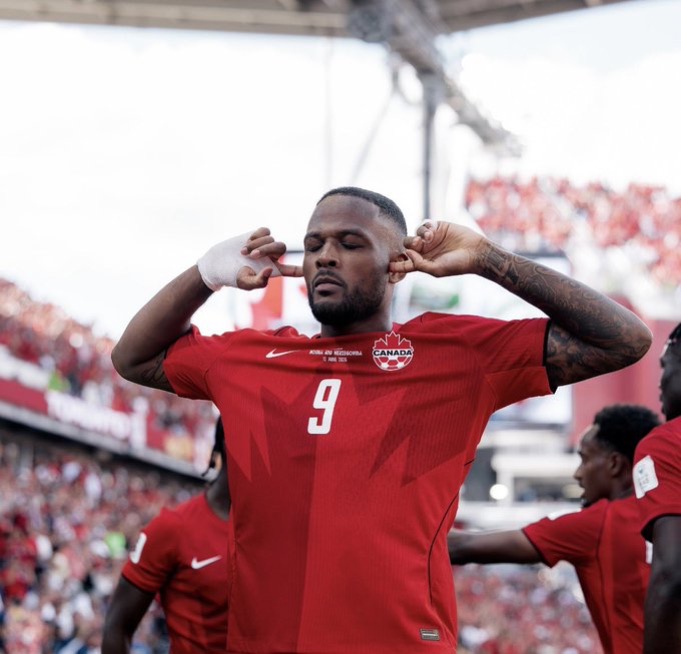
Recognizing the need for a fresh spark, Marsch turned to his bench, introducing Cyle Larin in the 76th minute.The substitution proved to be a masterstroke of coaching intuition. Just two minutes after stepping onto the pitch, Larin made an immediate impact. In the 78th minute, a well-orchestrated attacking sequence allowed Larin to find space inside the penalty area. He capitalized on the opportunity, firing a clinical, right-footed strike into the net to level the score at 1-1. The goal was more than an equalizer; it was a release of years of anticipation, marking Canada’s first-ever goal in a World Cup finals match and securing a historic result for the nation.
Defensive Resilience and Tournament Implications
The closing stages of the match were defined by desperation from both sides. Canada continued to press for a winner, with Cyle Larin coming close again in stoppage time, while Bosnia and Herzegovina looked to exploit the gaps left by the Canadian surge. Despite the late pressure, both defenses held firm. The final whistle confirmed a 1-1 draw, a result that reflected a balanced tactical encounter.
Statistics underscored Canada's command of the match, as they finished with 61% possession and demonstrated superior control in the middle of the park. While the co-hosts were clearly aiming for a victory to launch their campaign, the draw provides a critical foundation as they look ahead to their subsequent matches against Qatar and Switzerland. For Bosnia and Herzegovina, the result highlighted their ability to execute a game plan against a high-pressing opponent.
For Canada, the match represents a significant milestone in their soccer journey. Having navigated past campaigns without securing a result, this first point is a testament to the growth of the game domestically and the increasing quality of the national team’s core. The atmosphere at BMO Field was a reminder of the massive impact the co-hosting duties have had on the sport's profile in the country. As the group stage progresses, Canada will look to build on this performance, bolstered by the knowledge that they can compete with—and score against—disciplined international opposition in the world’s most prestigious tournament.