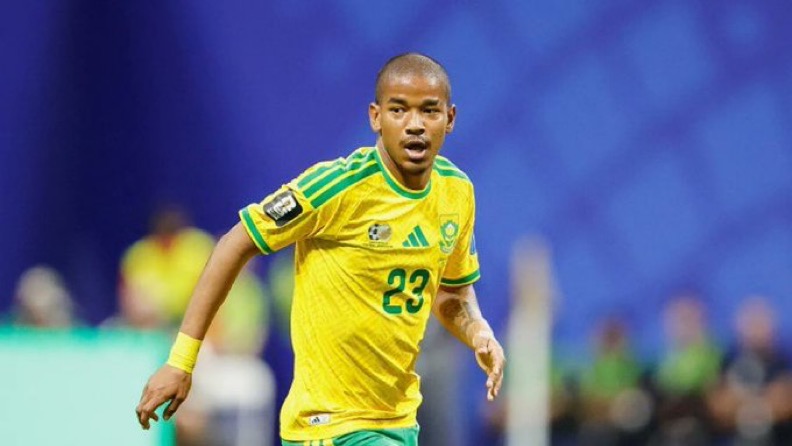
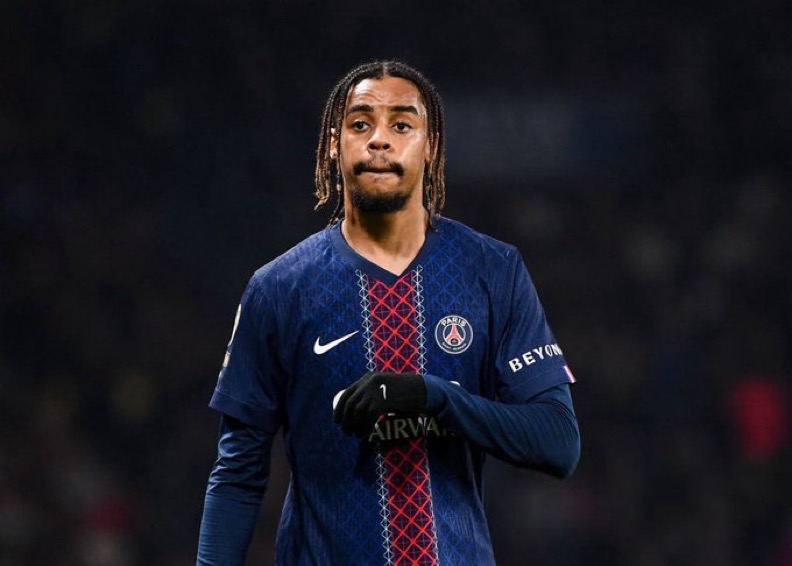
LAGOS, Nigeria — For many football fans, Moses Simon is a household name—the explosive winger known for his pace, precision, and consistency on the international stage. Currently plying his trade for Paris FC in France and a cornerstone of the Nigeria national team, Simon’s journey to the top of European football is often viewed through the lens of glamour and achievement. However, a recent, candid revelation has pulled back the curtain on the harsh, often overlooked realities faced by young talents in the Nigerian domestic league.
In a deeply personal interview with Urban Dwell Sports this July, the 30-year-old Super Eagles winger opened up about the systemic challenges he endured as a budding player—specifically, the devastating impact of tribalism early in his career. His account has sparked a national conversation about meritocracy in Nigerian football, while the club involved has firmly defended its institutional integrity.
The Trial of Faith: A Three-Month Odyssey
Simon’s revelation centers on his time as a young trialist at the legendary Enugu Rangers International FC. According to the winger, he spent an grueling three months with the club, training daily and proving his capabilities against a backdrop of financial uncertainty.
“I went to Rangers and trained with them for three months,” Simon recounted. “I wasn’t signed, but I was training with them. In fact, I was the captain of the screening team.”
During this period, Simon’s survival was as much a battle as his football performance. He spoke of surviving on minimal sustenance and enduring the mental pressure of constant turnover, where fellow trialists were released in batches of 20 or 30. Despite the instability, Simon’s consistency set him apart, earning him the admiration of club supporters who reportedly inquired about the “small one” who seemed to be a permanent fixture in the training sessions.
The Allegation of Tribalism
The turning point in Simon’s narrative, and the most contentious part of his revelation, came when he alleged that his eventual dismissal was not a reflection of his skill, but of his ethnicity.
“That year, I was dropped, not because of my game. That was just tribalism,” he claimed.
Simon alleged that while he was left unsigned despite months of dedication and leadership on the pitch, another player—whose identity he has since forgotten—joined the club and was offered a professional contract after just one week. When seeking an explanation for why he was overlooked, Simon stated he was told it was because he was from the North, while the successful trialist was Igbo.
“I never told anyone this story before, but it’s a disgrace,” Simon said. “They said it was because you are from the North.”
Enugu Rangers’ Official Response
The allegations, which surfaced on July 10, 2026, prompted a swift and unequivocal response from Enugu Rangers. The reigning Nigeria Premier Football League (NPFL) champions, an institution with over five decades of history, issued an official statement signed by their General Manager/CEO, Amobi Ezeaku.
The club categorically rejected the claims of ethnic bias. “While we respect every player’s right to recount his personal journey, it is important to clearly state that Rangers International FC has never maintained, and does not maintain, any policy of discrimination based on ethnicity, tribe, religion, or place of origin,” the statement read.
Rangers emphasized their status as a "national institution," pointing out that while they are proudly rooted in Enugu and the South-East, their roster and staff have historically represented every corner of Nigeria.
“The club’s recruitment philosophy has always been based on footballing ability, character, discipline, and commitment, not ethnic identity,” the club maintained. “Thousands of players have passed through Rangers over the years. Some earned contracts; others did not. Such decisions are part of football and are influenced by numerous sporting, technical, and administrative considerations.”
The club reiterated its commitment to professionalism, meritocracy, and social inclusion, emphasizing that talent remains the ultimate criterion for opportunity at the Never Say Die institution.
A Journey Forged in Sacrifice
Regardless of the circumstances surrounding his departure from Enugu, the experience serves as a pivotal chapter in what would become a remarkable career. Simon’s interview revealed that his trials in Enugu were not his only struggles; he spoke of a life defined by menial jobs, from farming in Kaduna to selling tomatoes and fish to sustain himself while pursuing his education and football dream.
These hardships clearly fortified the player who would eventually secure a breakthrough with the GBS Academy before moving to Ajax, AS Trenčín, and eventually becoming a mainstay in the Belgian and French leagues. With over 400 club appearances and nearly a decade of service to the Super Eagles, Simon’s career serves as a testament to perseverance.
A Broader Conversation for Nigerian Football
The debate sparked by Simon’s comments highlights a broader, often sensitive dialogue within the Nigerian sporting ecosystem regarding the intersection of identity and professional opportunities. For many young athletes, the path to professional status is fraught with hurdles that go beyond the 90 minutes of gameplay.
By bringing his story to light, Simon has not only shared a piece of his personal history but has also forced a public reflection on the importance of transparency in player recruitment. Whether his experience was an isolated incident or part of a larger systemic issue, the discourse surrounding it underscores a shared goal for the future of Nigerian football: ensuring that when a player steps onto the field, their talent, character, and hard work are the only factors that define their future.
As Moses Simon continues to represent Nigeria at the highest levels of the game, his journey remains a powerful reminder of the resilience required to overcome rejection—and the importance of fostering an environment where footballing talent, regardless of origin, is given the platform it deserves.