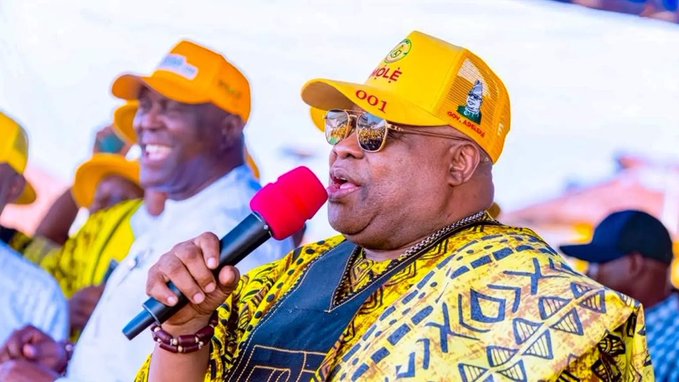
Oyo State Governor and Allied Peoples Movement presidential candidate, Seyi Makinde, has rejected proposals to restore Nigeria’s petrol subsidy, arguing instead that the country should reduce fuel costs by changing the way crude oil supplied to domestic refineries is priced.
Makinde made the proposal on Monday in Abuja while speaking at the commissioning of the APM presidential campaign office, where he presented his position as an alternative to the subsidy debate that has become an important issue ahead of the 2027 presidential election.
Rather than returning to what he described as the old subsidy system, Makinde said Nigeria should ensure that crude produced in the country and supplied to local refineries receives a pricing treatment that reflects Nigeria's position as an oil-producing nation.
His argument centres on where support for lower petrol prices should enter the petroleum value chain. Instead of using government intervention at the point where petrol reaches consumers, he wants the benefit to be incorporated earlier, through the price at which crude is supplied to domestic refineries.
The proposal places Makinde on a different side of the growing political debate over how Nigeria should manage petrol prices after the removal of the subsidy in 2023.
Makinde Says His Proposal Is Not a Return to Subsidy
Makinde sought to draw a clear distinction between his proposal and a conventional fuel subsidy.
He said some Nigerians had interpreted his recent comments on petrol pricing as support for restoring the subsidy, but maintained that this was not his position.
According to him, the central issue is whether crude supplied to Nigerian refineries should be priced as though it had been produced outside the country and transported into Nigeria.
Using a comparison with locally produced food, Makinde argued that a community producing its own food should not have to pay a price that assumes the food travelled from another part of the world.
He applied the same reasoning to crude oil, saying Nigeria's petroleum resources should generate a direct and measurable benefit for Nigerians.
The governor said the benefit should be incorporated into the system through domestic crude pricing rather than through what he called an opaque intervention at the petrol pump.
That distinction is central to his argument: rather than asking government to continually spend money to hold down the retail price of petrol, the proposed approach would seek to reduce one of the costs feeding into the final price before the refined product reaches consumers.
Proposal Comes Amid Renewed 2027 Subsidy Debate
The issue has become increasingly prominent as political parties and presidential hopefuls position themselves ahead of the 2027 general election.
President Bola Tinubu announced the removal of petrol subsidy during his inauguration on May 29, 2023, fulfilling a major campaign promise.
The decision brought an immediate increase in the cost of petrol and contributed to higher transportation and living costs. The Federal Government has nevertheless maintained that the reforms have produced important economic benefits.
More than three years after the announcement, the political argument over the policy remains unresolved.
Former Vice-President Atiku Abubakar, who is also seeking the presidency in 2027, has proposed bringing back a form of subsidy as part of his approach to reducing the pressure of petrol prices on Nigerians.
Makinde has rejected that approach and instead wants the country to reconsider the pricing structure behind domestic petroleum products.
The disagreement illustrates an increasingly important distinction in the 2027 campaign: while some political figures are focusing on restoring or modifying subsidies, others are advocating changes to the underlying pricing structure.
Makinde Wants Domestic Refineries to Receive Cheaper Crude
At the centre of Makinde's proposal is the price of crude oil allocated to Nigerian refineries.
Nigeria is an oil-producing country, but the cost structure surrounding petroleum products has long been influenced by crude pricing, refining, transportation, distribution, taxes and other expenses.
Makinde argues that Nigerians should not simply be presented with a final petrol price without being able to understand how that figure was reached.
He called for transparency across the petroleum value chain, including crude production and allocation, refining, transportation, distribution, taxes and retail margins.
Under his proposed approach, the government would not simply announce a lower petrol price. Instead, the system would be designed so that the benefit of Nigeria's crude resources is reflected earlier in the production process.
This, in Makinde's view, would make the eventual petrol price easier to understand and reduce reliance on interventions at the point of sale.
Governor Calls for Transparency in Petrol Pricing
Makinde has previously argued that Nigeria's fuel debate has focused too heavily on whether subsidy should exist rather than on whether the country's entire petrol pricing framework is appropriate.
In a newsletter published earlier in September, he argued that Nigerians should be able to understand the components used to determine petrol prices.
He identified issues such as the crude oil price benchmark, refining costs and margins, exchange-rate assumptions, logistics and distribution costs, taxes and levies as factors that should be clearly accounted for.
He also argued against making Nigerians pay higher petrol prices simply to eliminate the incentive for fuel smuggling into neighbouring countries.
According to the governor, the country should address border security rather than effectively transferring the cost of that challenge to consumers through higher petrol prices.
His latest comments therefore represent an extension of an argument he had already begun making publicly: that the question should not simply be whether Nigeria has a subsidy, but whether the pricing system allows citizens to receive a fair benefit from the country's natural resources.
Debate Puts Different 2027 Economic Proposals in Focus
Makinde's position comes as several presidential hopefuls and political groups offer different answers to Nigeria's fuel-price problem.
Atiku Abubakar has advocated a return to subsidy in a modified form, while Makinde is proposing cheaper domestic crude pricing as an alternative.
Another presidential contender, Accord Party chieftain and factional presidential candidate Gbenga Olawepo-Hashim, recently argued that petrol should sell for no more than N605 per litre under his proposed approach. He said the cost of domestic crude production, refining and transportation should be established before determining what Nigerians should pay.
The Independent Media and Policy Initiative has also criticised proposals for renewed fuel subsidies, warning that discounted crude allocations to domestic refineries could effectively transfer subsidy costs from direct government payments to cheaper crude supplied to refiners.
These competing positions show that the fuel subsidy debate has evolved since 2023.
The argument is no longer limited to whether the government should pay part of the cost of petrol. Political actors are increasingly debating where government intervention should occur, how crude supplied to local refineries should be valued, and how much Nigerians should ultimately pay at the pump.
Makinde Links Fuel Pricing to His “Reset Nigeria” Agenda
The governor presented the domestic crude proposal as part of his broader "Reset Nigeria" campaign.
He said the campaign was intended to create a wider national conversation about how Nigeria is governed and how its resources are used.
Makinde argued that Nigerians should be able to understand government decisions and know who benefits from public expenditure.
He also called for transparency throughout the petroleum value chain, from production and domestic crude allocation to refining, transportation, distribution, taxation and retail.
For Makinde, the issue is therefore larger than petrol prices alone. His argument is that Nigerians should be able to see how their country's oil wealth translates into economic benefits.
He said Nigeria's oil must provide a "real and measurable benefit" to Nigerians and that the system should allow citizens to understand how the final price of petrol is determined.
A Different Approach to the Subsidy Question
Makinde's proposal does not amount to an immediate promise that petrol prices would fall by a specific amount.
Instead, it is a proposal to alter the structure through which crude enters the domestic refining process.
That distinction is important because the final pump price of petrol is influenced by multiple components. Changing the price of crude supplied to domestic refineries would therefore represent one part of a wider pricing framework rather than a guarantee of a particular retail price.
Makinde has not presented a specific petrol price in the latest proposal. His focus has been on changing the framework and increasing transparency.
He said he wants Nigerians to know what they are paying for, who receives the payments and where inefficiencies increase the eventual price of petroleum products.
Why the Proposal Matters Ahead of 2027
Fuel prices remain a politically sensitive issue in Nigeria because changes in petrol costs affect more than motorists.
Transportation costs, household expenses and the operating costs of businesses can all be influenced by energy prices. That makes petrol pricing a major issue for voters and businesses alike.
The removal of subsidy in 2023 fundamentally changed the way petrol prices were determined and triggered a prolonged national debate about the economic consequences of the reform.
The renewed discussion ahead of 2027 means that fuel pricing is likely to remain part of the economic argument between presidential candidates.
Makinde's position provides voters with another option to consider: instead of returning to the previous subsidy arrangement, Nigeria could seek to reduce the cost of locally refined petrol by changing the price at which domestically produced crude is supplied to Nigerian refineries.
Whether such a framework would deliver the desired reduction would depend on how the policy is structured and how other components of the petroleum value chain are handled.
For now, Makinde is calling for Nigerians to judge the proposal as part of a broader discussion about the country's petroleum policy.
Makinde Says His Campaign Should Not Be Dismissed
At Monday's event, Makinde also addressed suggestions that his presidential campaign could be insignificant in the 2027 contest.
He recalled facing similar doubts when he first contested the Oyo State governorship, arguing that political expectations do not always accurately predict electoral outcomes.
He said dismissing his campaign would also mean dismissing the aspirations of Nigerians who want changes in how the country is governed.
His "Reset Nigeria" campaign, he said, should therefore extend beyond politicians and involve traders, farmers, workers, business owners, young Nigerians and other citizens affected by the country's economic challenges.
The fuel-pricing proposal is likely to remain one of the key economic elements of that campaign as the 2027 election approaches.
For Nigerians watching the developing debate, the major question will be whether competing proposals can move beyond political promises and demonstrate clearly how they would affect petrol prices, government finances, domestic refining and the wider economy.
For Makinde, the answer is not a return to the old subsidy system. It is a different pricing model in which domestic crude supplied to Nigerian refineries is treated differently and the entire petroleum value chain is made more transparent.