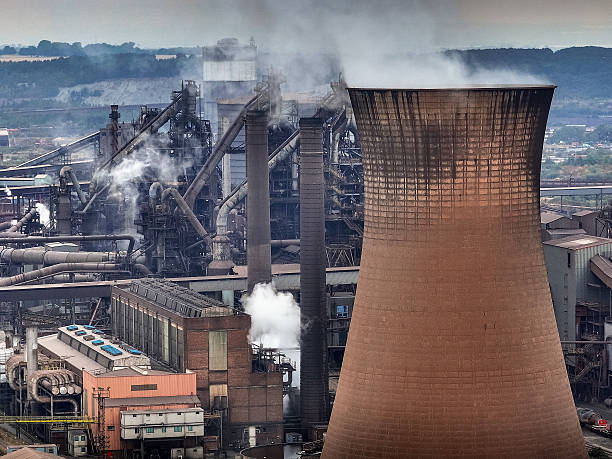
LONDON, UNITED KINGDOM — A major diplomatic dispute has erupted between London and Beijing following the British government’s decision to fully nationalize British Steel. The move has drawn sharp condemnation from the Chinese government, which stated it "firmly opposes and is strongly dissatisfied with the British government's decision."
The state intervention transfers the loss-making steel manufacturer into public hands—a policy the UK government maintains is necessary to protect thousands of industrial jobs and safeguard a "vital national capability." However, the timing of the nationalization introduces immediate geopolitical challenges, coming just days before the incoming administration takes office at Downing Street.
The decision marks a dramatic shift in the ownership structure of British Steel, which has been owned by China’s Jingye Group since 2020. While the UK government took administrative control of the primary operations in Scunthorpe last year, Jingye retained underlying ownership, creating a complex legal structure that limited the state’s ability to direct the company’s long-term future. By asserting complete public ownership, the British government has removed the Chinese conglomerate from the equation, sparking accusations of investment treaty violations and economic protectionism from Beijing.
Beijing Cites Treaty Violations and Infringement of Rights
The backlash from China’s Ministry of Commerce was swift and direct. In an official statement, Chinese authorities accused the UK government of overreaching under the guise of national security while ignoring the substantial capital investments Jingye Group had injected into the British economy.
Beijing argued that the forced takeover "seriously infringed upon Jingye's legitimate rights and interests and severely undermined the confidence of Chinese companies investing in the UK." Furthermore, the ministry called on Britain to "faithfully fulfil" its international legal obligations under the historic China–UK Bilateral Investment Treaty. Signed in 1986, this legally binding agreement was designed to promote and protect corporate investments between the two nations, providing a framework to prevent arbitrary asset seizures without fair compensation.
While the Chinese government stated it would monitor developments closely and actively support Chinese firms in protecting their rights, the ministry did not specify what countermeasures or legal actions might be taken. The escalating rhetoric threatens to strain Anglo-Chinese relations at a sensitive political juncture, forcing the incoming administration to balance national security priorities against the economic benefits of maintaining strong ties with the world's second-largest economy.
The Taxpayer Dilemma: Negotiation Collapse and the Cost of State Ownership
The UK government defended its intervention by framing it as a necessary step after private-sector talks broke down. A government spokesperson confirmed that extensive negotiations had taken place with Jingye Group but concluded that "it wasn't possible to reach an agreement that represented value to the taxpayer." Despite the friction, the spokesperson emphasized that London "highly values our relationship with China and remains open to Chinese investment" in non-strategic sectors.
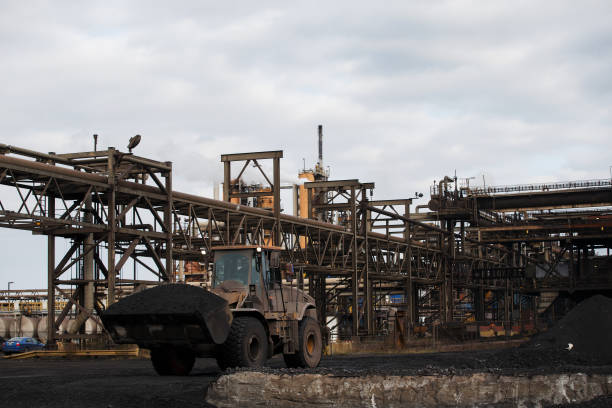
The financial reality of the Scunthorpe facility remains a significant challenge for British taxpayers. Prior to the takeover, Jingye Group reported that the business was losing an estimated £700,000 per day. However, recent findings from the National Audit Office (NAO) indicate that the actual operational drain is much higher, with the Scunthorpe steelworks costing the public purse approximately £1.3 million every single day.
Business Secretary Peter Kyle confirmed that the government would cover these substantial running costs "for the immediate future" to prevent an abrupt closure of the facility. Given this high daily cost, it is highly unlikely the state intends to manage the commercial operations permanently. Instead, the nationalization serves as a temporary measure to stabilize the asset while a broader restructuring plan is designed.
The question of financial compensation for Jingye Group remains unresolved. Small Business Minister Blair McDougall informed the House of Commons that the government plans to appoint an independent valuer in the autumn to assess the asset and determine any compensation due to the Chinese conglomerate—though he noted that the final assessed value "could be nil."
Industrial Strategy: Blast Furnaces, the G7, and the Green Transition
The underlying reason for the state intervention extends beyond immediate job preservation to encompass national economic sovereignty. The Scunthorpe plant directly employs around 2,700 workers and supports thousands of additional jobs across the domestic supply chain.
More importantly, the facility houses the UK's last remaining operational blast furnaces. If Scunthorpe were allowed to stop producing virgin steel, the United Kingdom would become the only member of the G7 group of leading economies without the domestic capability to manufacture steel from raw iron ore.
While the UK imports the majority of its steel from the European Union, the United States, China, and India, complete reliance on foreign supply chains is viewed as a significant strategic risk. The Scunthorpe plant produces specialized types of structural steel and rail tracks that are not manufactured anywhere else in the country—materials that are essential for Network Rail’s infrastructure upgrades and the domestic construction industry.
The long-term strategy for the British steel industry involves transitioning away from coal-fired blast furnaces toward Electric Arc Furnaces (EAFs), which recycle scrap metal into new steel products. EAFs are significantly cheaper to run and far less carbon-intensive, aligning with national net-zero targets. However, because the UK infrastructure sector cannot yet replace virgin steel with recycled alternatives for all applications, the government determined that Scunthorpe must be kept open as a bridge until domestic EAF alternatives are fully operational.
Historic Precedent and the Path Forward
The full nationalization of British Steel marks the first time the company has returned to complete state ownership since 1988, when it was privatized by Margaret Thatcher’s government. That privatization began a decades-long cycle of corporate restructuring, mergers, and foreign acquisitions that ultimately led to the recent ownership by the Jingye Group.
As the government takes full control of the blast furnaces, the immediate focus shifts to operational stabilization and minimizing the daily financial drain on the taxpayer. The incoming administration will face the complex task of managing this industrial transition, upgrading the site's technology, and addressing the diplomatic fallout with Beijing, all while trying to chart a sustainable, lower-carbon path forward for domestic manufacturing.