ABUJA — The Organisation of Petroleum Exporting Countries (OPEC) has issued a landmark projection, asserting that Nigeria and other African nations must mobilize approximately $92 billion in downstream refining investments by 2050. This massive capital commitment is identified as the critical path toward meeting the continent's accelerating fuel demand, fostering robust national energy security, and decisively ending a decades-long reliance on imported petroleum products that has historically hindered regional economic growth.
In its newly released World Oil Outlook 2026, OPEC emphasizes that while the African refining sector is finally entering a transformative phase of growth after a long period of stagnation, the current capacity remains alarmingly below the thresholds required to satisfy the continent's demographic and industrial expansion.
The Strategic Investment Roadmap
According to OPEC’s analysis, the path to energy self-sufficiency is segmented into two distinct financial phases, each serving as a building block for a more resilient downstream network:
-
Medium-Term Strategy (Before 2030): Africa is projected to require roughly $25 billion to finalize refining projects already in the pipeline or currently under active development. This phase focuses on leveraging existing projects to create immediate relief in product availability.
-
Long-Term Strategic Expansion (Post-2030): Beyond 2030, the scale of investment must broaden significantly. OPEC estimates that a further $67 billion will be necessary to develop new, large-scale refinery projects and expand existing facilities to keep pace with the continent's burgeoning population and industrialization requirements.
Nigeria and Angola: The Drivers of Downstream Growth
The report identifies Nigeria and Angola as the primary catalysts for Africa's next wave of refining expansion.Nigeria, in particular, is credited with a central role in this regional shift.
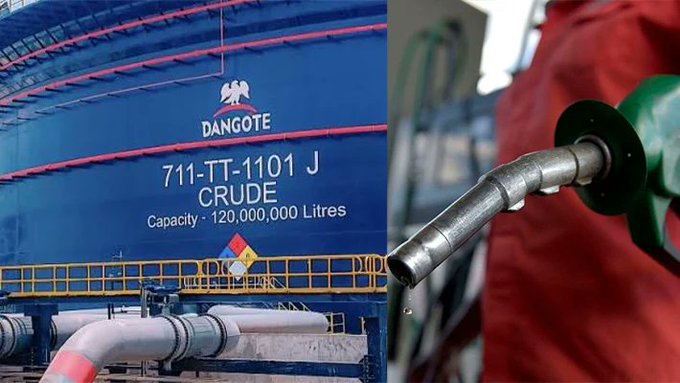
The commissioning and successful ramp-up of the Dangote Petroleum Refinery in Lekki, Lagos, has been characterized by OPEC as the most significant greenfield project in Africa over the past decade. The facility reached its full design capacity in February 2026, and its impact has been immediate: it has bolstered Africa's overall distillation capacity by approximately 8.2% compared to January 2025 and dramatically improved the continent’s secondary processing capability—an increase of 13.5% in the same timeframe.
Beyond the Dangote complex, the proposed 200,000 barrels per day (bpd) Akwa Ibom refinery, currently spearheaded by the BUA Group, is highlighted as a vital upcoming addition to Nigeria’s industrial landscape.These projects are crucial, as OPEC notes that Africa will need to add substantial capacity—projected at around 0.8 million barrels per day (mb/d) in the medium term—to even begin to close the gap between local production and rising consumption.
Addressing the Structural Deficit
Despite these headline-grabbing developments, OPEC cautions that the continent faces a persistent structural deficit. The organization warns that the pace of capacity additions, while significant, still lags behind the speed at which African demand is growing. Failure to execute planned projects—or the emergence of new delays in construction—could exacerbate this deficit, forcing nations to lean even more heavily on expensive, volatile international import markets.
To bridge this gap and successfully capture more value from domestic hydrocarbon resources, OPEC suggests that Africa must prioritize a shift in policy and financing logic:
-
Coordinated Policy Action: Harmonizing national energy policies to facilitate regional trade of refined products.
-
Expanded Capital Markets: Developing local and regional financial instruments that can attract long-term investment into complex industrial assets.
-
Public-Private Partnerships (PPPs): Creating frameworks that de-risk private investment in critical infrastructure.
-
Strengthened Infrastructure: Accelerating the development of the pipelines, storage terminals, and distribution networks necessary to move products from refining hubs to demand centers.
The 2050 Economic Cornerstone
As Africa’s industrial base grows, the ability to process crude oil domestically is set to become a defining feature of the continent's economic strategy. The transition from a structural demand center to a potential supply hub—especially in West Africa—offers a shield against the global supply chain shocks that have previously triggered fuel price volatility across the continent.
By embracing this $92 billion investment mandate, Nigeria and its peers are not merely building refineries; they are constructing the foundation for a more sovereign, stable, and industrially productive African future. For policymakers and investors alike, the message is clear: the cost of inaction is a continued reliance on external markets, whereas the potential of the downstream sector is the key to unlocking true regional energy independence.