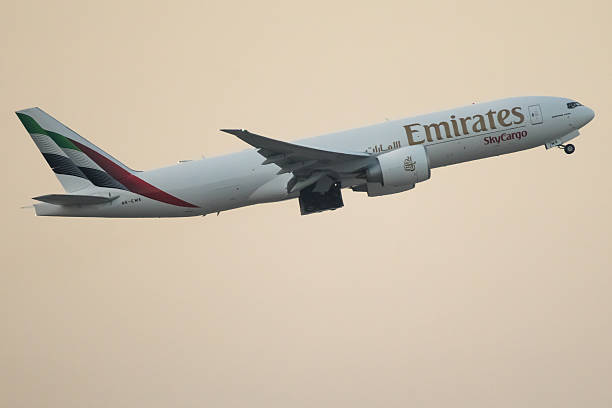
DUBAI — Emirates, the largest airline in the United Arab Emirates and the premier long-haul carrier of the Middle East, has officially integrated cryptocurrency payment options across its primary consumer booking channels.
The aviation giant confirmed that passengers can now utilize digital assets to purchase flight tickets, upgrades, and ancillary travel services settled in UAE dirhams through both the official Emirates website and mobile application.
The technological integration relies on the Crypto.com Pay merchant infrastructure, marking Emirates as the first full-service major network carrier in the Gulf region to establish a direct corporate gateway for virtual asset transactions.
The move reflects a deliberate commercial strategy to capture an expanding demographic of tech-savvy, digitally affluent travelers who prioritize decentralized financial tools, while simultaneously reinforcing Dubai’s overarching ambitions to establish itself as the premier global hub for the digital economy.
Strategic Commercial Objectives and Corporate Leadership Perspectives
The adoption of virtual asset settlement mechanisms represents a calculated effort by Emirates to modernize its payment infrastructure and cater to changing consumer behavior across international travel markets.
Speaking on the strategic vision behind the launch, Adnan Kazim, Deputy President and Chief Commercial Officer at Emirates, emphasized that today’s global consumers expect seamless, mobile-first financial interaction with primary service providers. Kazim noted that a growing segment of global travelers manages their personal wealth and travel planning entirely through smartphone ecosystems, requiring premium airlines to adapt their commercial interfaces to keep pace with modern digital habits.
Kazim also highlighted the rapid timeline of the rollout, pointing out that moving from the initial corporate memorandum to a live, production-grade payment system in less than twelve months demonstrates the agility of both organizations and the efficiency of local regulatory frameworks.
Representing the technical implementation partner, Eric Anziani, President and Chief Operating Officer of Crypto.com, characterized the partnership as a historic validation of Web3 infrastructure within mainstream corporate commerce. Anziani stated that enabling millions of global travelers to settle major long-haul flight itineraries with digital assets serves as a powerful testament to the forward-thinking regulatory and financial environment cultivated across the United Arab Emirates.
Expert Explanation: Understanding Crypto.com Pay, Settlement Mechanics, and Volatility Management
To evaluate the operational implications of Emirates’ adoption of virtual currency payments, it is essential to examine the underlying financial architecture that processes these transactions in real time.
A primary concern for traditional airlines accepting cryptocurrencies has historically been price volatility. Cryptocurrencies such as Bitcoin, Ethereum, or Solana can experience sharp intraday value fluctuations, which poses severe balance sheet risks for airlines operating on tight, capital-intensive margins.
The Crypto.com Pay integration solves this volatility challenge through an automated merchant conversion and settlement gateway. When an Emirates customer selects the cryptocurrency payment option during checkout on the app or website, the interface displays the real-time conversion equivalent of the dirham-denominated ticket price based on current market rates.
Once the customer authorizes the transfer from their digital wallet, the Crypto.com infrastructure instantly processes the transaction and locks in the fiat value. Crypto.com absorbs the execution volatility risk and settles the final transaction directly to Emirates in fiat UAE dirhams (AED). This approach allows the airline to offer cutting-edge payment flexibility to international passengers while maintaining conventional accounting practices, audited treasury controls, and predictable revenue reporting.
While the exact list of supported individual tokens for the Emirates checkout portal has not been exhaustively published, the Crypto.com platform hosts more than four hundred digital assets globally, including major cryptocurrencies like Bitcoin and Ethereum, high-throughput network tokens like Solana, native ecosystem assets like Cronos, and asset-backed stablecoins such as Tether (USDT) and USD Coin (USDC).
Background and Timeline: Dubai's Journey Toward Global Virtual Asset Dominance
The deployment of cryptocurrency payments by Emirates is not an isolated corporate initiative; rather, it represents the deliberate culmination of a multi-year economic strategy executed by the government of Dubai and the central authorities of the UAE.
Over the past decade, leadership in Dubai and Abu Dhabi recognized that future financial competitiveness depended on creating a clear, well-regulated home for financial technology, blockchain enterprise, and digital asset firms. In 2022, Dubai established the Virtual Assets Regulatory Authority (VARA), creating the world's first specialized regulatory body dedicated exclusively to overseeing virtual asset service providers, protecting consumer rights, and establishing operational guidelines for digital finance.
Concurrently, financial free zones such as the Dubai International Financial Centre (DIFC) and Abu Dhabi Global Market (ADGM) enacted comprehensive legal frameworks to attract global FinTech capital. This favorable regulatory clarity led Singapore-headquartered Crypto.com, which serves over one hundred and fifty million users worldwide across ninety countries, to establish a deep operational footprint within the Emirates through its regional entity, Foris Dax Middle East.
In May, Foris Dax Middle East achieved a critical regulatory milestone by securing a Stored Value Facilities (SVF) license from the Central Bank of the UAE. That license enabled Crypto.com to deepen its operational ties with state institutions, including a landmark agreement with the Dubai Department of Finance allowing citizens and residents to pay government fees using virtual assets.
The groundwork for aviation integration was laid shortly thereafter in July, when Emirates, alongside Dubai Duty Free, signed preliminary agreements with Crypto.com to develop merchant checkout solutions, directly leading to the full commercial launch.
Why It Matters: Commercial Airline Margin Impact and Payment Modernization
The entry of Emirates into the cryptocurrency settlement space carries profound financial implications for the broader airline industry, which has long struggled with high payment processing fees and cross-border interchange friction.
Traditional international flight bookings processed via credit card networks involve complex chains of acquiring banks, issuing institutions, card schemes, and foreign exchange intermediaries. These legacy systems frequently impose transaction fees ranging from one point five percent to over three percent on ticket sales, alongside exposure to credit card chargeback fraud and cross-border currency conversion margins.
By establishing direct digital asset settlement pathways, airlines can potentially lower merchant processing costs, mitigate card-not-present fraud risks, and offer an attractive alternative for international travelers who face restrictive foreign exchange limits or high conversion fees on local credit cards.
Furthermore, first-mover carriers gain a distinct competitive advantage in capturing high-yielding, digitally affluent younger demographics who prefer to deploy their investment portfolios or liquid stablecoin holdings directly for lifestyle and luxury travel expenditures.
Regional and Global Context: The Competitive Race Across Aviation and Modern Commerce
Emirates’ commercial launch accelerates a broader competitive race across the aviation sector as global and regional carriers compete to integrate Web3 technology into customer loyalty and booking channels.
Within the United Arab Emirates, low-cost carrier Air Arabia pioneered early adoption by enabling passenger payments through AE Coin, the nation's premier domestic stablecoin. Competitors across the region are moving quickly to match these digital capabilities; Abu Dhabi’s flag carrier, Etihad Airways, confirmed it is evaluating native cryptocurrency acceptance mechanisms, while Qatar Airways itineraries can already be booked through specialized third-party travel agencies accepting digital assets.
On the international stage, major carriers across Europe, North America, and Latin America have experimented with blockchain applications ranging from non-fungible token (NFT) ticketing structures and decentralized loyalty point programs to third-party crypto-to-fiat booking partners.
However, the direct integration of a multi-asset crypto checkout gateway by a global carrier of Emirates' scale establishes a new operational baseline for international commercial aviation. As the regulatory frameworks surrounding virtual assets mature across Europe, Asia, and the Americas, Emirates’ successful deployment in Dubai is expected to encourage rival global airlines to accelerate their own digital currency roadmaps, signaling the steady convergence of mainstream international travel and decentralized finance.