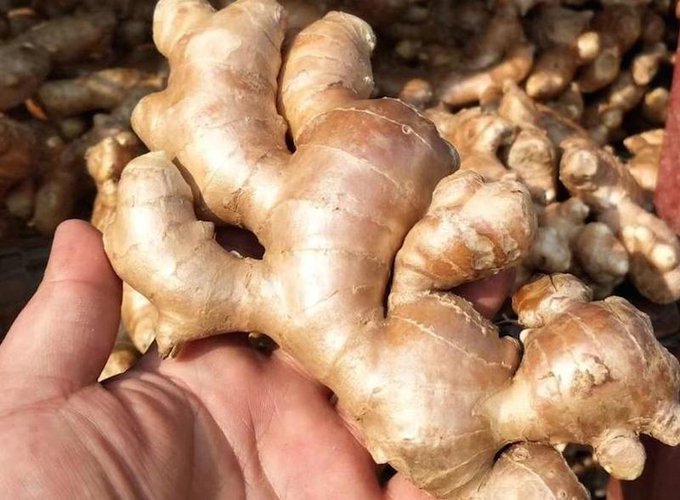
ABUJA — In a severe blow to Nigeria’s aggressive non-oil export ambitions, the country’s annual ginger export revenues plummeted to absolute zero by the end of 2025. The complete collapse marks a staggering multi-year decline from the peak of ₦26.2 billion recorded just three years prior, according to data from the National Bureau of Statistics (NBS).
The sudden erasure of what was once one of Nigeria's most lucrative agricultural export commodities stems from a catastrophic mixture of ecological failure and severe pricing distortions. A highly aggressive fungal blight has permanently crippled production volumes, while runaway localized production costs have completely priced the remaining harvest out of highly competitive global spice markets.
The Blight Epidemic and the Fall of a Spice Giant
For decades, Nigeria maintained its position as the world's third-largest producer of ginger and the undisputed leader in quality. Indigenous varieties like Tafin Giwa and Yatsun Biri were highly coveted by premium buyers across Europe, Asia, and North America for their uniquely high oleoresin content and sharp pungency.
However, the industry's vulnerabilities were laid bare starting in August 2023 when a highly destructive, soil-borne fungal blight identified by the Institute of Agricultural Research at Ahmadu Bello University (ABU) as Proxipyricularia zingiberis (linked to rhizome rot and bacterial wilt) swept rapidly through the heart of Nigeria's ginger belt.
The epidemic caused localized harvests to implode:
-
Production Footprint: The disease effectively wiped out between 85% to 95% of the total standing crop across primary cultivating zones in Kaduna, Plateau, and Nasarawa states.
-
Economic Demise: Farmers in major processing hubs like Kachia, Kagarko, and Jaba suffered immediate direct losses exceeding ₦12 billion in the initial wave alone.
-
Market Disruption: As scarcity hit the domestic ecosystem, the local price for a standard 50-kilogram bag of ginger escalated dramatically from under ₦50,000 to an astronomical ₦800,000, making it impossible for exporters to source affordable raw material.
Uncompetitive Production Costs Benefit Global Rivals
Beyond the biological destruction of the crop, long-term structural issues have systematically priced Nigerian ginger out of international shipping manifests. Due to massive inflationary pressures on inputs, processing logistics, fuel for irrigation, and transport, the domestic production cost of Nigerian ginger surged to an estimated $10,000 per metric ton.
With the average global market trading price for processed ginger sitting closer to $2,000 to $3,000 per metric ton, international buyers quickly shifted their procurement networks. Regional competitors, most notably Ethiopia, moved swiftly to capture Nigeria's vacated supply contracts in Europe and the Americas. The complete halt in trade has resulted in a bizarre domestic inversion, with local food manufacturers now importing pale, lower-potency ginger from China to meet basic domestic industrial demands.
Structural Failures and Mismanaged Interventions
Agricultural economists note that while the fungal blight was the immediate trigger for the industry's collapse, a lack of institutional infrastructure left smallholder farmers completely exposed. The country lacked a national ginger seed bank to provide clean, uninfected planting material, possessed no automated early-warning systems for soil pathogens, and lacked accessible crop insurance structures. Security challenges across rural farming communities further prevented farmers from effectively managing or treating their fields.
Furthermore, governmental emergency response packages have faced severe criticism from industry stakeholders. While the federal government set up a National Ginger Blight Epidemic Control Taskforce and announced recovery facilities—including a ₦1.6 billion package through the National Agricultural Development Fund (NADFUND) and a broader ₦6 billion intervention fund—the actual impact on the ground has been negligible.
Dr. Florence Edwards, President of the Ginger Growers, Processors and Marketers Association of Nigeria, publicly warned that critical intervention funds largely failed to reach the actual rural smallholders who needed them most, with resources frequently diverted or tied up in bureaucratic friction. Without clean, disease-resistant seeds and structural subsidies to drastically lower input costs, experts warn that reclaiming Nigeria's lost market share could take decades if the industry can be salvaged at all.
A devastating crop epidemic combined with uncompetitive pricing structures knocks the world's premier premium ginger supplier completely out of the global market.