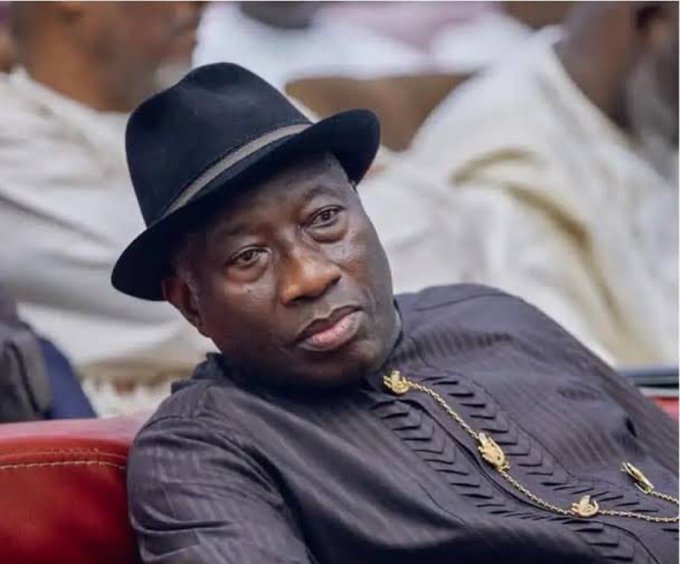
ABUJA — The Federal High Court in Abuja has officially scheduled Tuesday, May 26, 2026, to deliver a landmark judgment that could permanently alter the landscape of the 2027 presidential race. The upcoming ruling will determine whether former President Goodluck Jonathan is constitutionally permitted to run for the nation's highest office again, or if he has exhausted his legal term limits.
Presiding judge, Justice Peter Lifu, locked in the date after all participating legal teams formally adopted their final written addresses. Beyond deciding the core constitutional question, the court is concurrently mandated to issue a definitive ruling on an emergency interlocutory application seeking the immediate recusal of Justice Lifu from the entire registry on allegations of systemic bias.
The Recusal Battle: Defense Slams "Frivolous" Allegations
The legal proceedings took an adversarial turn during the adoption session when the plaintiff, Abuja-based legal practitioner Johnmary Jideobi, moved a motion requesting that Justice Lifu withdraw from presiding over the case. Jideobi alleged a lack of objective neutrality and questioned the court's overall impartiality in managing the fast-tracked litigation.
Fiercely pushing back against the recusal attempt, Chief Chris Uche (SAN), counsel to former President Jonathan, urged the court to throw out the application with substantial punitive financial costs. The Senior Advocate argued that the plaintiff’s allegations amounted to a calculated misrepresentation of facts, describing the motion as entirely frivolous, without merit, and a calculated attempt to disrupt the administration of justice.
Echoing the defense's position, Maimuna Lami-Shiru, Director of Civil Litigation and Public Law at the Federal Ministry of Justice, who appeared on behalf of the Attorney-General of the Federation (AGF) and Minister of Justice, Lateef Fagbemi (SAN), argued that the motion lacked any sound legal foundation.
Lami-Shiru noted that while judicial recusal is an established safeguard when genuine conflicts of interest arise, the plaintiff had failed to provide a single shred of credible evidence to establish bias. Labeling the application a gross abuse of the judicial process, she asked the court to dismiss the plaintiff’s motion and award an explicit N2 million cost against Jideobi. Justice Lifu subsequently announced that his decisions on all preliminary objections and motions would be bundled together and read during the final judgment broadcast on Tuesday.
The Substantive Suit: Interpreting Nigeria's Term Limits
In the primary substantive suit, filed under case file metric FHC/ABJ/CS/2102/2025, Jideobi is seeking a binding order of perpetual injunction restraining Goodluck Jonathan from throwing his hat into the 2027 presidential ring or presenting himself to any registered political entity for primary nomination.
The plaintiff's case is anchored on a strict technical interpretation of Sections 1(1), (2) & (3) and 137(3) of the 1999 Constitution of the Federal Republic of Nigeria (as amended). Jideobi argues that because Jonathan assumed the presidency in May 2010 to complete the unexpired term of the late President Umaru Musa Yar’Adua, and subsequently won and served a full four-year term following the 2011 general elections, he has legally exhausted the maximum two constitutional terms permitted for any individual holding the presidential office.
The prosecution maintains that allowing Jonathan to vie for office from 2027 to 2031 would result in him taking the presidential oath of office for an unprecedented third time, theoretically violating the statutory eight-year cumulative cap intended by the framers of the constitution. To guarantee full enforcement of this interpretation, the lawsuit asks the court to restrain the Independent National Electoral Commission (INEC) which failed to send legal representation to Monday's hearing from accepting, verifying, or publishing Jonathan's name as a candidate for the 2027 polls or any future presidential cycle.
Conversely, former President Jonathan and the AGF have both presented a unified defense, asserting that the suit lacks a proper cause of action and relies on an erroneous interpretation of constitutional amendments that cannot be applied retroactively. With both sides having submitted their definitive legal maps, political actors across all major parties are eagerly awaiting Tuesday's court sitting, which is set to establish a monumental constitutional precedent for Nigeria’s evolving democracy.