ABUJA — The Central Bank of Nigeria has chosen to hold its key benchmark lending rate steady at 26.5 percent, deciding against further monetary easing as board members weigh a delicate balance between encouraging domestic growth and guarding against renewed inflationary impulses triggered by persistent international turmoil.
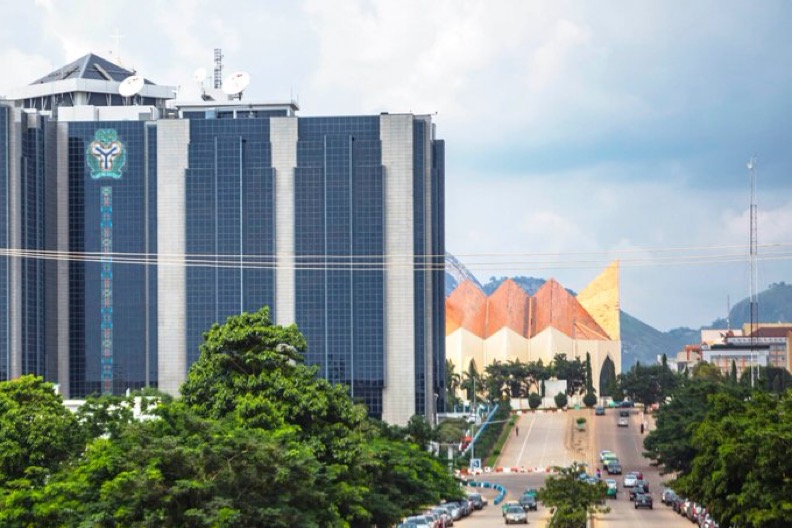
The determination was finalized following the conclusion of the Monetary Policy Committee’s 306th ordinary session, hosted at the central bank headquarters in Abuja on July 20 and 21, 2026. Central Bank Governor Olayemi Cardoso announced the decision during a comprehensive press conference, revealing that committee members were aligned in their judgment to maintain current credit conditions while waiting for broader economic developments to fully materialize before contemplating additional policy adjustments.
The decision represents the second consecutive meeting at which the central bank has maintained its primary policy tool, following an earlier 50-basis-point rate reduction implemented in February when the benchmark rate was trimmed from 27 percent. By keeping borrowing costs unchanged, the apex monetary authority underscores a resolute commitment to price stability even as domestic inflation figures demonstrate preliminary signs of stabilization.
Technical Framework and Liquidity Adjustment Measures
In tandem with maintaining the primary Monetary Policy Rate at 26.5 percent, the committee approved specific technical adjustments to its operational parameters to refine monetary transmission mechanisms and guide commercial bank liquidity management across West Africa's largest economic market.
The central bank recalibrated the asymmetric standing facilities corridor surrounding the benchmark rate to plus 50 and minus 450 basis points. Financial analysts note that widening the lower boundary of the corridor is designed to discourage commercial lenders from depositing idle excess reserves at the central bank, thereby incentivizing financial institutions to deploy capital into the real economy through expanded private-sector lending programs.
Simultaneously, the monetary authority reaffirmed its stringent macroprudential requirements regarding institutional reserves. The Cash Reserve Ratio for Deposit Money Banks was sustained at 45 percent, while merchant banking institutions remain subject to a 16 percent liquidity threshold. Public sector deposits operating outside the Treasury Single Account environment will continue to attract a heightened 75 percent cash reserve requirement, ensuring that excess government liquidity does not undermine broader monetary stabilization goals. The official systemic liquidity ratio was kept firm at 30 percent across all licensed commercial operators.
Macroeconomic Drivers: Inflation Moderation Versus External Shocks
The background to the committee's decision reflects a nuanced macroeconomic landscape characterized by encouraging domestic disinflation trends alongside growing external vulnerabilities that threaten to disrupt supply chains and commodity pricing.
According to official data released by the National Bureau of Statistics, Nigeria's headline inflation rate experienced a mild contraction in June 2026, dropping to 15.91 percent compared to 15.93 percent recorded in May. Although the marginal numerical decrease appears modest, economic commentators emphasize that the decline represents the first month-on-month deceleration in price growth after three straight months of upward pressure between February and May, suggesting that prior monetary tightening cycles are delivering their intended cooling effects.
However, Governor Cardoso cautioned against premature celebrations, explaining that while internal supply conditions have improved, external geopolitical friction represents an unpredictable wild card for domestic price stability. In particular, escalating conflict and military hostilities in the Middle East have injected severe volatility into international energy markets, threatening to raise global crude prices, elevate freight transportation costs, and import inflationary pressure back into the domestic economy.
"The committee's decision to maintain the current policy stance follows a thorough assessment of the balance of risks," Cardoso stated during his address to market analysts and journalists."Although headline inflation moderated marginally in June 2026, global uncertainties have heightened due mainly to renewed hostilities in the Middle East, which continue to present tangible risks to global energy prices and domestic food security."
Banking System Resilience and Capitalization Standards
Beyond immediate interest rate settings, the Monetary Policy Committee devoted significant attention to the structural health of Nigeria’s financial sector, evaluating the ongoing progress of the apex bank's mandatory banking sector recapitalization directive.
The committee expressed strong satisfaction with the capital-raising activities executed by commercial, merchant, and non-interest banks across the country. Preliminary performance reviews indicate that key prudential ratios including capital adequacy, non-performing loan proportions, and liquidity coverage remain well above mandatory regulatory minimums, demonstrating that Nigeria's banking institutions possess sufficient shock-absorbing capacity to navigate shifting domestic and global economic tides.
Cardoso emphasized that a capitalized financial sector is essential for sustaining long-term macroeconomic expansion, as larger institutional balance sheets enable banks to finance major infrastructure projects, support expanding industrial enterprises, and absorb unexpected credit defaults without requiring state intervention. The apex bank governor directed supervisory divisions within the central bank to sustain rigorous risk-based monitoring to ensure compliance with financial soundness guidelines as the recapitalization deadline approaches.
Fiscal-Monetary Synergies and Future Policy Outlook
A central theme highlighting the central bank's current operational philosophy is the deliberate alignment between monetary policy interventions and broader fiscal reforms spearheaded by the federal government.
Throughout the briefing, Governor Cardoso commended the federal government's ongoing structural reforms, particularly initiatives aimed at enhancing domestic agricultural production, streamlining port logistics, and improving state revenue collection. Strengthened policy coordination between the Ministry of Finance and the central bank has helped reduce fiscal deficit monetization, allowing monetary policy tools to operate with greater precision and efficacy than in previous economic cycles.
Development economists and market strategists widely endorsed the decision to maintain borrowing rates at 26.5 percent, viewing the hold as a prudent middle path that avoids prematurely loosening monetary policy while preventing unnecessary economic slowdowns that might accompany further rate hikes.
Looking ahead, financial markets anticipate that the Central Bank of Nigeria will remain in a data-dependent holding pattern for the remainder of the third quarter of 2026. Should domestic headline inflation continue its downward trajectory and global energy markets stabilize, monetary authorities may find sufficient policy space to consider cautious interest rate reductions in upcoming quarters. Conversely, if geopolitical conflicts intensify and trigger systemic import price spikes, the committee reiterated its readiness to deploy all necessary instruments including further monetary tightening—to preserve price stability, protect foreign exchange reserves, and defend the national currency.