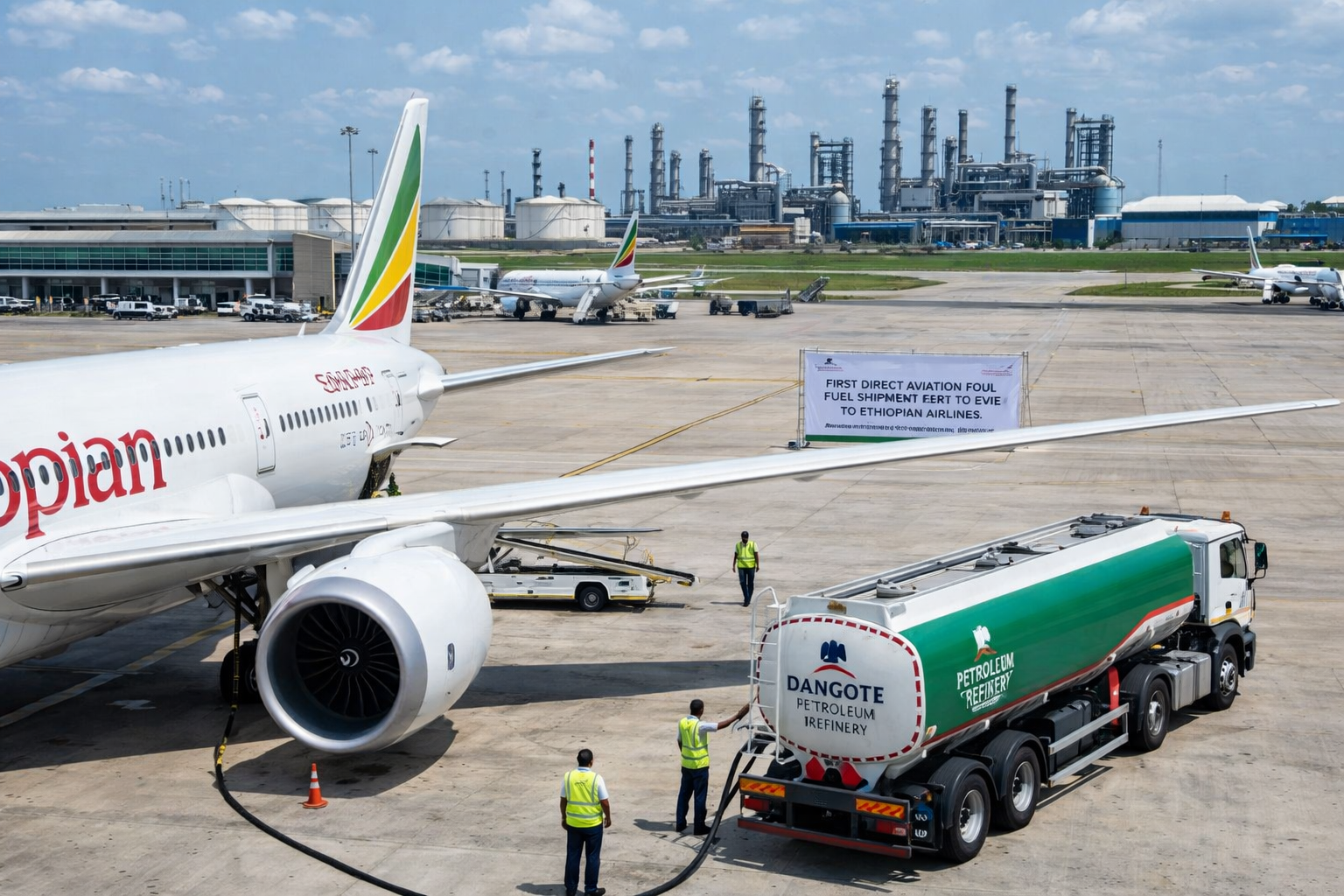
LAGOS — In a major intervention designed to rescue Nigeria’s struggling aviation sector from collapse, the management of the Dangote Petroleum Refinery has officially announced a significant price reduction for Aviation Turbine Fuel, popularly known as Jet A1.
According to an official corporate statement released on Monday, the multi-billion-dollar refinery complex has dropped the price of jet fuel to ₦1,650 per litre, down from its previous commercial rate of ₦1,750 per litre. The proactive fiscal correction is aimed at easing the intense operational cost pressures currently threatening the financial sustainability of domestic airline operators.
The price crash comes at a critical time for the industry. Members of the Airline Operators of Nigeria (AON) had recently issued a joint warning threatening a complete shutdown of flight operations across domestic airports due to the unsustainable spike in aviation fuel prices.
The domestic fuel crisis was heavily worsened by the ongoing military conflict between the United States and Iran, which triggered a chaotic wave of inflation across national fuel supplies. The AON publicly argued that the pricing spikes imposed by independent local marketers were completely disconnected from international crude oil benchmarks. Prior to the geopolitical crisis, Jet A1 traded at roughly ₦900 per litre, but rapidly escalated to a punishing range of between ₦2,700 and ₦2,900 per litre, with several exploitative third-party marketers selling the product for as high as ₦3,300 per litre at remote regional runways.
Financial Lifelines: Nairanisation and 30-Day Interest-Free Credit Facilities
Recognizing that a simple price reduction would not entirely solve the liquidity bottlenecks choking the aviation industry, the Dangote Petroleum Refinery introduced a multi-layered financial relief package alongside the rate cut.
The refinery has officially moved its entire aviation fuel commercial registry away from a dollar-denominated pricing structure, transitioning completely to a naira-based pricing model. By clearing out the volatile foreign exchange factor from daily fuel procurement, domestic airlines can now plan their long-term budgets without the constant threat of currency depreciation.
Furthermore, the refinery’s corporate statement disclosed the immediate activation of a highly supportive 30-day interest-free credit facility tailored exclusively for registered fuel marketers and local airline operators. To access the financial window, off-takers are merely required to back their procurement volumes with standard corporate Bank Guarantees (BG).
The strategic credit model provides cash-strapped airlines with the immediate logistical breathing room needed to refuel their fleets, sustain consistent flight schedules, and maintain operational stability without exhausting their immediate cash reserves.
Industry Impact: Easing the Passenger Burden and Airfare Pressures
The intervention by Africa's largest single-train refinery addresses the single biggest financial drain in modern airline administration. Aviation fuel historically accounts for over 40 percent of the total operational running costs of any domestic carrier in Nigeria. When Jet A1 costs spiked uncontrollably, airlines were forced to transfer the financial burden onto passengers, driving economy-class tickets to unprecedented highs and triggering a sharp decline in regional passenger numbers.
By cutting factory prices and guaranteeing a steady, uninterrupted domestic supply directly from its petrochemical hub in Lekki, the Dangote refinery is effectively undercutting predatory middlemen and stabilizing the supply chain.
Aviation industry analysts project that this systematic price reduction, combined with the naira-based payment structure, will drastically lower the cost of doing business for major domestic carriers. This structural relief is expected to translate into a gradual moderation of commercial airfares for daily commuters, enhance the safety standards of flight operations by ensuring airlines do not skip routine logistics due to fuel costs, and ultimately safeguard thousands of aviation jobs across the country.