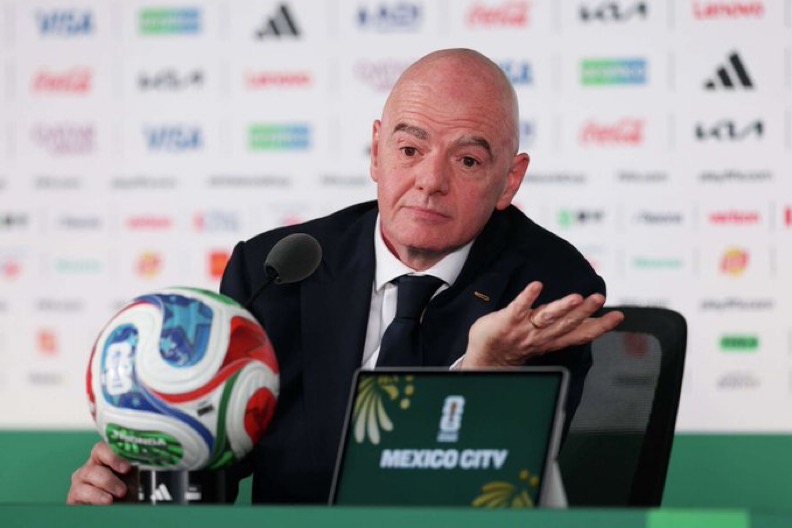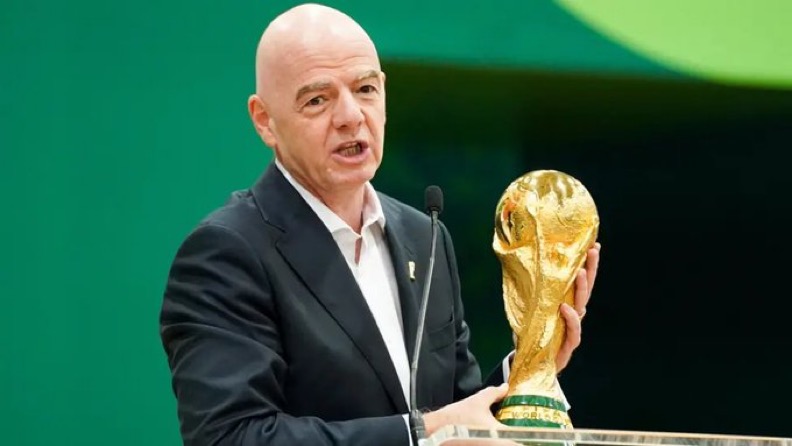
ZÜRICH — The political foundations of global sports governance have been shaken to their core following an unprecedented public declaration of non-confidence issued by UEFA against FIFA President Gianni Infantino.
The European governing body's blistering public rebuke arrived despite Infantino’s humiliating, early morning withdrawal of a secret multi-billion dollar proposal to sell minority equity stakes in the commercial operations of the FIFA World Cup to private equity investors.
The dramatic retreat by world football’s governing body caps a disastrous five-day political firestorm that erupted when details of the clandestine initiative were first leaked to international media.
In a scathing official response, UEFA accused the fifty-six-year old (56yrs) Swiss-Italian administrator of orchestrating a shabby, back room, and opaque deal that betrayed fundamental promises of transparency made when he first assumed the presidency in 2016.
With European football leaders explicitly declaring that confidence in Infantino’s leadership has been irrevocably shattered across multiple continental confederations, the 2026 World Cup co-host nations, European federations, and major international stakeholders now openly question whether the FIFA president can survive the growing political rebellion.
The Abandoned Deal: Inside the Four-Billion Dollar FIFA Forward Enterprise Proposal
The root of the institutional fracture stems from an ambitious financial project titled FIFA Forward Enterprise (FFE).
Under the covert plan presented to select executives, FIFA sought to establish a dedicated commercial subsidiary to assume complete control over the broadcasting, corporate sponsorship, ticketing, and intellectual property rights for its flagship tournaments, including the expanded men's World Cup and the FIFA Women's World Cup.
By valuing this newly created corporate subsidiary at twenty billion dollars, FIFA aimed to sell off minority, non-controlling equity stakes to private equity consortiums, with the goal of raising four point two billion dollars in upfront private capital.
To secure necessary backing from FIFA’s two hundred and eleven member associations, Infantino proposed distributing a portion of the private equity proceeds directly to national federations.
The financial incentive package promised each member association an immediate, one-off windfall payment of twenty million dollars in early 2027. Furthermore, the proposal pledged to dramatically increase baseline operational funding allocations for all national associations from eight million dollars to twenty million dollars for the 2027–2030 financial cycle.
However, the strategy of leveraging short-term cash payouts to fast-track structural privatization without formal consultation across continental confederations triggered immediate suspicion and fierce institutional pushback from the game’s primary power centers.
Institutional Mutiny: Multi-Continental Opposition and High-Level Resignations
The political collapse of the FIFA Forward Enterprise initiative was driven by a rare, coordinated alignment of global football’s most influential regional bodies and executive advisors.
European football's governing body, UEFA, spearheaded the opposition by issuing an absolute ultimatum, threatening a complete European boycott of all FIFA organized competitions if the privatization scheme proceeded.
UEFA was rapidly joined by CONCACAF the governing body representing North America, Central America, and the Caribbean, which includes the three 2026 World Cup host nations of the United States, Canada, and Mexico alongside the Asian Football Confederation (AFC), representing forty-seven member nations from its headquarters in Kuala Lumpur.
Even traditionally allied continental bodies distanced themselves from the project. South American confederation CONMEBOL, headed by close Infantino ally Alejandro Domínguez, issued formal requests demanding full disclosure regarding the governance, legal structure, and long-term financial impacts of the proposal.
Simultaneously, the African Football Confederation (CAF) convened emergency review sessions for its member nations, though those meetings were rendered moot by the sudden withdrawal of the bill.
The pressure inside FIFA's Zürich headquarters reached a breaking point with the high-profile resignation of senior FIFA advisor Carlos Cordeiro.
In a public resignation statement, the former US Soccer President condemned the privatization scheme as a fundamentally flawed venture that represented a bad deal for member associations, a bad deal for football, and a direct threat to the long-term stewardship of global sport.
Expert Breakdown: Private Equity, Cash Reserves, and FIFA's Constitutional Promises
To fully appreciate why UEFA and partner confederations reacted with such hostility, it is necessary to examine the underlying financial architecture of FIFA and the mechanics of private equity in sports administration.
Private equity firms operate by deploying capital into assets to extract maximum commercial yield, demanding high investment returns, corporate governance representation, and priority dividend payouts.
In public sports governance, introducing profit-motivated private investors into the primary commercial engine of a non-profit international federation creates an immediate conflict between community sports development and commercial profit extraction.
Opponents pointed out that FIFA already maintains an extraordinarily healthy balance sheet, holding unallocated cash reserves in excess of five billion dollars.
In its public condemnation, UEFA highlighted this massive financial buffer, arguing that with billions sat idle in liquid bank accounts, there is zero economic rationale for selling off long-term commercial assets to private investors.
Furthermore, UEFA charged Infantino with violating the core campaign pledges that brought him to power in 2016 following the corruption scandals that ended Sepp Blatter’s presidency.
At the time, Infantino assured member associations that FIFA’s revenues belonged exclusively to the national federations and that his administration would maintain complete operational transparency. UEFA asserted that hatching a secret privatization deal behind closed doors proved that Infantino had failed to deliver on both counts.
Background and Timeline: From Reforms to Rebellions Under Gianni Infantino
Gianni Infantino’s decade-long tenure as FIFA President has been characterized by aggressive commercial expansion, structural tournament redesigns, and repeated political clashes with European football authorities.
-
2016: Infantino is elected FIFA President on a platform of anti-corruption reform, financial transparency, and expanded funding for developing football nations.
-
2018: FIFA attempts to introduce a secret twenty-five-billion-dollar commercial proposal backed by international private investors to revamp the Club World Cup, which is ultimately blocked by UEFA and CONMEBOL.
-
2021–2022: FIFA launches a controversial global campaign to hold the men's World Cup biennially instead of quadrennially, triggering widespread condemnation from player unions, domestic leagues, and European confederations before the plan is shelved.
-
2026: Infantino presides over the expanded 48-team World Cup across North America, but days later attempts to launch the four-billion-dollar FIFA Forward Enterprise privatization scheme.
-
August 2026: Widespread institutional rebellion forces Infantino to cancel the privatization proposal, prompting UEFA to officially declare a total loss of confidence in his leadership.
Why It Matters: Rebalancing Power in Global Sports Governance
The open rift between UEFA and FIFA carries profound implications for the commercial structure, political governance, and long-term leadership of international athletics.
For decades, international sports governance has operated on a delicate balance of power between FIFA's global administrative headquarters and the wealthy European football ecosystem, which controls the world's most valuable domestic leagues, broadcasting markets, and elite playing talent.
Infantino’s attempt to bypass European confederations by offering direct financial payouts to smaller member associations was viewed by critics as a deliberate effort to centralize political power and secure unassailable voting blocs ahead of future presidential elections.
By successfully defeating the privatization initiative and publicly withdrawing confidence from Infantino, UEFA and its international allies have re-established continental leverage over FIFA's executive committee.
The collapse of the deal signals to international sports administrators that major structural changes to global competitions cannot be forced through via back-room negotiations, establishing a firm precedent that public sporting assets must remain under transparent, democratic governance.
Regional and Global Context: African, Asian, and Developing Nation Perspectives
While European leaders led the public offensive, the fallout from the aborted proposal exposes complex financial realities across developing football nations in Africa, Asia, and Oceania.
For many smaller member associations within CAF and the AFC, national football budgets are heavily dependent on direct financial grants from FIFA to build training pitches, fund youth national teams, and maintain basic administrative operations.
The promise of an immediate twenty-million-dollar cash injection alongside doubled annual operating budgets represented transformative financial capital for federations operating in developing economies.
However, leadership across the AFC, CONCACAF, and CAF ultimately recognized that accepting short-term financial payouts at the cost of mortgaging future World Cup revenues to private equity firms posed severe long-term risks to global football equity.
As the Asian Football Confederation noted in its formal response, the future of global sport must be shaped through inclusive, transparent dialogue and respect for established governance structures, rather than secret financial maneuvers.
As Gianni Infantino attempts to initiate damage-control sessions with international stakeholders in the coming weeks, he faces an uphill battle to restore personal credibility.
With UEFA actively organizing partner confederations to demand a comprehensive, fundamental review of FIFA's executive leadership, world football stands at a historic junction, with the long-term governance of the global game hanging in the balance.