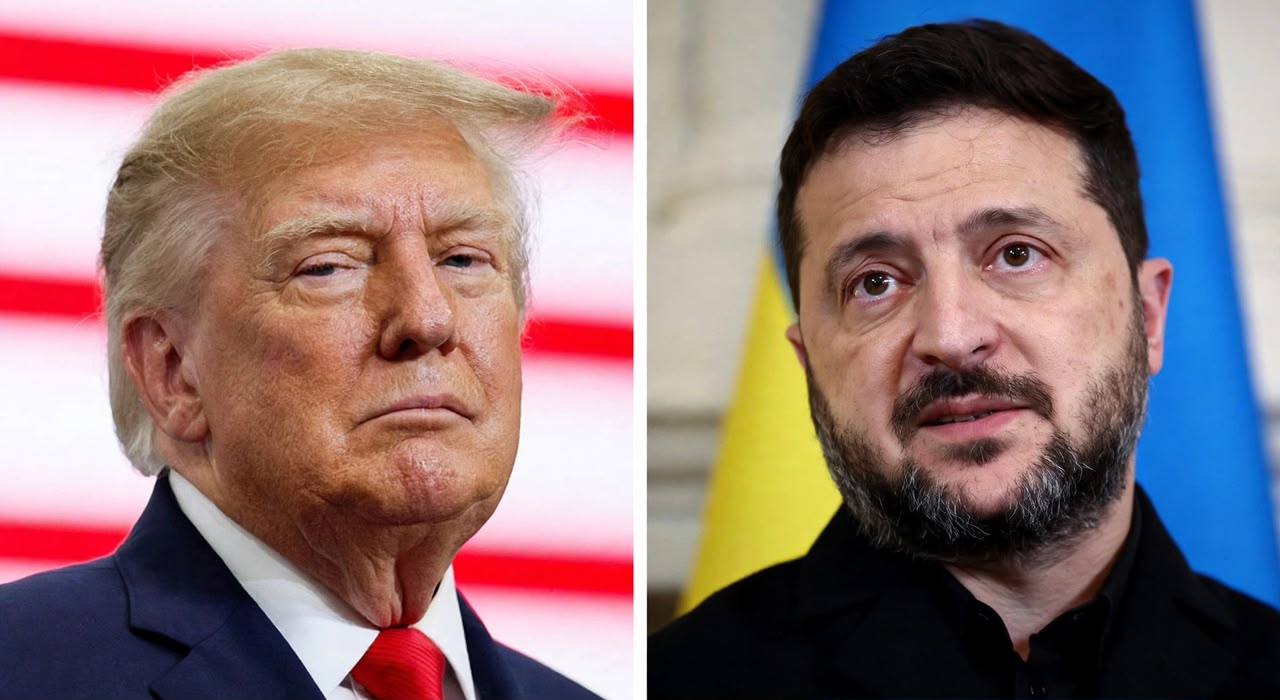
President Donald Trump says he does not believe Congress would need to approve his proposed $5,000 “Trump Dividend” payments to American adults, setting up a potential constitutional and legal clash over Congress’s authority over federal spending.
Trump made the comments in an interview with CBS News on September 10, one day after announcing that he would issue a $5,000 payment to every adult U.S. citizen if Republicans retain control of both the House of Representatives and Senate in the November midterm elections.
The proposed payments could cost the federal government more than $1 trillion, depending on the number of people ultimately deemed eligible. Trump has suggested that tariff revenue and other government income could finance the payments, but he has not provided a detailed legal or funding mechanism for distributing the money.
Trump says Congress may not be needed
Asked directly whether Congress would have to approve the payments, Trump said he did not think congressional approval would be necessary.
He nevertheless expressed confidence that lawmakers would support the proposal if their approval ultimately proved necessary.
Trump described the planned payments as a major economic boost and said the money would have to be spent within the United States. He has compared the proposal to a dividend paid by a successful company to its shareholders.
The comments immediately raised questions because the president does not normally have unilateral authority to spend money from the U.S. Treasury.
Under Article I, Section 9 of the U.S. Constitution, money cannot be withdrawn from the Treasury except through appropriations made by law. The Constitution Annotated, maintained by Congress, identifies this as the Appropriations Clause.
That means a presidential announcement by itself would not ordinarily create the legal authority necessary to send billions of dollars in federal payments to Americans.
Congress controls federal spending
The Constitution gives Congress significant authority over taxation, spending and appropriations.
Article I gives Congress the power to tax and spend for the nation's general welfare, while the Appropriations Clause restricts withdrawals from the Treasury to money authorized by law.
That separation of powers is at the center of the questions surrounding Trump's proposal.
If the administration attempted to distribute the checks without an existing statutory appropriation authorizing the payments, the move could face legal challenges from lawmakers, taxpayers or other parties.
CBS News reported that it remains unclear what legal authority Trump believes would allow the payments to be made without congressional approval.
The disagreement could ultimately end up before the courts if the administration attempts to proceed without legislation.
The proposal could cost more than $1 trillion
The size of the proposed program is another major obstacle.
Trump's initial promise calls for $5,000 for every adult U.S. citizen if Republicans win both chambers of Congress.
Estimates place the total cost at more than $1.2 trillion, with some estimates reaching roughly $1.3 trillion depending on the number of eligible adults.
That would make the program one of the largest direct-payment initiatives in U.S. history.
For comparison, the federal government is already operating with a substantial annual deficit, while the national debt has surpassed $40 trillion. The scale of the proposed dividend has therefore generated concerns about whether tariff revenue could realistically finance it without additional borrowing or another source of federal funding.
Trump points to tariff revenue
Trump has repeatedly linked the proposed dividend to money generated through tariffs.
In his CBS interview, he said the United States had collected “trillions” of dollars through tariffs and other sources.
However, available Treasury figures do not support the claim that tariff collections alone have reached the level necessary to fund a nationwide $5,000 payment.
The Wall Street Journal reported that the Treasury collected about $256 billion in tariff revenue during the previous year, far below the more than $1 trillion that would be required for the proposed checks.
Tariff revenue also does not automatically become money that a president can distribute at will.
Tariffs are collected by the federal government, but spending those receipts remains subject to federal budget and appropriations laws.
Trump says the money would stay in America
Trump has added another condition to the proposal: recipients would have to spend the money inside the United States.
The president has not explained how such a requirement would be enforced or how the government would track whether recipients spend the money domestically.
That leaves several practical questions unanswered.
It is not yet clear whether Americans would receive checks, direct deposits or another form of payment. There is also no detailed proposal establishing eligibility, administration, enforcement or the precise source of the funds.
Trump's announcement therefore remains a political promise rather than an established federal benefit.
Republicans face their own questions
The proposal has also created an uncomfortable debate within the Republican Party.
Republicans have traditionally emphasized limiting government spending, reducing deficits and restraining the growth of federal programs.
A nationwide $5,000 payment program costing more than $1 trillion would represent a significant expansion of federal spending.
Some Republican lawmakers and conservative commentators have expressed skepticism about the proposal, particularly because of its potential impact on inflation, government borrowing and the national debt.
Others have supported Trump's proposal or argued that tariff revenue could provide a basis for returning money to Americans.
The disagreement could become more important if Republicans retain control of Congress and lawmakers are asked to turn Trump's promise into legislation.
Democrats question the proposal
Democrats have also attacked the plan, with some characterizing it as an attempt to influence voters ahead of the midterm elections.
Trump has rejected the characterization that the payments would amount to buying votes, presenting them instead as a reward for Americans and a return of money generated by his economic policies.
The distinction could become politically important because the payments are explicitly conditioned on Republicans winning control of both chambers of Congress.
Trump's original announcement stated that Americans would receive the dividend if Republicans won the House and Senate in November.
That political condition has intensified scrutiny of the proposal.
Legal questions could become decisive
The biggest immediate question is whether the president can legally authorize the payments without a new act of Congress.
The constitutional text is clear that federal money cannot simply be withdrawn from the Treasury without an appropriation made by law.
The precise legal argument Trump could use to claim independent authority has not been fully explained.
If the administration attempted to issue the payments without congressional legislation, opponents could challenge the action in federal court.
Courts would then potentially have to determine whether an existing statute provides sufficient authority or whether Congress must specifically appropriate the money.
This makes the issue considerably different from simply announcing a tax policy or directing an executive agency to enforce an existing law.
The dividend is not yet guaranteed
For Americans following the proposal, the most important point is that no $5,000 payment has been authorized or scheduled.
Trump has made a political promise conditional on the outcome of the November elections.
Even if Republicans retain both chambers, lawmakers would still have to determine whether to support the proposal, how to fund it and what legislation would be required.
Congressional approval would also give lawmakers an opportunity to establish eligibility rules, funding mechanisms and safeguards around the program.
Without such legislation, the administration could face a major legal challenge if it attempted to distribute the money on its own.
Next Thing To Happen
The issue is likely to become a major part of the 2026 midterm debate.
If Republicans maintain control of the House and Senate, Trump could pressure lawmakers to turn the dividend promise into legislation.
Congress would then face difficult questions over the program's cost, funding source and potential effect on inflation and federal debt.
If Democrats win control of either chamber, the proposal could face an even steeper political obstacle.
For now, Trump's statement that he may not need congressional approval puts the president directly at odds with the traditional constitutional framework governing federal spending.
The Appropriations Clause gives Congress a central role in deciding how federal money is spent, meaning the question of whether Trump can legally bypass lawmakers could become as important as the proposed $5,000 payment itself.
Until Congress acts or the courts provide a definitive answer, the “Trump Dividend” remains a proposal—not an approved $5,000 benefit for Americans.