SAN FRANCISCO — OpenAI has confidentially filed for an initial public offering (IPO) in the United States. The developer of the world-leading ChatGPT platform has joined an unprecedented wave of AI giants—including rival Anthropic—rushing to capitalize on the insatiable investor demand for artificial intelligence assets as the "AI Era" establishes itself as the defining investment theme of the decade.
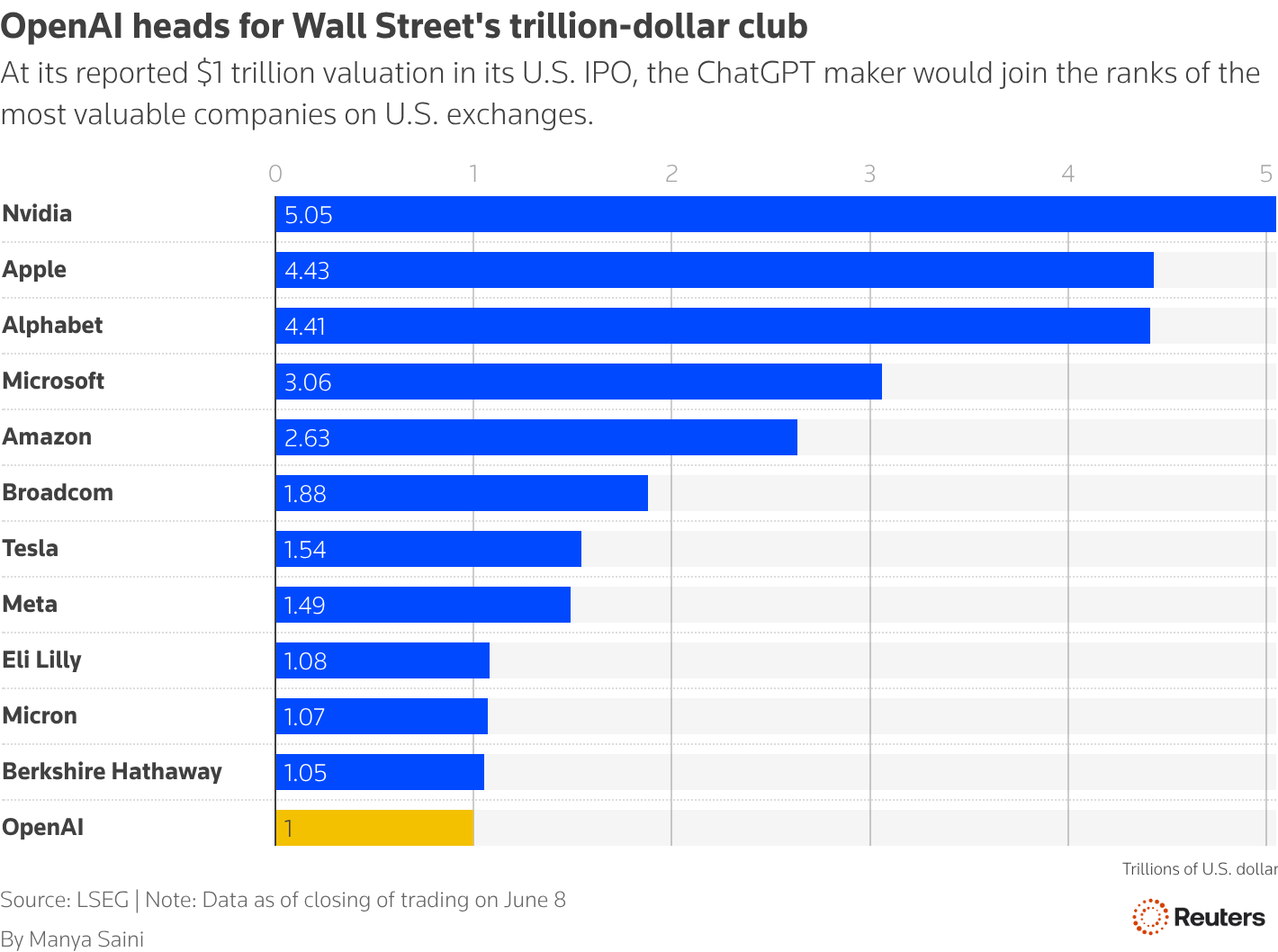
A Landmark Valuation
While OpenAI has not disclosed specific terms or a definitive timeline in its confidential filing, industry sources suggest the company is targeting a valuation approaching $1 trillion. If achieved, this milestone would cement OpenAI among the most consequential companies in the history of the U.S. stock market.
The company’s explosive growth is supported by staggering performance metrics that highlight its rapid scaling:
-
Massive User Base: ChatGPT now boasts over 900 million weekly active users, with 50 million consumer subscribers fueling its direct-to-consumer revenue stream.
-
Explosive Revenue: As of March 2026, the company reached an annualized revenue run rate of $25 billion, generating approximately $2 billion in monthly revenue. This growth trajectory is significantly faster than the giants of the mobile and internet eras, reflecting the uniquely rapid adoption of generative AI.
-
Deep Investor Confidence: Recent private funding rounds have included heavyweights like SoftBank, Amazon, and Nvidia, signaling long-term institutional belief in the firm’s ability to lead the AI infrastructure and application market.
The Great AI IPO Race
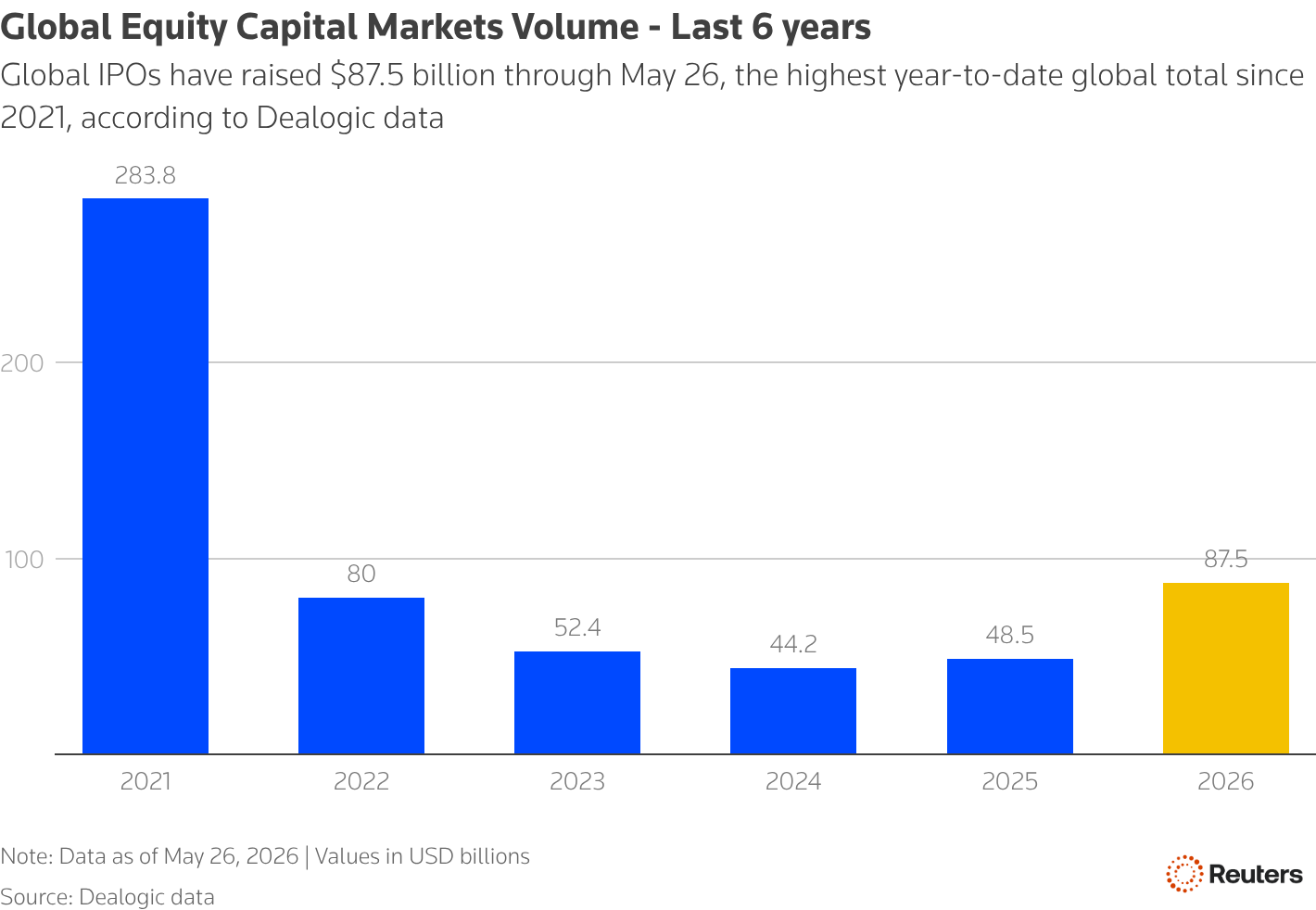
OpenAI’s move to public markets is part of a broader, highly competitive environment. Rival Anthropic filed its own confidential IPO paperwork earlier in June 2026 and is reportedly targeting an October 2026 debut on the Nasdaq. Meanwhile, Elon Musk’s SpaceX completed its historic IPO on June 12, 2026, at a valuation of approximately $1.75 trillion, setting the benchmark for what massive tech-forward companies can achieve in the current market.
Analysts warn that the sheer concentration of capital required for these mega-listings is unprecedented. The combined demand for liquidity from OpenAI, Anthropic, and other major AI entities may soak up significant market capital, potentially creating volatility and forcing smaller technology firms to compete harder for investor interest.
Legal Hurdles Cleared
The path to this IPO was significantly smoothed in May 2026, when a U.S. federal jury ruled against Elon Musk in his high-profile lawsuit against OpenAI. Musk had accused CEO Sam Altman and the company of abandoning its foundational mission as a research-focused nonprofit to prioritize private enrichment and corporate profit.
The unanimous verdict, reached after an 11-day trial, determined that Musk’s claims were barred by the statute of limitations. By removing this major legal overhang, the court decision provided the corporate stability necessary for OpenAI to pursue its financial ambitions without the persistent cloud of litigation.
Strategic Evolution and Future Challenges
OpenAI is currently in the midst of a massive structural evolution, transitioning toward a Public Benefit Corporation (PBC) model. This shift is designed to allow the company to raise significantly more capital and forge new, independent partnerships—such as its expanding collaborations with Amazon and Google—moving beyond its foundational reliance on early investor Microsoft.
Despite the excitement, the road ahead remains challenging. OpenAI has cautioned investors that it does not expect to reach profitability until roughly 2029 or 2030, a testament to the immense, sustained costs required to develop and deploy frontier AI models. As the company navigates the transition from a private research powerhouse to a public entity, it must balance its ambitious "AGI for all" mission with the rigorous demands of public-market shareholders, regulatory scrutiny, and the fierce competitive pressure of the AI landscape.
"The conclusion of this litigation has significant implications for the AI industry and corporate governance. OpenAI is preparing for a potential initial public offering that could value the business at $1 trillion. The removal of this legal hurdle provides the corporation with the stability necessary to pursue such a valuation." — Industry Analyst