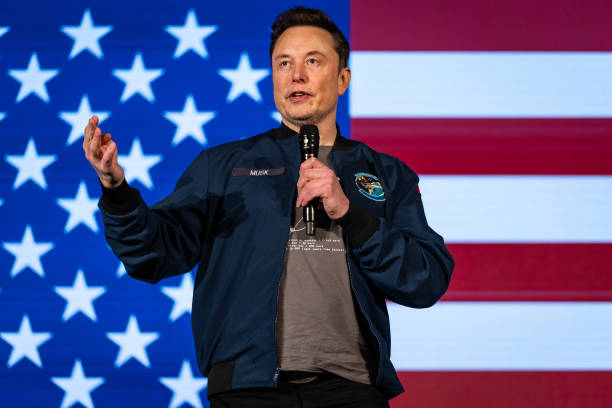
WASHINGTON — Tech entrepreneur Elon Musk has proposed a transformative approach to the U.S. economy: the implementation of direct Treasury payments to citizens as artificial intelligence and robotics reshape the global workforce. Musk’s recent commentary suggests that the sheer productive power of advanced AI systems could fundamentally alter economic foundations, rendering traditional employment models less central to survival and necessitating new mechanisms for wealth distribution.
The Rationale: Abundance Through Automation
Musk’s proposal is rooted in the belief that AI and robotics will eventually perform a vast array of tasks—from manufacturing and logistics to complex administrative and creative work—with a level of efficiency that creates an era of unprecedented abundance. In this paradigm, Musk argues that the cost of goods and services will drop significantly as technological efficiency accelerates.
Responding to discussions regarding government oversight of AI, Musk noted on X in June 2026 that the government should bypass traditional social welfare bureaucracy and instead "send money directly to the people from the Treasury." His core argument is that if the surge in productivity driven by AI and robots results in the production of goods and services that vastly exceed any necessary increase in the money supply, this distribution mechanism would not necessarily trigger inflation. Rather, Musk has predicted that the U.S. economy could eventually experience deflationary pressures as the cost of essentials—including food, housing, healthcare, and energy—plummets due to high-efficiency automation.
"Universal High Income" vs. Universal Basic Income
While the concept shares similarities with Universal Basic Income (UBI), Musk has distinguished his vision as "Universal High Income" (UHI). The distinction lies in the expected scale of the payments. Where UBI is traditionally framed as a minimal safety net to cover basic needs, Musk’s UHI envisions a future where machine productivity is so expansive that government-issued checks could provide a comfortable standard of living, effectively making human labor a matter of choice rather than a necessity for survival.
Musk has gone as far as suggesting that, in this "positive AI future," the concept of saving for retirement might become irrelevant because the overall wealth generated by automation would be so substantial that citizens would be supported by the state’s redistributive mechanisms.
Economic and Policy Challenges
Despite the utopian outlook, the proposal has sparked a fierce debate among economists and public commentators. The primary concerns include:
-
Fiscal Sustainability: Critics have questioned the long-term viability of relying on Treasury-funded payments, warning of the potential to bankrupt government coffers if not backed by sustainable, large-scale productivity gains.
-
Inflationary Risks: While Musk argues that productivity will outpace the money supply, many mainstream economists remain skeptical, warning that injecting massive amounts of cash into the economy could still trigger severe inflationary cycles.
-
Psychological and Social Impact: Beyond the math, observers have highlighted the psychological toll of widespread joblessness. Many workers derive a sense of purpose and meaning from employment, leading critics like investor Michael Burry to warn of potential social revolutions or civil unrest if society displaces human workers at scale before the necessary cultural and economic frameworks are in place.
-
The "Bottleneck" Problem: Skeptics point out that while digital goods may become abundant, "bottleneck" sectors like land, housing, and specialized services may not see the same efficiency gains, potentially leading to competition for limited resources even with increased income.
The Shifting Political Landscape
Musk’s advocacy comes at a time when the federal government is grappling with how to regulate the burgeoning AI sector while navigating the fiscal realities of an evolving administration. Although official Washington has not formally embraced the idea of recurring, high-value Treasury disbursements as a primary policy solution, Musk’s high-profile support has forced the issue into the center of national economic discourse.
As the U.S. refines its approach to AI governance, the tension between embracing innovation and protecting the livelihoods of the average citizen remains a defining challenge of the decade. The conversation Musk has reignited is not merely about policy—it is a fundamental debate about the future of human purpose and the mechanisms by which a society chooses to share the fruits of its technological ingenuity in the age of intelligent machines.
"Universal HIGH INCOME via checks issued by the Federal government is the best way to deal with unemployment caused by AI." — Elon Musk