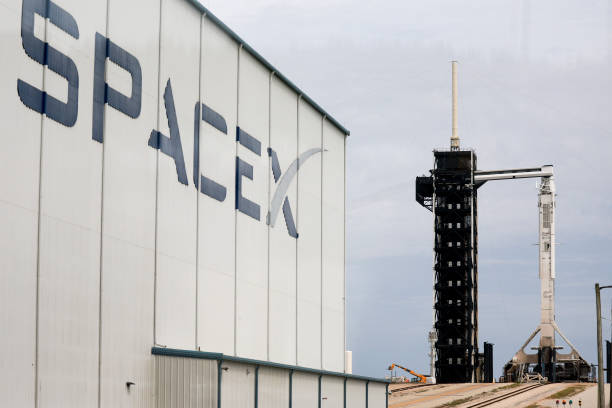
NEW YORK — Barely weeks after its historic debut on the Nasdaq, SpaceX is already making aggressive moves to solidify its financial foundation. The aerospace and artificial intelligence conglomerate has officially launched a massive multi-tranche bond offering, aiming to raise at least $25 billion. This move marks the company’s first-ever foray into the investment-grade dollar bond market, signaling a bold strategy to pivot from its recent record-breaking Initial Public Offering (IPO) toward long-term institutional debt financing.
Refinancing for the Future
Industry sources confirm that a consortium of the world’s leading financial institutions—including Goldman Sachs, Morgan Stanley, JPMorgan Chase, Bank of America, and Citigroup—are managing the sale. The primary objective of this debt issuance is to refinance the $20 billion bridge loan facility secured earlier this year to facilitate the landmark acquisition of Elon Musk’s artificial intelligence firm, xAI.
By transitioning from short-term bridge financing to long-term, multi-tranche notes (with maturities ranging from 5 to 30 years), SpaceX is essentially restructuring its balance sheet. This move provides the company with greater financial stability, allowing it to move away from the high-interest pressure of bridge debt and lock in more sustainable terms as it navigates its new reality as a publicly traded entity.
A Dual-Track Strategy: AI Meets Aerospace
The massive capital raise underscores the sheer scale of SpaceX’s ambitions. The company is not merely content with dominating the launch industry; it is committing tens of billions of dollars to build the digital architecture of the future. The proceeds from the bond offering are earmarked not just for debt repayment, but for "general corporate purposes," which analysts translate as an aggressive push into AI infrastructure.
To remain competitive in the rapidly evolving AI landscape, SpaceX is investing heavily in:
-
Large-Scale Data Centers: Expanding capacity to support the heavy compute requirements of the xAI models.
-
Specialized Hardware: Procurement of advanced GPU clusters and next-generation processing units.
-
Power Infrastructure: Developing the robust energy solutions required to sustain high-density computing operations.
Market Reaction and Valuation Scrutiny
The bond offering news comes during a period of heightened investor scrutiny. After a "blockbuster" Nasdaq debut on June 12, 2026—which saw the company’s valuation briefly exceed $2 trillion—the stock (ticker: SPCX) has faced significant volatility. Traders and analysts are currently engaged in a high-stakes debate: can the company’s aggressive, capital-intensive strategy generate the long-term value required to sustain such a premium valuation?
In the days following the reports of the bond offering, SpaceX shares experienced a pullback of approximately 6%. While this adjustment is not uncommon for companies following high-profile IPOs, it reflects a market that is still learning to price a firm that sits at the intersection of two of the most capital-hungry industries in existence.
The Institutional Appetite
Despite the market's volatility, institutional appetite remains strong. Reports indicate that the offering has already attracted nearly $85 billion in orders, suggesting that major investors still hold high confidence in SpaceX’s long-term creditworthiness and its ability to execute its dual-track growth strategy.
As SpaceX navigates its first few months as a public company, the bond offering serves as a critical indicator of its fiscal roadmap. By leveraging debt markets to fund its AI infrastructure while maintaining its aerospace dominance, the company is betting that the synergy between its launch capabilities and AI computing power will define the next era of technological productivity. For the investors now watching the stock, the focus shifts to whether this debt-fueled expansion will deliver the fundamental growth promised in the company’s S-1 prospectus or if the immense capital requirements will continue to create friction in the near term.