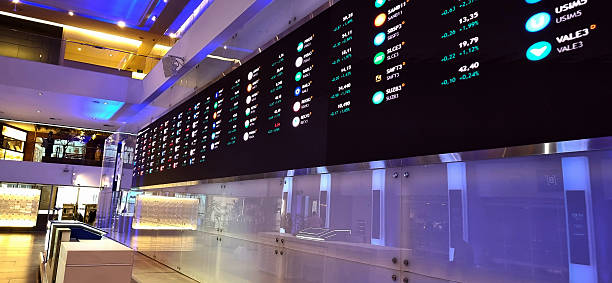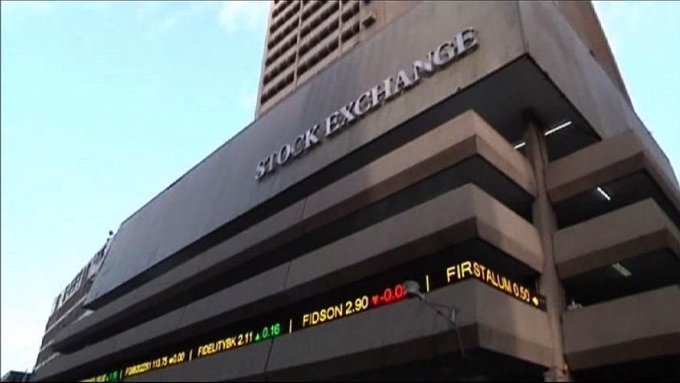
LAGOS — The Nigerian Exchange (NGX) experienced a seismic shift in market activity on Tuesday, July 7, 2026, recording a monumental gain of ₦3.205 trillion. In a session that effectively erased the preceding days' losses, the total market capitalization surged to an unprecedented high of ₦147.174 trillion. This 2.23% increase is not merely a statistical bounce; it serves as a powerful indicator of renewed investor confidence and a strategic rotation of capital into the Nigerian industrial and consumer goods sectors.
Market Performance Summary
The session was defined by high-conviction buying, particularly among large-cap stocks that have been the focus of institutional re-balancing throughout the second quarter of 2026. The All-Share Index (ASI), the primary barometer for the market’s health, mirrored the capitalization surge with a 2.23% increase, closing at 228,579.80 basis points.
| Metric | Previous Session | Tuesday Close | Change (%) |
| Market Capitalization | ₦143.969 Trillion | ₦147.174 Trillion | +2.23% |
| All-Share Index (ASI) | 223,602.29 bps | 228,579.80 bps | +2.23% |
| Year-to-Date (YtD) Return | — | 46.89% | 📈 Rising |
The "Heavyweight" Rally: Market Breadth Analysis
One of the most intriguing aspects of Tuesday's rally was the divergence between market value and market breadth. While the index and capitalization soared, the market breadth actually closed negatively, with 42 losers against 39 gainers. This confirms that the day’s explosive growth was driven primarily by "heavyweight" stocks—the industrial and consumer giants—rather than a broad-based rally across the entire exchange.
For investors, this signals a sophisticated, institutional-led market. Retail sentiment remained cautious, as evidenced by the decline in numerous mid-cap stocks, while institutional managers were aggressively accumulating positions in firms deemed essential to the implementation of the federal government’s 2026 fiscal policy.
Top Movers: High-Performance Leaders and Profit-Taking
The list of gainers was dominated by industrial leaders, with several blue-chip stocks hitting the "10% limit-up" threshold, reflecting intense demand for firms with strong production and infrastructure portfolios.
-
Top Gainers (10% Club): WAPCO (₦324.50), Industrial and Medical Gases (IMG) (₦39.60), and FTN Cocoa Processors (₦5.50) all reached the daily maximum price appreciation, highlighting the current investor appetite for manufacturing and raw material processing.
-
Sectoral Pressure: Conversely, profit-taking was evident in the banking sector. Leading financial stocks like UBA (-10%) and Jaiz Bank (-8.98%) faced significant selling pressure. Analysts suggest this is a tactical shift; as investors position for the next stage of the fiscal year, they are offloading financial holdings to rotate into industrial giants that stand to benefit from government infrastructure contracts.
Liquidity and Trading Dynamics
The surge in market value was supported by a massive spike in liquidity. The total value of traded shares soared by over 50% compared to the previous trading day.
-
Volume Metrics: Investors exchanged 907.96 million shares, a sharp increase from the 678.2 million shares recorded on Monday.
-
Transaction Value: The total transaction value reached ₦68.23 billion, compared to the ₦44.14 billion seen at the start of the week.
Access Corporation dominated the volume charts with 219.5 million shares, while Nestlé Nigeria topped the value chart, recording a staggering ₦15.27 billion in transactions. This concentration of value in Nestlé—a consumer goods titan—reinforces the narrative that investors are hedging against inflation by increasing exposure to firms with strong brand equity and resilient product demand.
Investor Sentiment and Policy Outlook
The market's performance suggests a clear alignment between equity valuation and the evolving economic landscape of 2026. The shift away from financial stocks—which dominated the first half of the year—toward industrial and consumer giants indicates that the market is beginning to price in the medium-term impact of the government’s 2026 fiscal measures.
Institutional investors are particularly focused on companies that can navigate the volatility of the current interest rate environment while benefiting from government-backed infrastructure development. As the market enters the second half of the year, the "Heavyweight Rally" on Tuesday serves as a blueprint for the themes expected to dominate: infrastructure, industrial processing, and consumer resilience.
As we look toward the remainder of the week, the primary question for investors is whether this momentum can be sustained or if the market will see a period of consolidation. Given the robust liquidity and the clear intent behind the capital rotation, the current trajectory suggests that the NGX remains one of the most dynamic environments for capital growth in the African financial markets.