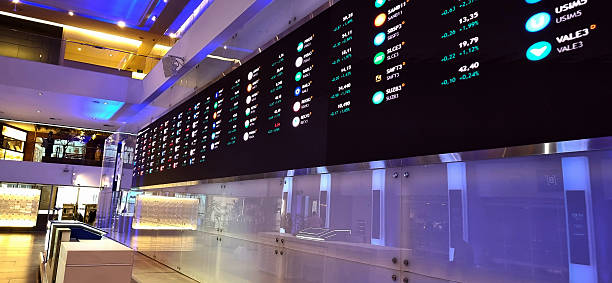
NEW YORK / HAWTHORNE — Setting the stage for the most anticipated and monumental public debut in capital markets history, Elon Musk’s aerospace empire is officially stepping into the public eye. Following the formal submission of its S-1 registration statement to the U.S. Securities and Exchange Commission (SEC), SpaceX is on track to begin trading on the Nasdaq exchange as early as June 12, 2026, under the ticker symbol $SPCX.
The high-stakes offering aims to raise a staggering $75 billion at a target valuation of $1.75 trillion. If executed within this pricing range, the transaction will comfortably eclipse Saudi Aramco's historic $29.4 billion listing in 2019 by more than two and a half times, easily crowning it the largest initial public offering (IPO) ever recorded.
The Deal at a Glance: SpaceX IPO Capital Structure
The metrics unveiled in the preliminary S-1 prospectus detail an unprecedented scale for a public market debut, positioning the rocket and satellite telecom giant ahead of legacy titans like Berkshire Hathaway and trailing only a handful of elite tech megacaps.
Key Financial & Offering Benchmarks
| Metric / Parameter | IPO Target & Financial Reality |
|---|---|
| Target Ticker | $SPCX (Nasdaq Global Select Market) |
| Expected Trading Date | Friday, June 12, 2026 (Pricing scheduled for June 11) |
| Total Capital To Raise | Approximately $75 billion (~43 million shares) |
| Implied Post-IPO Valuation | $1.75 trillion to $2.0 trillion |
| 2025 Financial Performance | $18.67 billion in revenue with a $4.9 billion net loss |
| 2026 Revenue Projection | Estimated upward trajectory targeting $22 billion to $27 billion |
| Lead Underwriters | Goldman Sachs, Morgan Stanley, Bank of America |
📊 The Valuation Multiple: At a $1.75 trillion baseline, SpaceX is seeking to trade at roughly 109x to 116x trailing 2025 revenue. Even when factoring in optimistic forward-looking 2026 projections, the implied multiple sits at 58x to 65x revenue. This represents an astronomical premium compared to historical tech market listings, signaling that the market must price in flawless operational execution for years to come.
The Multi-Pronged Growth Engine: Starlink, xAI, and Terafab
The investment thesis driving wall-to-wall retail and institutional excitement relies on a unique blend of heavy industrial aerospace dominance, recurring telecommunications infrastructure, and high-profile artificial intelligence integration.
Starlink Connectivity: Far from a simple rocket builder, Starlink serves as the company's primary recurring cash engine. The low-Earth-orbit (LEO) satellite network officially crossed 10 million global subscribers in early 2026, adding between 750,000 and 1.5 million users monthly. The connectivity segment alone recorded a $1.19 billion profit last quarter, acting as the structural safety net offsetting deep developmental losses elsewhere.
The AI & Semiconductor Play: The IPO incorporates significant tech pivots executed earlier this year. In February 2026, SpaceX fully absorbed Elon Musk's artificial intelligence venture, xAI, in a mostly stock-based transaction, rebranding the unit as SpaceXAI. Additionally, the company has heavily marketed Terafab—its newly formed, high-density silicon chip-building joint effort with Tesla—positioning $SPCX as a pure-play bet on advanced edge-AI infrastructure.
Launch Dominance: On the industrial side, SpaceX continues to hold a near-monopoly on domestic commercial flight, handling roughly 85% of all orbital launches for NASA, the U.S. Department of Defense, and international commercial operators via its reusable Falcon 9 and Falcon Heavy fleets.
The Bear Case: Execution Hurdles and Aggressive Governance
Despite the staggering retail demand fueled by reports that up to 30% of the IPO shares will be unusually reserved for retail buyers alongside an approved 5-for-1 stock split to lower per-share entry barriers institutional fund managers are preaching extreme caution.
⚠️ Extreme Dual-Class Voting Lock: A major governance red flag highlighted in the SEC filing is the highly management-friendly dual-class share architecture. Insiders will hold Class B shares carrying 10 votes each, effectively leaving CEO Elon Musk with 85.1% of the total voting power despite owning roughly 43% of equity. Public Class A buyers will have virtually zero influence over board composition, capital allocation, or executive compensation. Pension fund chiefs from New York and California have already issued public pushback against this highly concentrated corporate setup.
Furthermore, physical execution risks remain deeply tied to the company's capital-intensive Starship program. The massive next-generation rocket system, which has swallowed over $15 billion in capital through 2025, is essential to lowering launch costs for next-gen Starlink hardware and fulfilling lucrative lunar contracts.
However, Starship flew just five times in 2025 against an ambitious 25-flight target. All eyes are now on Starbase in Boca Chica, Texas, where the maiden flight of Starship Version 3 from the newly constructed Pad 2 is scheduled to launch this week. Any structural anomalies or launch pad delays could heavily disrupt the aggressive monetization models holding up the $1.75 trillion valuation.
Finally, commercial headwinds are gathering. Tech giant Amazon is rapidly scaling its own LEO constellation network, Project Kuiper (Amazon Leo). While currently a fraction of Starlink's size, Amazon possesses the corporate infrastructure to bundle satellite connectivity directly into Amazon Web Services (AWS) or consumer Prime memberships in ways SpaceX cannot easily match. For retail players, the general market consensus points to position-sizing with caution—treating $SPCX as a high-volatility growth play or waiting for the first public earnings report in November 2026 before building a heavy portfolio stake.