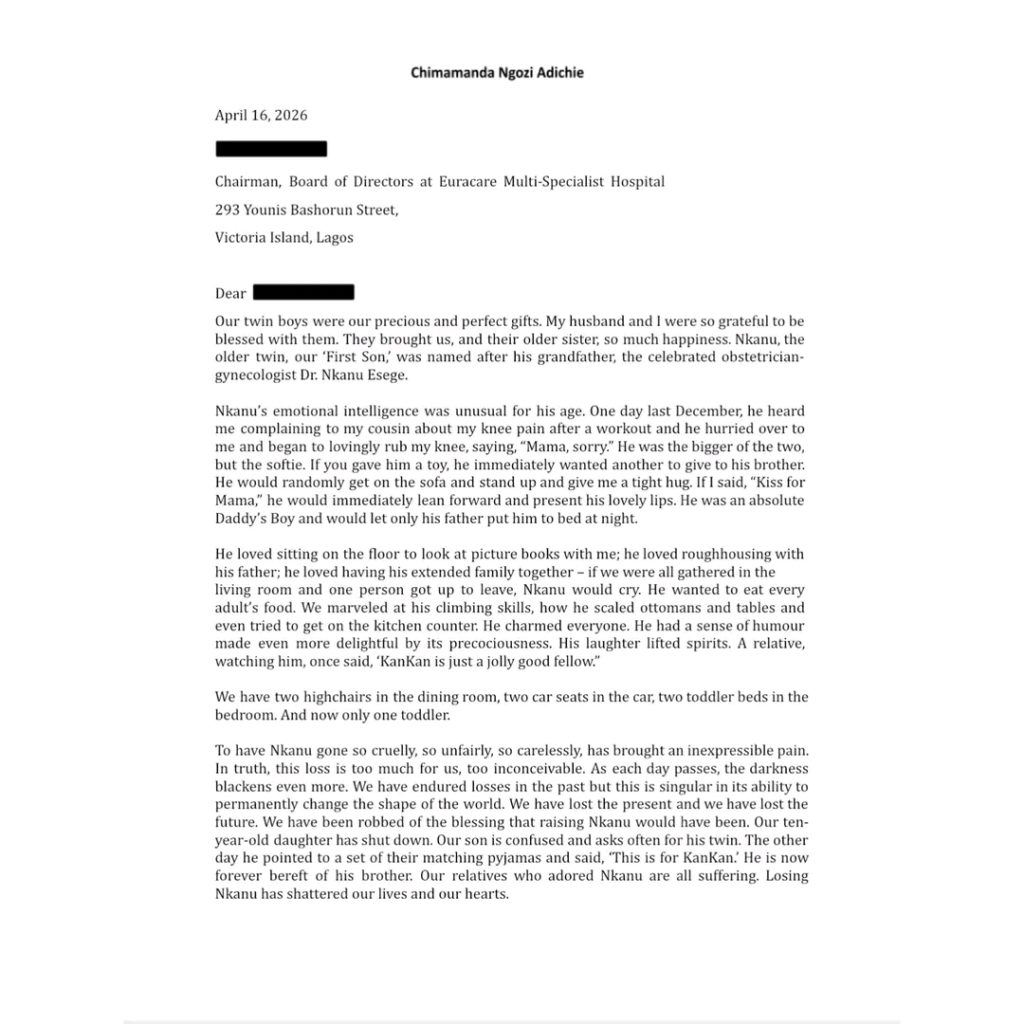
LAGOS — The public sphere in Nigeria has been deeply shaken following the harrowing statement released by renowned author and public intellectual, Chimamanda Ngozi Adichie. On Saturday, June 13, 2026, Adichie leveraged her global platform to air serious allegations of medical negligence and institutional obfuscation against Euracare Multi-Specialist Hospital in Lagos. The heart of the matter concerns the untimely death of her son, Nkanu Nnamdi, and the subsequent legal and ethical battle that has unfolded in the months following his passing. For Adichie, this is more than a personal grievance; it is a desperate quest for truth in a healthcare environment where transparency is too often sacrificed for institutional preservation.
The Allegations: Negligence, Inconsistency, and Obstruction
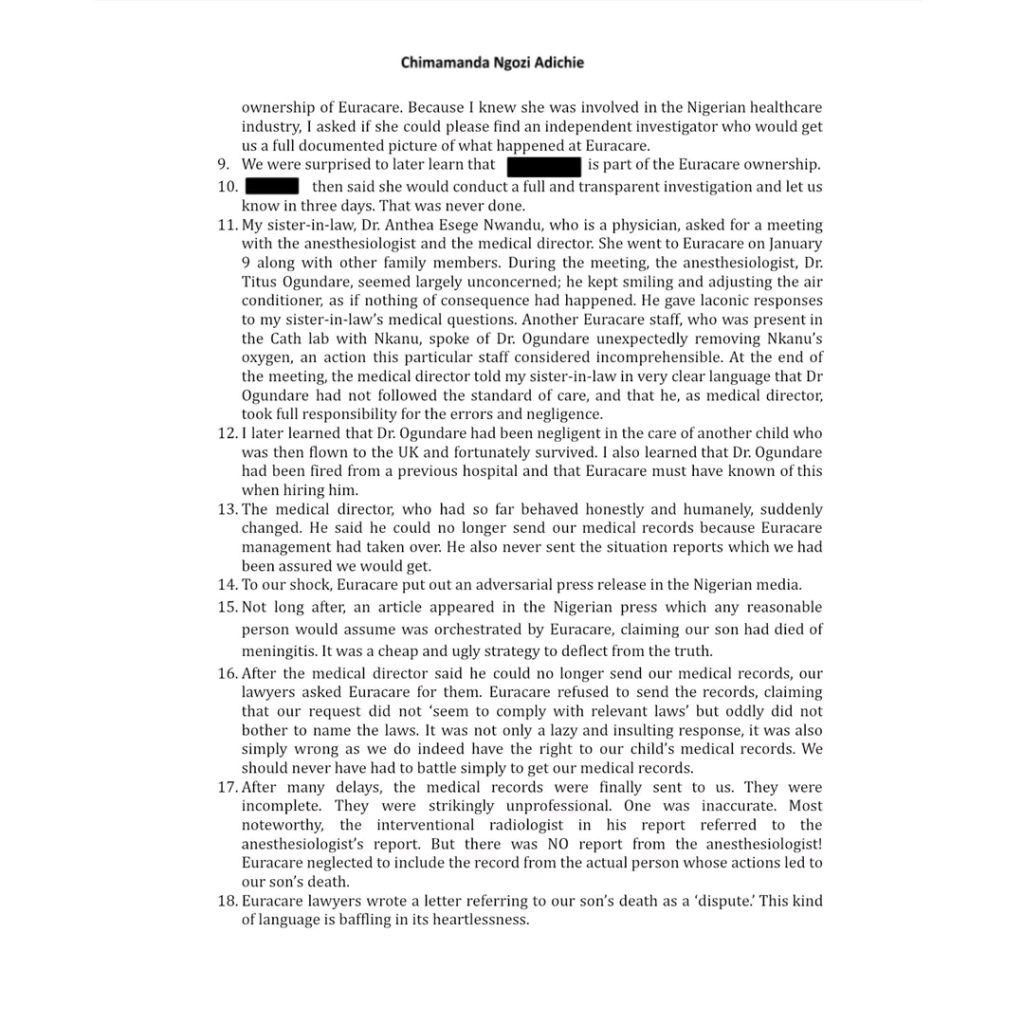
Adichie’s account depicts a family trapped in a cycle of grief compounded by professional malpractice and bureaucratic evasion. According to her statement, the initial communication from Euracare suggested an openness to a judicial inquest—a process the hospital ostensibly welcomed to clear its reputation following "rumors of negligence." However, Adichie alleges that this early posture of cooperation was a performative gesture. She claims that as soon as the formal legal machinery of the inquest began to turn, the institution shifted to a strategy of stalling, utilizing sophisticated legal maneuvers to impede the coroner’s proceedings.
The grievances leveled by Adichie are centered on three primary pillars of alleged malfeasance:
-
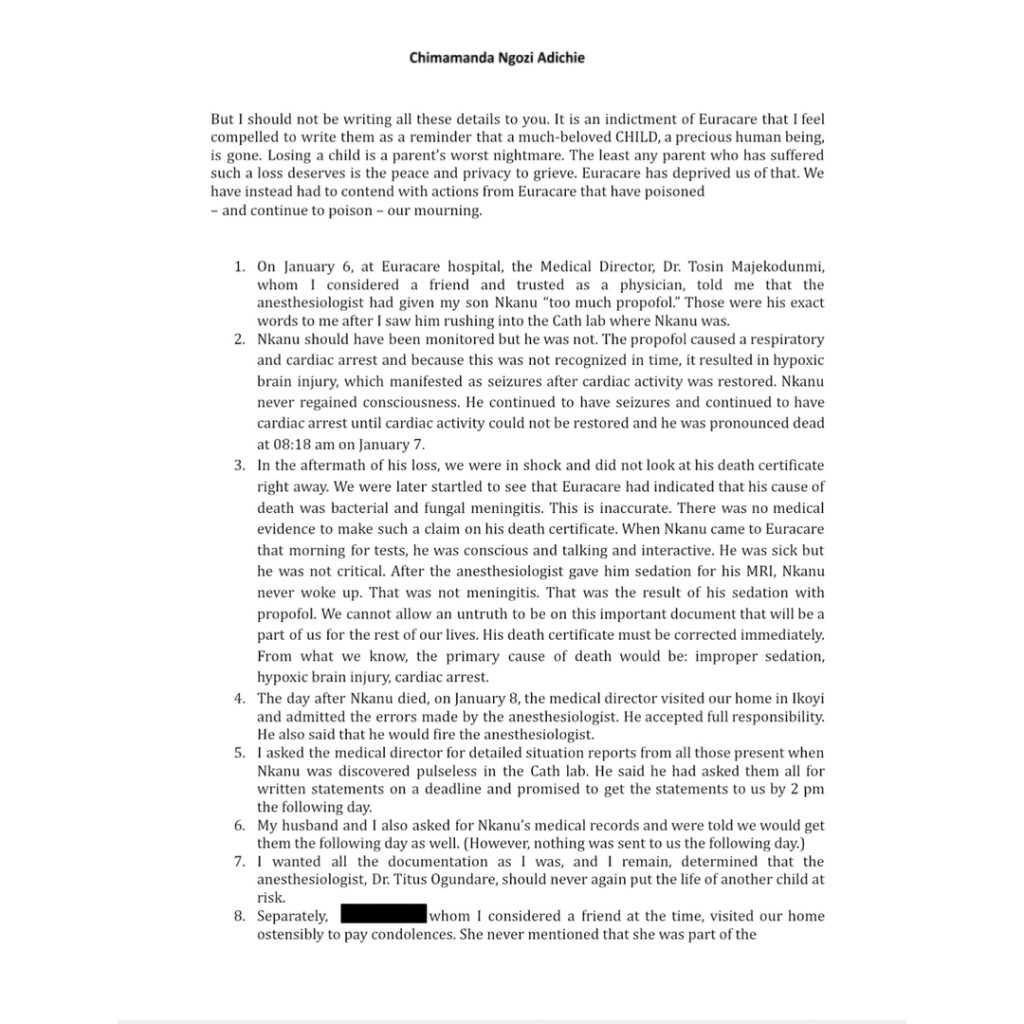
Conflicting Medical Reports: Perhaps the most egregious of the claims involves the shifting narratives surrounding the cause of Nkanu Nnamdi’s death. Adichie asserts that internal medical discussions initially pointed toward complications arising from the sedation process. Yet, when the official death certificate was issued, the diagnosis had pivoted to meningitis—a medical conclusion Adichie explicitly and categorically disputes. Such discrepancies in diagnostic documentation are not merely administrative errors; in a legal context, they raise fundamental questions about the veracity of the records and the potential for retrospective alteration.
-
Withheld and Obfuscated Records: Transparency is the cornerstone of trust in the doctor-patient relationship. Adichie contends that despite early admissions of procedural error from members of the hospital staff, the institution has systematically denied her legal team access to complete medical records, internal staff reports, and raw data necessary to understand the final hours of her son’s life. Without this information, the family is effectively barred from mounting an informed legal challenge or achieving closure.
-
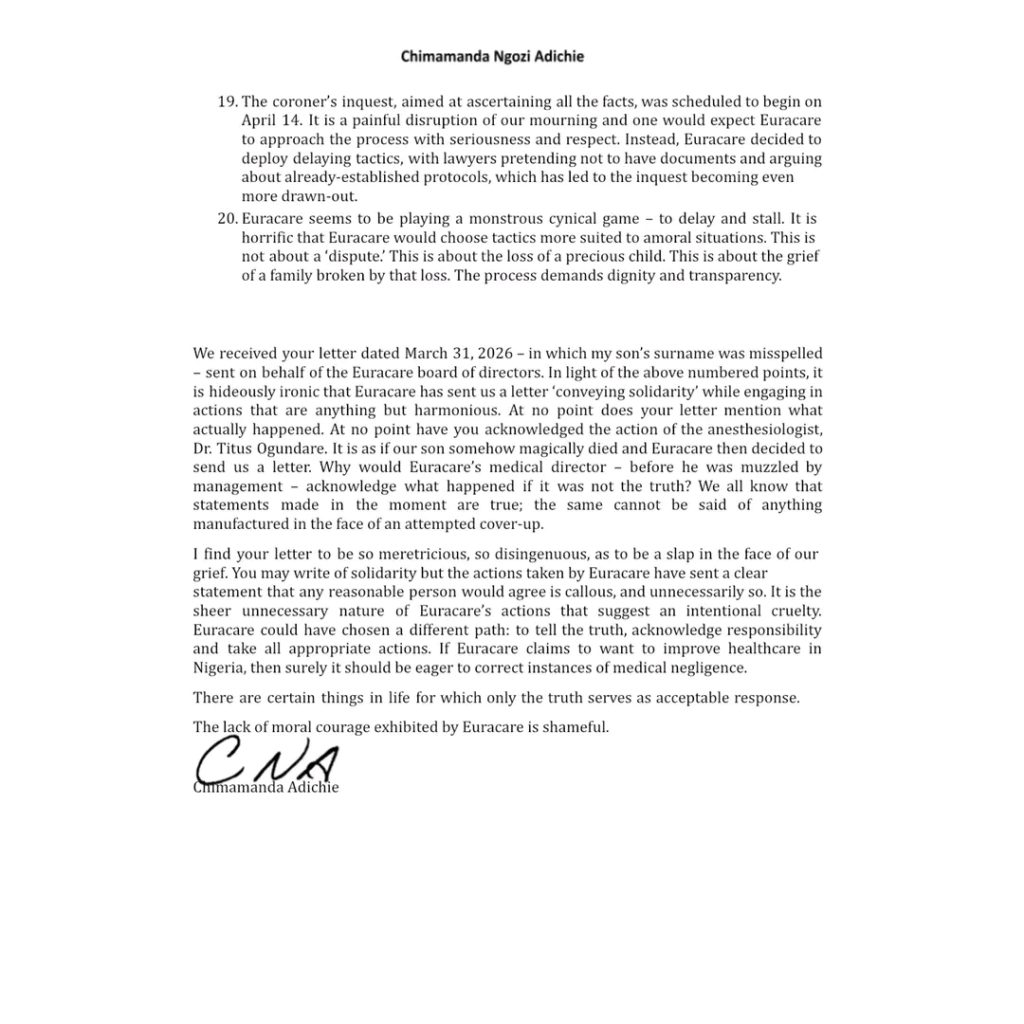
Legal Obstructionism: By actively frustrating the coroner’s inquest, Euracare is accused of placing institutional reputation above the legal requirement for public accountability. A coroner’s inquest is a fact-finding mission designed to serve the public interest by determining the "who, when, where, and how" of a death. By mounting legal hurdles to delay or dismantle this process, Adichie argues that Euracare is not acting like an entity that has nothing to hide, but rather like one protecting a systemic failure.
The Emotional and Moral Imperative
For Adichie, the pursuit of justice is the only bridge to mourning. Grief is a non-linear process, but it requires at least a veneer of truth to begin. "I long for, at least, peace to mourn, but Euracare Hospital has robbed me even of that," she wrote. Her decision to go public—a move that brings with it the risk of additional litigation—is framed by her as a moral imperative. In her view, the institutional silence of Euracare is not a neutral stance; it is a choice to perpetuate a system of impunity. "To keep silent about Euracare’s evil is to enable it," she stated, challenging the hospital to address these claims in the court of public opinion if they cannot do so in the court of law.
Medical Accountability in Private Healthcare
This case serves as a flashpoint for a much larger, brewing discourse regarding the transparency and accountability of private healthcare institutions in Nigeria. As the country’s medical tourism industry grows, and as high-end multi-specialist hospitals increasingly cater to the elite and middle class, the mechanisms for external oversight have not kept pace.
Many private hospitals in Nigeria operate with a high degree of autonomy, and when negligence occurs, the pathways for redress are often long, prohibitively expensive, and fraught with institutional gatekeeping. Adichie’s case brings the "power imbalance" between an aggrieved family and a multi-specialist hospital into sharp focus. The incident highlights the urgent need for a more robust regulatory framework—one that mandates immediate disclosure in the event of unexpected deaths and provides for the automatic, independent review of medical records by a third-party ethics committee.
The Necessity of Investigative Transparency
As of early Sunday, June 14, 2026, the silence from Euracare Multi-Specialist Hospital regarding these specific allegations remains deafening. While the institution may be constrained by legal counsel to avoid public statements, the court of public opinion has already made its presence felt. The discourse generated by Adichie’s plea emphasizes that in the modern era, healthcare institutions can no longer operate behind a wall of "medical confidentiality" when the health outcomes in question are characterized by high-profile failure or suspicious circumstances.
Medical uncertainty is a part of life, but institutional dishonesty is a systemic choice. When a facility links a death to sedation and then, without clarification, pivots to a diagnosis of meningitis, it does not just fail the patient—it fails the integrity of the entire medical profession. Adichie’s push for an inquest is, at its core, a demand for the type of transparency that should be the standard for every Nigerian, regardless of their status. Whether this battle results in a landmark legal precedent for medical accountability or remains a tragic personal struggle, it has already succeeded in forcing a long-overdue conversation about the rights of patients and the responsibilities of those who promise to heal them.