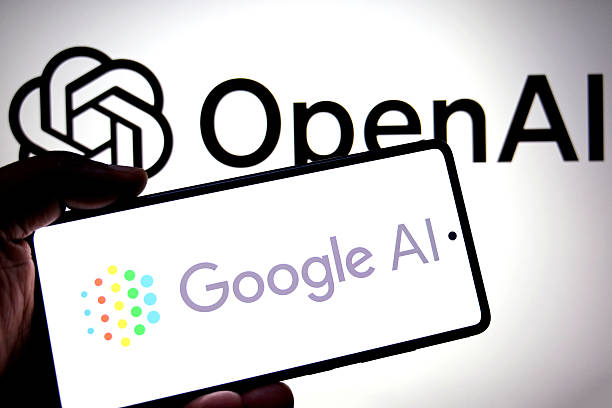
SAN FRANCISCO / WASHINGTON — In an era where artificial intelligence is increasingly viewed as a cornerstone of national security and economic dominance, a deepening rift has emerged between Silicon Valley’s open-access philosophies and Washington’s geopolitical objectives. A recent report by The Financial Times has brought this tension to the forefront, revealing that tech behemoths OpenAI and Google have been supplying advanced AI models to Singapore-based subsidiaries of major Chinese technology corporations—entities that currently sit on the US Pentagon’s blacklist due to alleged ties to the Chinese military.
This revelation has sparked a fierce debate among policymakers, cybersecurity experts, and industry leaders regarding the effectiveness of current US trade restrictions and the risks inherent in an interconnected global digital economy.
The Geography of Access vs. The Reality of Espionage
The core of the controversy lies in the operational structure of major Chinese tech conglomerates like Alibaba, Baidu, and Tencent. While these entities are subject to strict oversight within mainland China and have been identified by the US Department of Defense under the "1260H list"—a designation for companies suspected of working with the Chinese military—their international subsidiaries operate across hubs like Singapore and Hong Kong.
OpenAI and Google have defended their international business practices, arguing that they do not provide direct access to their models from within mainland China. Instead, they frame their services as accessible to international subsidiaries that are expected to adhere to rigorous safety protocols.
An OpenAI spokesperson clarified the company’s stance, stating, "We would rather see more of the world using AI shaped by democratic values than AI controlled by autocratic governments." The company maintained that nationality should not be the sole arbiter of access, emphasizing that their security frameworks are designed to prevent malicious use regardless of a firm's ownership structure. Google echoed this sentiment, noting that their advanced AI services are available in international hubs, provided users remain compliant with strict usage policies that forbid the development of weapons or the facilitation of cyberattacks.
The "Distillation" Threat: Stealing Intelligence
Despite the optimism surrounding their security safeguards, both OpenAI and Google have been forced to confront the sophisticated reality of digital espionage. The report highlights a growing concern regarding "model distillation," a process through which a developer takes the output of a premium, proprietary AI model (such as GPT-5.6) and uses it to train a lower-tier, indigenous model.
Essentially, by feeding the high-quality outputs of a rival's system into their own, these companies can rapidly "distill" the intellectual property and specialized capabilities of the US-based models.
OpenAI confirmed that it was forced to take drastic measures last month, suspending access for several users affiliated with Alibaba. The company’s internal monitoring systems had flagged these accounts for attempting to engage in distillation practices—a move that underscores the cat-and-mouse game occurring behind the scenes of every API call. Google, too, has conceded that geographic restrictions are no longer sufficient to mitigate these risks, noting that the threat of unauthorized IP transfer is a constant, evolving challenge.
Washington’s Regulatory Blind Spot
For years, the US government—under both current and previous administrations—has aggressively pursued policies to maintain a technological edge over China. However, these efforts have historically focused on physical hardware. The focus of export controls has primarily targeted high-end microchips, such as the GPUs required to train massive AI models, as well as the manufacturing equipment used to produce them.
While this "hardware-first" strategy has been effective in slowing down the physical training of large-scale models in China, it has left a gaping loophole in the software domain. Because AI models are digital products, they can be distributed via the cloud, crossing borders instantly.
Current federal regulations have placed restrictions on a handful of elite, next-generation AI models—specifically citing Anthropic’s "Mythos" and "Fable," as well as OpenAI’s latest GPT-5.6 iteration—as sensitive technologies. Yet, there remains no comprehensive federal ban stopping Chinese-headquartered corporations from purchasing advanced AI software through their various international subsidiaries. This creates a scenario where a company placed on the Pentagon's "1260H list" for military-civil fusion is legally permitted to access the very software tools that are intended to be kept out of the hands of hostile state actors.
The Road Ahead: Balancing Innovation and Security
Security experts argue that this software loophole effectively negates the hardware bans that the US has spent billions of dollars and significant diplomatic capital to enforce. If Chinese tech giants can access the intelligence of elite models via international subsidiaries, the restrictions on microchips become significantly less effective, as they can maximize the utility of their limited compute resources using state-of-the-art software architectures.
The pressure is now mounting on the US Department of Commerce and the Pentagon to reconcile their export control regimes with the realities of the AI industry. Proposals for stricter software licensing, mandatory disclosure for international subsidiaries, and more robust "know your customer" (KYC) requirements for AI API providers are currently circulating in Washington.
However, industry leaders warn that overly aggressive regulation could stifle American innovation and drive the global AI community toward proprietary silos, potentially hindering the development of safety standards.
As the 2026 tech cycle continues to accelerate, the question of whether software can be contained like physical contraband remains unanswered. The current standoff between OpenAI, Google, and the US security establishment is likely just the beginning of a long, complex negotiation over what it means to secure the intellectual foundations of the modern world. For now, the "distillation" of US-made technology continues, forcing tech companies to weigh their global commercial aspirations against the national security mandates of the governments that fostered them.