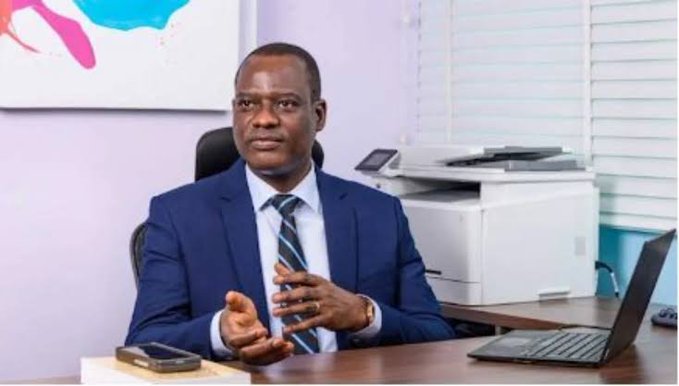
ABUJA — In a major shift in fiscal rhetoric, the Minister of Finance and Coordinating Minister of the Economy, Taiwo Oyedele, has declared that Nigeria must end its heavy reliance on external and domestic borrowing to fund national progress. Speaking at the 28th Annual Tax Conference of the Chartered Institute of Taxation of Nigeria (CITN), Oyedele emphasized that the path to a $1 trillion economy lies in a sustainable, internally generated fiscal system rather than a mounting debt profile.
The Sustainability Mandate
The Minister's warning comes at a delicate time, as reports recently surfaced regarding the Federal Government’s pursuit of a fresh $1.25 billion World Bank loan. Addressing the apparent contradiction, Oyedele argued that while targeted credit may support immediate reforms, the long-term goal is to build a system capable of independently funding infrastructure, education, healthcare, and security.
"Nigeria cannot continue to finance development primarily through borrowing," Oyedele stated. He defined fiscal sustainability as a system that does more than just collect cash it must promote productivity, protect the most vulnerable, and reduce the widening gap of inequality.
Radical Tax Reforms: Fairness Over Frequency
Oyedele detailed the administration's comprehensive tax overhaul, which he described as an effort to fix decades of structural decay. Historically, the Nigerian tax landscape has been marred by multiple taxation, fragmented administration, and a "narrow base" that unfairly burdened a small group of compliant taxpayers.
Key pillars of the new tax proposal include:
-
Relief for Low-Income Earners: Minimum wage earners are now officially exempt from personal income tax.
-
Corporate Incentives: A proposed reduction in Company Income Tax (CIT) rates to make Nigeria a more competitive destination for foreign direct investment.
-
VAT Modernization: Expanding input VAT credits to reduce the "cost buildup" for businesses, which the government hopes will help moderate the country’s high inflation rates.
-
Tax Harmonization: The Minister revealed that 15 states have already enacted laws to stop overlapping levies and "predatory" enforcement, with more expected to follow.
VP Shettima Defends "Pro-People" Policies
Vice-President Kashim Shettima, represented by Dr. Tope Fasua, echoed the Minister’s sentiments, describing the reforms as an "act of patriotism." Addressing public skepticism and the fear that higher taxes mean more hardship, the Vice President insisted that the administration is focused on "lifting millions out of poverty" by taxing consumption and high-end wealth rather than basic survival.
Shettima acknowledged that "misinformation" is a major hurdle but maintained that President Bola Tinubu is committed to a business-friendly environment where ordinary Nigerians can thrive regardless of their social background.
A Positive Shift in Debt-to-Revenue Ratios
CITN President Innocent Ohagwa provided a data-driven perspective on the success of these early reforms. He noted that Nigeria’s revenue-to-debt servicing ratio, which reached a staggering 120 per cent in December 2022, has successfully declined to 68 per cent as of the end of 2025.
Ohagwa asserted that the goal is to transition Nigeria "from a nation that borrows to survive to one that invests to thrive." He added that the focus on digital filing and technology-driven compliance will help curb illicit financial flows and bring more of the informal sector into the fold.
The conference, themed “Tax Reforms and Global Relevance,” concluded with a consensus that while the transition is painful, a transparent and fair tax system is the only alternative to a future of perpetual debt.