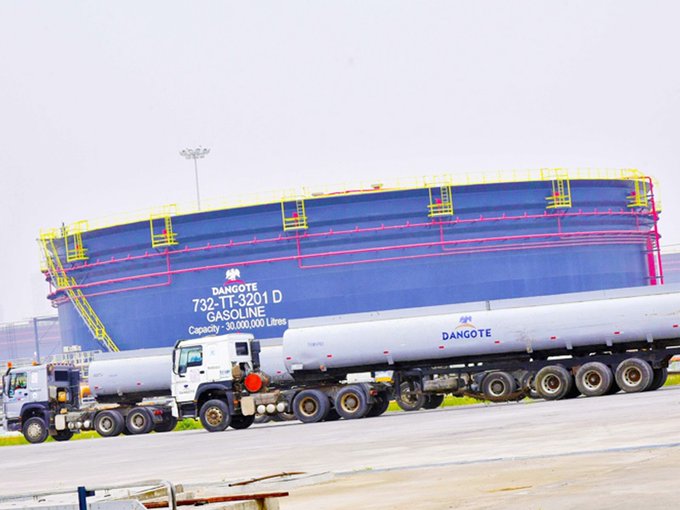
LAGOS — The Dangote Petroleum Refinery has aggressively cemented its monopoly over Nigeria’s downstream energy sector, accounting for an unprecedented 79 per cent of the nation's total petrol supply in April 2026. This monumental surge in domestic refining capacity has triggered a massive 37 per cent drop in fuel imports, signaling a historic shift away from Nigeria's decade-long reliance on foreign refined products.
Surging Production and Capacity Utilization
According to the April 2026 State of the Midstream and Downstream Fact Sheet released by the Nigerian Midstream and Downstream Petroleum Regulatory Authority (NMDPRA), the 650,000-barrel-per-day mega-refinery significantly ramped up its distribution channel. The plant raised its daily Premium Motor Spirit (PMS) evacuation from 34.2 million liters recorded in March to a staggering 40.7 million liters per day in April.
The NMDPRA report further highlighted that the multi-billion-dollar facility achieved a remarkable 100 per cent capacity utilization on the vast majority of trading days throughout April. This output explosion brings Aliko Dangote’s facility within arm's reach of its ultimate goal: injecting 75 million liters of petrol daily into the local market, which easily eclipses Nigeria's baseline consumption needs.
The Death of Fuel Imports Amid Rising Demand
The immediate fallout of Dangote's production boom is the drastic contraction of foreign fuel vessels docking at Nigerian ports. Daily petrol imports plummeted to just 3.7 million liters in April, down from the 5.9 million liters trickling in during March.
This drop in imports occurred despite a noticeable spike in domestic fuel hunger. Driven by heightened commercial transport activities, Nigeria's actual daily petrol consumption climbed sharply to 51.1 million liters per day, up from 47.3 million liters the previous month. Dangote’s ability to absorb this demand shock effectively insulated the country from potential scarcity.
The refinery also duplicated this success in the heavy machinery sector. Domestic supply of Automotive Gas Oil (diesel) via the Lekki-based facility more than doubled, jumping to 8.5 million liters per day in April from 3.9 million liters in March, helping satisfy a national diesel appetite that peaked at 17.3 million liters daily.
State-Owned Refineries Idle, Modular Outlets Hold the Line
In stark contrast to the private sector triumphs, the NMDPRA data painted a bleak picture of Nigeria’s state-owned infrastructure. All four of the Nigerian National Petroleum Company (NNPC) limited refineries located in Port Harcourt, Warri, and Kaduna remained entirely dormant and recorded zero production output throughout April. The newly rehabilitated Port Harcourt plant stayed offline, only managing the skeletal truck-out of 0.048 million liters per day of leftover diesel refined back in March.
Fortunately, local modular refineries provided vital tactical support, operating at respectable capacities to keep the economy lubricated:
-
Edo Refinery: Led the modular pack with a stellar 79.20 per cent capacity utilization, releasing 0.092 million liters of diesel daily.
-
Waltersmith Refinery: Posted an average capacity utilization of 56.14 per cent, supplying 0.254 million liters of diesel per day.
-
Aradel Holdings: Operated at 33.95 per cent utilization, contributing an average of 0.213 million liters daily.
Combined, these three private modular hubs injected a steady 0.559 million liters of diesel daily into the national pool. As the mid-year approaches, the NMDPRA's benchmarks demonstrate that while actual consumption across petrol, diesel, and cooking gas continues to overshoot official yearly projections, the rapidly expanding footprint of domestic private refining is safely steering Nigeria toward a self-sufficient energy future.