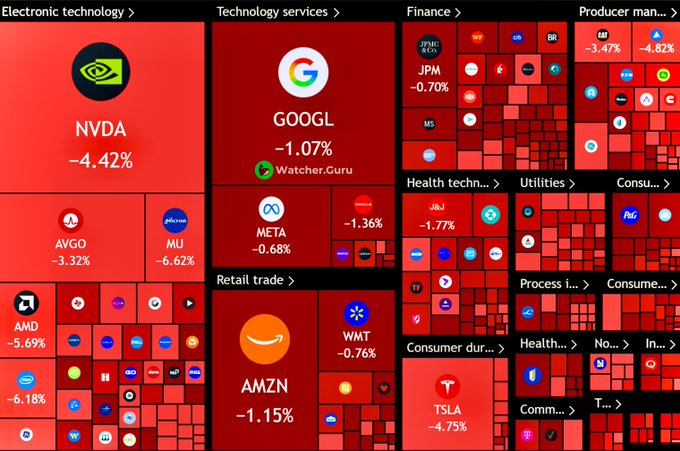
NEW YORK — In a dramatic and highly turbulent trading window that has sent shockwaves through global financial corridors, more than $900 billion in total market capitalization was completely erased from US equities in a single devastating trading session. The massive sell-off marks one of the sharpest single-day destructions of wealth in recent financial memory, instantly positioning the session alongside the most severe macroeconomic drawdowns of the post-pandemic era.
The scale of the multi-billion-dollar rout caught institutional desks and retail traders off guard, triggering widespread liquidations across major indices. A single-day market evaporation of this magnitude sends an unmistakable signal to global capital allocators that market sentiment has turned deeply defensive, bringing a prolonged period of relative equity market stability to a grinding halt.
Anatomy of a Meltdown: Macro Pressures Converge
While regulatory agencies and exchange desks have yet to pinpoint a single, precise catalyst behind the sudden afternoon rout, equity analysts indicate that liquidations of this historic magnitude are almost always driven by a confluence of severe macroeconomic pressures. Chief among the suspected culprits is a sudden spike in long-term interest rate expectations, fueled by persistent underlying inflation data that could force the Federal Reserve to maintain an aggressive, hawkish policy stance for much longer than the market had previously priced in.
Compounding the interest rate anxiety is a broader, systemic deterioration of global risk appetite. Institutional desks reportedly accelerated program trading models into defensive mode, shifting capital out of high-flying tech megacaps and speculative growth equities into the safety of short-term US Treasury bills and cash reserves.
The sudden rotation completely drained liquidity from the trading floors, leaving minor bid-side support to absorb the massive volume of sell orders. By the closing bell, the aggressive institutional positioning left deep red numbers across the board, wiping clean months of accumulated capital gains in a matter of hours.
The Crypto Correlation and Contagion Outlook
With over $900 billion drained from traditional equity accounts, financial analysts are shifting their immediate focus toward secondary asset classes to assess the threat of cross-market contagion. The cryptocurrency market is facing intense scrutiny, given its increasing structural correlation with US tech equities during broad, risk-off macro episodes.
Historically, when institutional liquidity tightens in New York, digital assets experience sharp, high-beta liquidations as fund managers scramble to meet margin calls and shore up cash balances. If the equity bleed carries over into the overnight sessions, digital assets could face a severe wave of forced selling.
Moving forward into the upcoming weekly sessions, asset managers are advising extreme caution and disciplined risk management. Market participants are heavily monitoring the overnight futures indices and bracing for any emergency macro commentary or liquidity assurances from Federal Reserve governors, Treasury officials, and European central bankers to determine whether this historic session was an isolated technical correction or the opening salvo of a deeper, prolonged bear market.