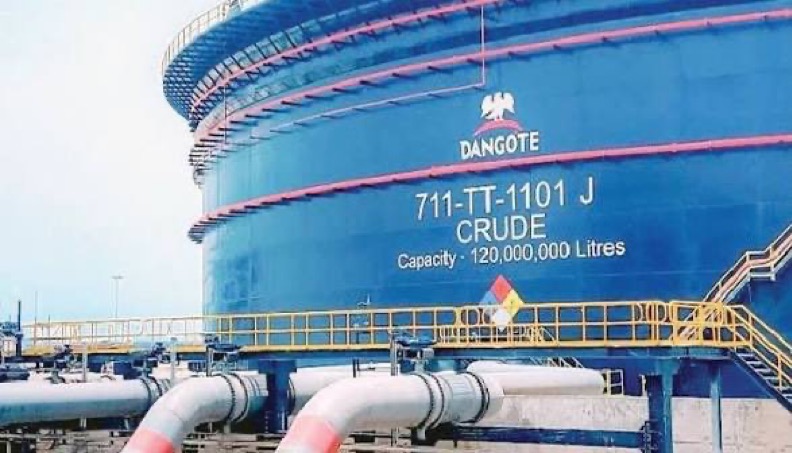
LAGOS — The Dangote Petroleum Refinery and Petrochemicals has officially redefined the benchmarks of the global energy sector. In a performance test conducted by the facility’s Process Licensors, the refinery confirmed it has successfully ramped up its crude oil processing capacity to 700,000 barrels per day (bpd). This milestone is not only a triumph of engineering but a pivotal moment for Nigeria’s industrial future, as the facility—already the world’s largest single-train petroleum refinery—continues to outperform its original nameplate capacity of 650,000 bpd.
Exceeding Expectations: The Engineering Feat
The achievement of 700,000 bpd represents a significant operational victory. For years, the Nigerian oil and gas sector struggled with aging, inefficient state-owned infrastructure that left the nation, despite its vast oil wealth, paradoxically dependent on imported fuel. The Dangote facility, by design and execution, has effectively reversed this narrative.
Devakumar Edwin, Vice-President for Oil and Gas at Dangote Industries Limited, confirmed that the performance test is only the beginning of a larger trajectory. The refinery’s ability to exceed its nameplate capacity validates the sophisticated technology and complex infrastructure integrated into the site. By optimizing process flows and enhancing secondary units, the management has demonstrated that the facility can function at a scale that exceeds the projections of even its original international consultants.
Strategic Expansion: Toward 1.4 Million BPD
While a capacity of 700,000 bpd is historic, the Dangote Group has set its sights on even loftier goals. The company has formally announced an ambitious expansion strategy that aims to double its total refining capacity to 1.4 million bpd within the next 30 months.
This expansion plan, slated for completion by 2028, is designed to transform Nigeria into a pre-eminent regional energy hub. By scaling to 1.4 million bpd, the refinery will not only meet the entirety of Nigeria's domestic demand for refined petroleum products but will also provide a massive surplus for export, fundamentally altering Nigeria’s balance of trade. For a nation that has historically battled with severe foreign exchange (FX) shortages, the transition from a net importer to a high-volume exporter of high-value refined products is a game-changer. It effectively insulates the domestic economy from the volatility of global shipping costs and currency devaluation cycles that previously crippled the local downstream sector.
Global Market Influence and Geopolitical Stability
Since commencing operations in 2024, the refinery has moved beyond domestic utility to become a major player in the global oil market. The facility’s scale has provided a necessary cushion for international energy markets, particularly amid the ongoing geopolitical volatility in the Middle East, which has historically caused sudden spikes in global oil and gas prices.
The facility’s reach is extensive. It has rapidly scaled its international footprint, establishing robust supply chains for jet fuel, gasoline, and diesel to major markets across the United Kingdom, France, Spain, Italy, the Netherlands, and Saudi Arabia. This international success is not merely anecdotal; in April 2026, S&P Global Commodities officially recognized the refinery as the world’s largest exporter of jet fuel. This distinction marks Nigeria’s entry into the elite circle of global energy suppliers, signaling a shift in the way African industrial capabilities are viewed by international markets.
Driving Downstream Industrialization
Aliko Dangote’s vision for the refinery, however, extends far beyond the production of petrol and diesel. The facility is strategically positioned to serve as the heartbeat of Nigeria’s downstream industrial growth. By providing a consistent, reliable supply of essential feedstocks, the refinery is attracting ancillary industries that were previously untenable in Nigeria due to raw material shortages.
-
Petrochemical Feedstocks: The facility is a critical source for polypropylene, which is essential for the manufacturing of plastics, textiles, and packaging. This is expected to trigger a boom in the domestic consumer goods manufacturing sector.
-
Chemical Intermediates: Future plans include the production of Linear Alkylbenzene (LAB), a critical component for the detergent and surfactant industry, which will significantly reduce import dependency for Nigeria's vibrant cleaning products sector.
-
LPG Distribution: By increasing the domestic supply of Liquefied Petroleum Gas (LPG), the refinery is supporting the federal government’s "gas-to-power" and "gas-to-home" initiatives, helping transition millions of households from more expensive and environmentally hazardous fuels.
Economic Impact and Long-term Development
As the refinery sustains this rising output, its impact on the Nigerian labor market and industrial ecosystem is expected to be profound. The sourcing of feedstock is increasingly diverse, drawing from both domestic oil fields and international crude supplies. This diversity of supply ensures that the refinery operates at high utilization rates, regardless of localized production disruptions.
The planned expansion to 1.4 million bpd is poised to be the primary engine for Nigeria’s GDP growth in the coming years. By fostering job creation through the multiplier effect—where every direct job at the refinery creates multiple indirect jobs in logistics, supply chain management, and downstream manufacturing—the facility is helping to diversify an economy that has for too long been reliant on crude oil exports alone.
Furthermore, the refinery is setting new standards for environmental compliance and professional training in the sector. Thousands of young Nigerian engineers, technicians, and project managers have been trained on-site, building a local talent pool that will form the backbone of Nigeria’s industrial future for decades to come.
As the refinery continues its operational surge, it remains the clearest evidence of the power of large-scale private sector investment in infrastructure. With the performance test confirmed and expansion efforts underway, the facility is not just a triumph for the Dangote Group—it is a cornerstone for a new, industrially self-sufficient Nigeria.