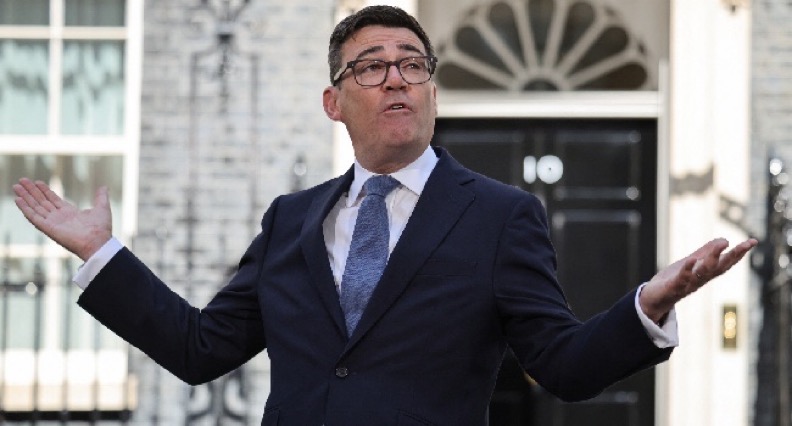
LONDON, UNITED KINGDOM — The first major economic policy action since taking office, newly appointed United Kingdom Prime Minister Andy Burnham has announced an immediate reduction in value-added tax (VAT) on consumer electricity bills. The targeted tax relief program, unveiled ahead of his administration's inaugural cabinet meeting at 10 Downing Street, is designed to provide rapid relief to British households navigating persistent cost-of-living pressures.
The fiscal intervention marks a decisive shift in economic policy following the departure of former Prime Minister Keir Starmer. Burnham, the former Mayor of Greater Manchester who returned to Parliament before securing the Labour leadership, pledged during his inaugural address to deliver a "circuit breaker" for the national economy. The VAT adjustment represents the first step in a broader ten-year structural reform program aimed at re-industrializing the United Kingdom, decentralizing fiscal power, and expanding state intervention across essential public services.
Targeted Fiscal Relief: The Mechanics of the Electricity VAT Cut
Under the newly announced measures, the federal value-added tax levied on domestic electricity consumption will be reduced from 5 percent down to zero starting in October. Treasury estimates indicate that the tax cut will trim approximately £45 ($61) annually off the average household energy bill, offering immediate margin relief to lower- and middle-income families across England, Scotland, and Wales.
To preserve strict fiscal neutrality and comply with existing statutory borrowing limits, the Burnham administration confirmed that the revenue shortfall will be offset by canceling planned administrative expenditures. Specifically, the government is scrapping the proposed national digital identity card program, reallocating its capital budget directly to fund the energy relief initiatives.
[ UK Energy Tax Cut & Fiscal Offsets Overview ]

• Statutory Tax Change: Value-Added Tax (VAT) on electricity reduced from 5% to 0%
• Implementation Date: October 2026
• Estimated Consumer Benefit: ~£45 ($61) savings per household annually
• Primary Funding Source: Reallocated budget from canceled National Digital ID initiative
• Target Audience: Domestic energy consumers nationwide
Speaking on behalf of the new administration, newly appointed Business Secretary Jonathan Reynolds characterized the announcement as a foundational statement of intent for the government. Reynolds emphasized that while the tax cut represents an initial intervention, it establishes a clear trajectory toward lowering operational overheads for British households while maintaining responsible fiscal management.
Wholesale Cabinet Reorganization and Political Realignment
The tax announcement followed a swift and comprehensive overhaul of the executive cabinet. Moving rapidly after his formal appointment by King Charles III at Buckingham Palace, Prime Minister Burnham restructured key ministerial portfolios, removing several senior figures closely aligned with his predecessor's agenda while promoting allies from the party's regional and soft-left wings.
The cabinet reshuffle resulted in major leadership transitions across top government departments:
-
HM Treasury (Finance Ministry): Former Defence Secretary John Healey has been named Chancellor of the Exchequer, replacing Rachel Reeves. Healey inherits a complex fiscal landscape defined by high sovereign debt servicing costs and tight statutory rules.
-
Foreign, Commonwealth & Development Office: Ed Miliband transitions to Foreign Secretary, tasked with managing diplomatic relations across Europe and North America.
-
Ministry of Defence: Wes Streeting, who previously served in shadow health roles, takes charge as Defence Secretary, assuming oversight of national security priorities and military assistance commitments.
-
Home Office: Shabana Mahmood retains her position as Home Secretary, ensuring operational continuity in overseeing ongoing border management and asylum system reforms.
-
Deputy Leadership & Regional Devolution: Angela Rayner returns to senior government leadership, spearheading local government engagement and regional economic decentralization.
[ Key Cabinet Appointments in Burnham Administration ]

• Prime Minister: Andy Burnham
• Chancellor of the Exchequer: John Healey
• Foreign Secretary: Ed Miliband
• Defence Secretary: Wes Streeting
• Home Secretary: Shabana Mahmood
• Business Secretary: Jonathan Reynolds
The political restructuring reflects Burnham's intention to establish a distinct governance philosophy centered on regional empowerment and public investment, departing from the centralized technocratic structure that characterized previous administrations.
Industrial Re-industrialization and Domestic Policy Directives
In his first official address from the steps of 10 Downing Street, Prime Minister Burnham outlined a vision to reverse structural economic decisions dating back to the 1980s. He argued that decades of over-centralized political power, rapid privatization of public infrastructure, and aggressive industrial downsizing left regional economies vulnerable to global market volatility.
A primary pillar of the administration's long-term strategy involves leveraging state procurement to rebuild domestic manufacturing capacity. By directing public sector contracts toward domestic suppliers, the government plans to stimulate regional employment, support heavy industry, and secure essential supply chains in energy, transportation, and construction.
Simultaneously, Burnham issued his first executive instruction ordering government agencies to establish a comprehensive strategy to eliminate rough sleeping across urban centers. Drawing on initiatives piloted during his tenure as Mayor of Greater Manchester, the policy combines targeted emergency shelter investments with expanded public housing development and integrated mental health support networks.
Foreign Policy Continuity and Transatlantic Relations
Despite significant shifts in domestic economic strategy, the new administration has signaled continuity across major international security and diplomatic engagements. Following his appointment, Prime Minister Burnham conducted introductory bilateral telephone calls with key world leaders to outline the United Kingdom's foreign policy positioning.
During a initial diplomatic exchange with U.S. President Donald Trump, discussions focused on trade cooperation, defense commitments, and maritime security operations, including ongoing joint efforts to maintain open navigation channels through the Strait of Hormuz. President Trump publicly acknowledged the conversation, noting shared interests in defense technology and commercial exchange.
In a separate call with Ukrainian President Volodymyr Zelenskyy, Prime Minister Burnham reaffirmed Britain’s unwavering military and diplomatic backing for Ukraine. Additionally, French President Emmanuel Macron and European leaders welcomed the transition, expressing optimism regarding deeper bilateral cooperation on regional security, commercial trade, and cross-border energy grids.
Macroeconomic Headwinds and Parliamentary Mandate
As the Burnham administration prepares to present its comprehensive ten-year plan and upcoming budget statement, it confronts severe macroeconomic constraints. The United Kingdom faces elevated public debt ratios, stagnant productivity growth, volatile international wholesale energy prices, and persistent domestic inflation.
Opposition lawmakers and political analysts have noted that the prime minister operates within tight fiscal parameters. Adhering to established parliamentary spending rules limits the scope for unfinanced stimulus, requiring any additional public sector investments to be balanced by structural cost savings or targeted revenue measures.
Nevertheless, the rapid deployment of energy tax cuts and cabinet restructuring demonstrates a clear strategy to address consumer cost pressures directly. The coming months will test whether the administration's emphasis on regional devolution, public infrastructure control, and domestic industrial backing can deliver sustained economic stability across the United Kingdom.