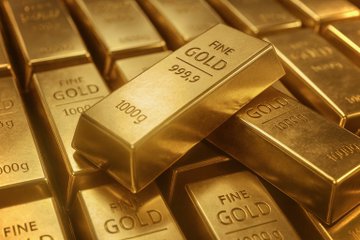
NEW YORK — The global gold market has faced a period of intense selling pressure throughout the trading session of June 10, 2026. As prices retreated by approximately 2% to 2.4%, the precious metal found itself caught in the crosscurrents of a broader, systemic revaluation of global asset classes. While recent financial news reports have been dominated by headlines of a staggering $1.1 trillion loss in market capitalization, it is essential to distinguish between the structural decline of equity indices and the specific, inflation-hedged adjustments occurring within the gold market.
Clarifying the Market Narrative: Equities vs. Precious Metals
The confusion regarding the $1.1 trillion loss—a figure often cited in recent financial bulletins—frequently obscures the distinct nature of asset-class behavior. That massive valuation evaporation refers to a liquidity event within the U.S. stock market, primarily driven by a sell-off in mega-cap technology companies and growth stocks. In contrast, the decline in gold prices is a reflection of shifts in investor appetite for "safe-haven" assets in a high-interest-rate environment.
Gold, which traditionally serves as a store of value and an inflation hedge, has struggled to find a solid floor as the macroeconomic narrative has shifted. Investors are currently recalibrating their portfolios in anticipation of the Federal Reserve’s upcoming interest rate decisions. The fundamental tension is clear: as long as interest rates remain elevated or are projected to climb, the opportunity cost of holding non-yielding assets like gold becomes increasingly difficult for institutional portfolio managers to justify.
The Federal Reserve and the "Interest Rate Trajectory"
The primary catalyst for gold’s recent decline is the market’s reaction to the Federal Reserve’s hawkish stance. When the Fed signals a commitment to restrictive monetary policy to combat persistent inflation, the yield on U.S. Treasury bonds tends to rise. Because gold does not pay interest or dividends, it becomes inherently less attractive compared to fixed-income securities when bond yields are competitive.
On June 10, 2026, the movement in the gold market was essentially a mirror of the movement in Treasury yields. As investors began to price in a "higher-for-longer" rate environment, capital flowed out of gold bullion and into government-backed debt instruments. This reallocation is standard in cycles of high macroeconomic uncertainty, yet the speed of the decline has caught many retail traders by surprise.
Geopolitical Uncertainty and the Safe-Haven Paradox
Paradoxically, gold is currently struggling despite a global landscape marked by significant geopolitical uncertainty. Historically, gold acts as a hedge against systemic risk, performing well during periods of international conflict or diplomatic instability. However, the current market reality is dictated by a "Liquidity Preference" framework. In periods of extreme market stress—such as the massive sell-offs witnessed in equities earlier this week—investors often sell their liquid assets, including gold, to meet margin calls or to raise cash to cover losses in other sectors.
This behavior, known as "selling what you can, not what you want," explains why gold often drops in tandem with stocks during the initial stages of a broader market crash. It is not necessarily a reflection of a long-term bearish view on gold, but rather a short-term reaction to the demand for liquidity.
Analyzing the Trend: Is this a Sustained Downturn?
Market analysts remain divided on the long-term implications of today's price action. Some institutions suggest that this dip represents a healthy rebalancing, providing a better entry point for long-term investors. They point to the persistent structural inflation in the global economy—driven by energy transition costs and labor market tightness—as factors that will eventually force gold back into a dominant position.
Others are more cautious. They argue that if the "AI-driven" bull market in technology continues to fracture, we may see further liquidation events that push the price of gold lower in the short term. The ability of gold to decouple from the stock market’s volatility is the metric that professionals are watching most closely. If gold begins to rise while the S&P 500 continues to fall, it would signal that the precious metal is reclaiming its traditional role as a portfolio stabilizer.
Strategic Outlook for Investors
For the retail and institutional investor, the current volatility highlights the necessity of diversification. Relying on gold as a singular hedge during a period of total market liquidity stress can lead to temporary losses. However, the underlying drivers of the gold market—central bank buying, industrial demand in electronics, and long-term concerns over currency debasement—remain largely unchanged.
As we move through the remainder of the second quarter, the focus will be squarely on the Federal Reserve’s rhetoric. Any softening in the language regarding future rate hikes could provide the catalyst for a gold price recovery. Conversely, if economic data continues to show surprising strength, allowing the Fed to keep rates at restrictive levels, the pressure on gold to reach a lower support level will likely intensify.
The volatility seen on June 10 serves as a stark reminder: even in markets designed to protect wealth, the interaction between interest rates, liquidity needs, and investor psychology creates a dynamic environment where constant monitoring is required. For now, the gold market is navigating a turbulent path, seeking to define its role in an economic cycle that is, in many ways, unprecedented.