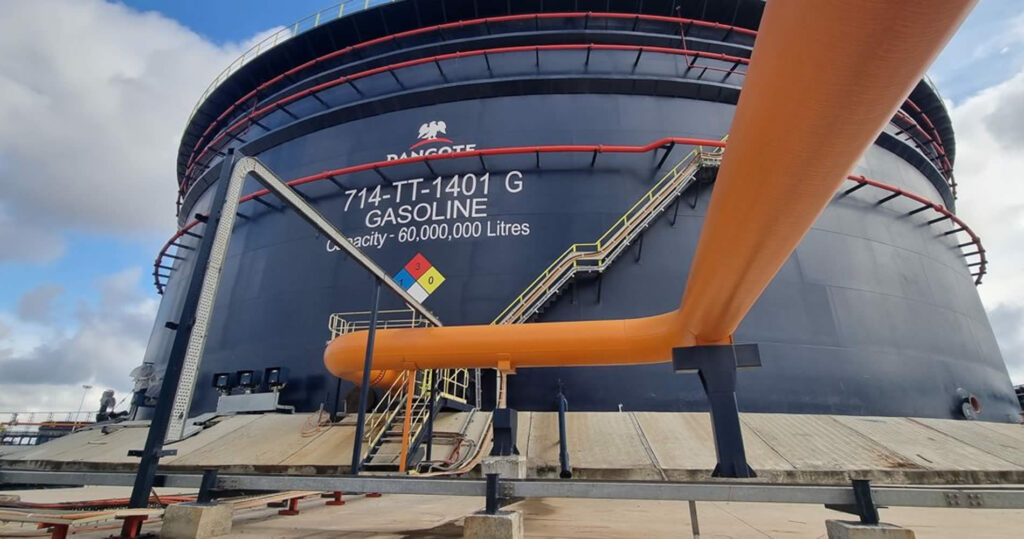
LONDON — The Dangote Petroleum Refinery is leveraging its significant aviation fuel surplus to establish itself as a major player in the global energy market. Speaking at the S&P Global Energy Middle East Petroleum and Gas Conference in London on Tuesday, June 2, 2026, the refinery's CEO, David Bird, highlighted the facility’s capability to serve international demand while operating at full nameplate capacity.
Exporting Surplus to Global Markets
With domestic African demand for jet fuel remaining lower than in other regions, the refinery has redirected its output to global markets. Mr. Bird emphasized that the facility is now recognized as a "reliable, high-quality and dependable supplier" capable of landing products competitively worldwide.
This pivot toward global exports comes at a time of heightened volatility in international energy markets. Tensions involving the US, Israel, and Iran have created supply concerns, particularly around the Strait of Hormuz, causing fuel prices to remain elevated in many regions. As a result, refiners outside the Gulf region like Dangote have found strategic opportunities to fill supply gaps.
A Period of Rapid Growth
Data from intelligence platform Kpler highlights the speed at which the refinery has scaled its operations.Between April 2024 and April 2026, the refinery exported an estimated 57 million barrels of jet fuel. Exports saw a dramatic surge following geopolitical disruptions in early 2026, peaking at approximately 160,000 barrels per day (bpd) in April 2026.
Ambitious Expansion Plans
Looking beyond its current 650,000 bpd capacity, the refinery is embarking on a "ruthless replication" strategy aimed at doubling output:
Short-term Targets: The refinery plans to bring an additional 700,000 bpd of fully complex refining capacity online by the end of 2028.
Long-term Vision: With plans for another refinery in East Africa, the group aims to potentially increase total refining capacity to 2.1 million bpd, solidifying its position as a dominant force in global crude and refined product markets.
Domestic Context
While the refinery eyes global opportunities, its impact on the Nigerian energy sector remains profound. Mr. Bird noted that since the facility came online, Nigeria has transitioned from a state of chronic fuel scarcity to "absolute fuel abundance."
However, domestic aviation challenges persist. Despite the refinery's local presence, many Nigerian airlines, including Air Peace, United Nigeria Airlines, and Ibom Air, have continued to report operational strain due to high Jet A1 fuel costs, which have led to flight disruptions and increased financial pressure on carriers. The refinery’s ability to balance its international export ambitions with the needs of the domestic aviation sector remains a critical area of ongoing national discussion.