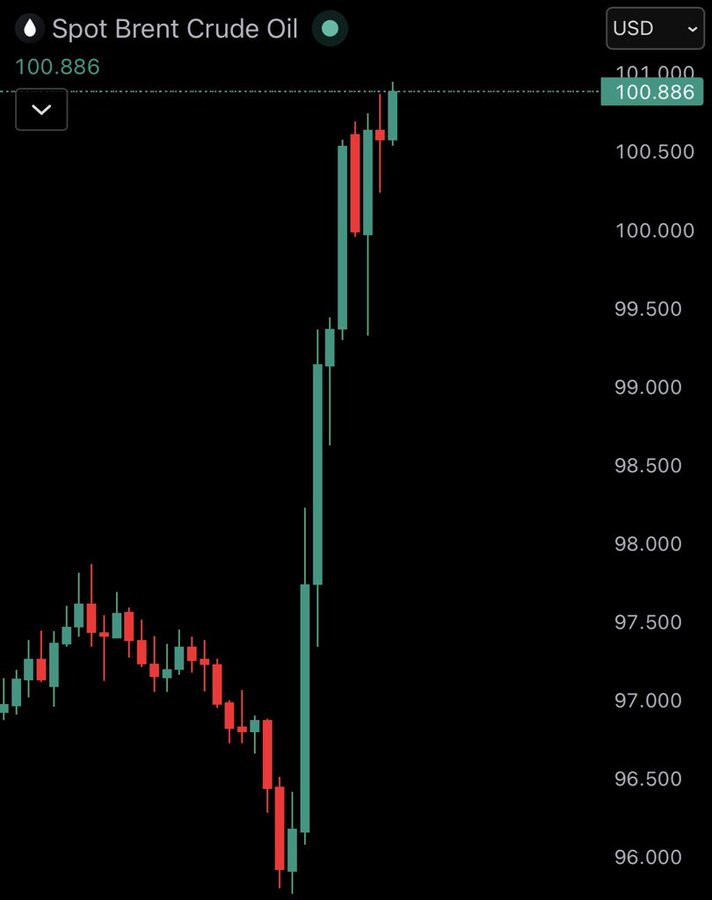
GLOBAL MARKETS — Brent crude oil prices saw a significant intraday surge of 5% to 7% at the start of June 2026, pushing the benchmark back toward the $95 per barrel level. This volatility follows reports that Iran has suspended indirect communications with the United States and issued renewed threats to close the Strait of Hormuz and the Bab el-Mandeb Strait.
Context of the Market Reaction
The spike in energy prices is a direct response to escalating tensions in the ongoing conflict involving Iran, Israel, and the United States.
• Suspension of Negotiations: On June 1, 2026, Iranian state media reported that Tehran’s negotiating team stopped the exchange of messages with Washington through mediators. The Iranian government cited ongoing Israeli military operations in Lebanon as the primary reason for this suspension, declaring that a "violation of the ceasefire on one front is a violation of the ceasefire on all fronts."
• Threats to Maritime Chokepoints: Iranian officials have threatened a full closure of the Strait of Hormuz, a critical global maritime artery through which approximately 20% of the world’s oil and LNG transits. This threat, combined with the potential for new fronts in the conflict including the Bab el-Mandeb Strait has re-introduced a substantial "geopolitical risk premium" into oil markets.
• Market Response: While prices surged as high as $95–$97 per barrel following the news, they have since experienced fluctuations as traders weigh these threats against statements from U.S. leadership. President Donald Trump has indicated that he had not been formally notified of a suspension of talks and suggested that diplomatic efforts to resolve maritime transit issues could still move forward.
Economic Implications
Analysts note that the global economy remains sensitive to any disruption in the Persian Gulf.
• Risk Premium: Even if threats of a full closure do not immediately materialize into physical blockades, the high cost of "war risk" insurance and the caution exercised by shipping companies have effectively tightened global supply chains.
• Long-Term Outlook: Energy market experts, including those from Goldman Sachs, have suggested that oil prices are likely to remain elevated in the $90–$100 per barrel range through the remainder of 2026, as Middle East producers face challenges in restoring production capacity and geopolitical uncertainty remains high.