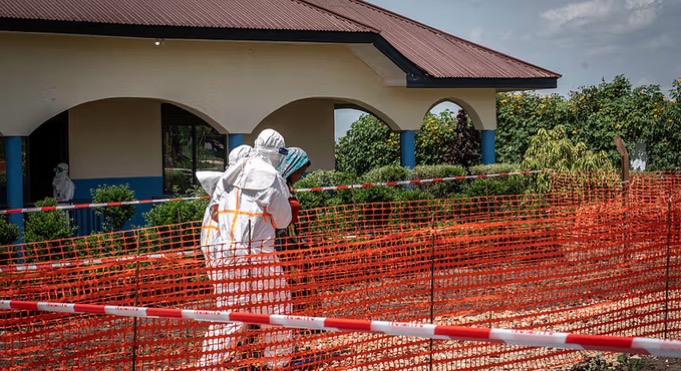
NAIROBI — The Kenyan High Court has issued an emergency order temporarily halting the establishment of a U.S.-backed Ebola quarantine and treatment facility in Laikipia County. The court’s decision, delivered on May 29, 2026, serves as a direct response to a surge in public outcry and a formal legal challenge regarding the transparency and potential health risks associated with the controversial bilateral project.
The Judicial Intervention
High Court Judge Patricia Nyaundi granted conservatory orders requested by the Katiba Institute, a prominent constitutional rights advocacy group. The ruling is comprehensive, explicitly prohibiting the Kenyan government and its partner agencies from proceeding with any development or operationalization of the proposed facility at the Laikipia Air Base.
Furthermore, the order blocks the admission or transfer of any individuals exposed to or infected with the Bundibugyostrain of the Ebola virus into Kenyan territory under this specific U.S. arrangement. By effectively freezing the project until the next scheduled hearing on June 2, 2026, the court has prioritized the need for legal and public scrutiny over the immediate logistical requirements of the U.S. health mission.
The Anatomy of the Controversy
The proposed U.S. facility, intended to be a 50-bed unit, was designed to treat American citizens who might be exposed to the ongoing outbreak in the Democratic Republic of Congo (DRC) and Uganda. Washington’s rationale was grounded in medical logistics: treating exposed individuals closer to the outbreak epicenter is theoretically safer than attempting long-distance medical evacuations to the United States. However, this logic has found little favor with the Kenyan public and professional classes.
The backlash is multifaceted, rooted in deep-seated concerns over ethics, transparency, and health security:
-
Constitutional and Transparency Concerns: The Katiba Institute’s primary argument is one of procedural illegality. They contend that the agreement was negotiated in near-total secrecy, effectively bypassing the legislative oversight mandated by the Kenyan Constitution. For a decision of this magnitude—which involves importing a high-consequence pathogen—public participation is not just a suggestion but a legal requirement.
-
The Medical Union’s Dissent: The Kenya Medical Practitioners, Pharmacists and Dentists Union (KMPDU) has emerged as one of the most vocal opponents of the plan. Their rhetoric has been sharp, labeling the proposed facility a "containment colony" and an "apartheid healthcare model." The KMPDU argues that prioritizing the care of foreign nationals in a specialized facility—while the local healthcare system faces chronic underfunding—is ethically unacceptable. The union has threatened nationwide industrial action should the government fail to disclose the full scope and terms of the secret agreement.
-
Sovereignty and Risk Management: At the heart of the public discourse is the question of why Kenya should assume the risk of hosting a pathogen that the United States deemed too dangerous for its own soil. As Kenya currently has no confirmed local cases, citizens view the importation of potentially infected individuals as an unnecessary invitation for an outbreak that could devastate the local population.
Differing Perspectives: Washington vs. Nairobi
The United States government has maintained that the project is a necessity for regional stability and health security. As part of a larger $112 million regional Ebola response commitment, Washington has pledged $13.5 million specifically for Kenya’s domestic Ebola preparedness. U.S. officials argue that this funding strengthens Kenya's overall ability to handle future health crises, portraying the treatment facility as a single component of a much broader, mutually beneficial health infrastructure investment.
The Kenyan executive branch, led by President William Ruto, has navigated this situation with notable caution. While the administration has spoken in broad terms about the imperative of international cooperation and the necessity of regional health security, it has remained conspicuously silent on the granular details of the U.S. agreement. This silence has only fueled the narrative that the government may have prioritized its diplomatic relationship with Washington over the concerns and democratic mandates of its own electorate.
The Broader Implications for Global Health
This standoff serves as a critical case study in the challenges of global health governance. When foreign governments intervene in local health landscapes, they must navigate not only the medical complexities of a virus but also the political, ethical, and sovereignty-based sensitivities of the host country.
The court's decision in Laikipia is a reminder that in the post-pandemic era, populations are far more vigilant regarding the movement of biological threats. Whether the project can be salvaged through increased transparency and public consultation remains to be seen. However, for now, the Laikipia facility stands as a testament to the fact that international health aid, when perceived as lacking transparency or equity, can quickly become a catalyst for intense domestic political opposition. The upcoming June 2 hearing will be a defining moment, potentially setting a precedent for how African nations balance international security obligations with the constitutional rights of their citizens.
Do you think that bilateral healthcare agreements between powerful nations and developing nations can ever be truly equitable, or is there an inherent power imbalance that leads to situations like this?